

Study on the Impact of Douglas Mcgregor’s Theory X And Theory Y in Oil and Natural Gas Corporation (ONGC)
C. Lizy RK, Mandira Dey
1Indian Institute of Engineering Sciences and Technology, Shibpur, West Bengal, India.
2Corresponding Author Email: clrkca@gmail.com
------------------------------
IThis study explores the application and implications of Douglas McGregor's Theory X and Theory Y within the context of the Oil and Natural Gas Corporation (ONGC), a prominent entity in India's energy sector. McGregor's theories present contrasting views on employee motivation and management, where Theory X perceives employees as inherently lazy and needing strict supervision, while Theory Y posits that employees are self- motivated and thrive in an empowering environment. The research aims to assess the prevalence of Theory X and Theory Y characteristics among ONGC employees through a descriptive analysis using secondary data and a primary survey conducted via a Likert scale questionnaire. The study examines demographic factors such as age, gender, designation, income, and experience to understand how these variables influence motivational dynamics within the organization. By analyzing these perspectives, the study seeks to provide insights into employee motivation levels at ONGC and recommend strategies for enhancing organizational performance and employee engagement in the energy sector.
Keywords:Theory X, Theory Y, ONGC, employee motivation, descriptive analysis, Likert Scale, motivational dynamics, organizational performance..
1. INTRODUCTIONTThe exponential growth of visual data across digital platforms necessitates efficient and intelligent image compression techniques. Conventional image codDouglas McGregor, in 1960, introduced Theory X and Theory Y, which offer contrasting views on human behavior in the workplace. Theory X views workers as inherently disliking work and requiring supervision and coercion to meet organizational goals. This perspective reflects a more authoritarian management approach. On the other hand, Theory Y is more optimistic, seeing workers as self-motivated and responsible, with a positive attitude towards their duties and an openness to change. McGregor suggests that managers' assumptions about individual nature influence their management style. In response to customer demand, a new product line was created. While Theory X is pessimistic, Theory Y embodies a more positive outlook on employees and their capabilities. Theory Y suggests that employees find fulfillment in their calm and routine jobs, naturally exerting physical and mental energy [1]. They do not need fear or authority to be motivated. Rather, they can show loyalty and commitment if their work is gratifying. Employees can learn accountability and maximize their reasoning abilities. Their creativity, resourcefulness, and innovative capabilities can address organizational challenges. Theory X, on the other hand, has a negative view of employees' behavior and nature, focusing on basic needs. Theory Y, in contrast, emphasizes social, esteem, and self-actualization needs and promotes teamwork, challenging work, and inclusive decision-making. McGregor believes Theory Y is more logical than Theory X.
Theory X
Theory X, formulated by Douglas McGregor, posits that employees are inherently lazy and require coercion and control to be productive. This management style, rooted in the industrial era, advocates constant supervision and punishment as means to enforce productivity. McGregor utilized Theory X to demonstrate how managerial beliefs shape management practices.
Assumptions of Theory X include:
- Employees are intrinsically lazy and will shirk work if given the chance.
- Employees need to be compelled, controlled, and threatened with punishment to achieve objectives.
- Employees lack ambition and necessitate continuous supervision and direction.
- Employees are incapable of decision-making and require instructions for tasks.
These assumptions foster a culture of control and fear, where managers enforce regulations rather than fostering motivation and engagement. Consequently, employees may feel demotivated, disengaged, and less committed to their work.
The impact of Theory X on employee motivation and performance can be detrimental. Employees may feel undervalued, leading to low productivity, diminished commitment, and high turnover rates. Additionally, employees may hesitate to voice opinions or take initiative, hindering creativity and innovation. Furthermore, Theory X influences employees' perceptions of their work, viewing it as a chore rather than a passion. They may perceive managers as controllers rather than supporters, leading to strained employee-manager relationships and decreased motivation and productivity.
In summary, Theory X's assumptions undermine employee morale, hindering productivity, creativity, and trust within organizations.
Theory Y
Theory Y suggests that employees are self-motivated and committed to achieving goals when given opportunities to participate in decision-making and a positive organizational climate.
Assumption and Impact:
Theory Y's assumptions influence employees' attitudes towards their work. They may view their job as an opportunity for growth and fulfillment, and their manager as supportive, empowering, and guiding,leading to trust and respect, increased motivation, and productivity.
To effectively implement the assumptions of Theory Y in an organization, managers should:
- Provide opportunities for employee participation in decision-making and problem-solving.
- Encourage open communication and feedback to improve employee engagement and motivation.
- Provide autonomy and trust to employees to make decisions and take responsibility for their actions.
- Focus on employee growth and development by providing opportunities for training and mentorship.
- Create a positive organizational climate that values and empowers employees.
Theory Y significantly impacts employee motivation and performance by fostering empowerment, value, and motivation. This leads to increased productivity, commitment, and low staff turnover, fostering creativity and innovation in the workplace. It suggests that managers can enhance their management style by shifting focus from controlling to motivating and engaging employees, thereby creating a more productive and positive work environment where employees feel valued and motivated.
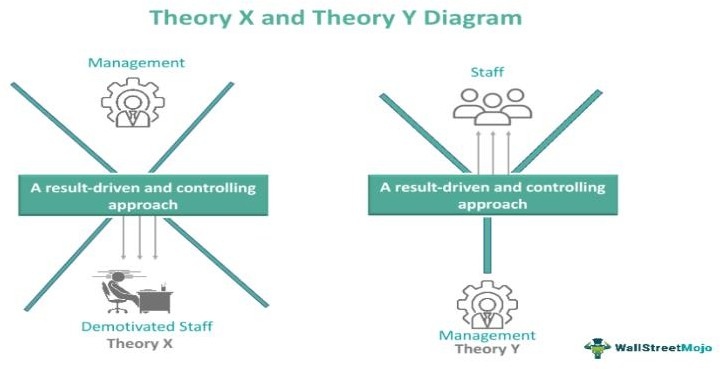
(Reference: https://www.wallstreetmojo.com/theory-x-and-theory-y/)
LITERATURE REVIEWliterature review on McGregor's Theory X and Theory Y in Bangladesh's banking industry contrasts the theories' The assumptions about employee behavior. Theory X requires close supervision and rewards for motivation, while Theory Y emphasizes self-motivation and autonomy. Though previous research has focused on education and construction, the banking sector's high-stress environment has seen limited exploration.Studies show SMEs with Theory Y leadership outperform those with Theory X, highlighting leadership's impact on performance and satisfaction. The review calls for more research on how management perceptions influence employee behavior and performance, offering insights for HR practices in Bangladesh's banking sector [2].
Lawter, Kopelman, and Prottas (2015)conducted a pioneering study [3] on McGregor's Theory X/Y and its impact on job performance in organizations. The research utilized a multilevel, multi-source analysis to investigate the relationship between managerial attitudes, behaviors, and performance at both individual and group levels. Despite the small sample size, the study yielded significant results with small to medium effect sizes, highlighting the importance of distinguishing between X/Y attitudes and behaviors. The findings underscored the relevance of McGregor's theory in contemporary organizational settings and emphasized the need for tailored leadership approaches to enhance employee performance. Overall, the study provided valuable insights into the practical implications of McGregor's Theory X/Y in improving job performance within organizations.
Lt. Dr. L.K. Singh’sstudy on Theory X and Theory Y in the 21st century examines the relevance of these management theories in modern business [4]. Theory X assumes individuals dislike work and need supervision, while Theory Y views them as self-motivated and responsible. The study reviews the evolution of these theories, their contemporary relevance, and the impact on management practices. Singh finds that Theory Y fosters a positive work environment and innovation, whereas Theory X can lead to low morale. The research emphasizes the need for adaptable management styles that integrate elements of both theories to enhance organizational effectiveness.
Wangdi and Tobgay's 2022study, "The Impact of McGregor’s Theory X/Y on the Level of Job Satisfaction of Teachers and Principals," explores [5] how McGregor's Theory X and Theory Y managerial assumptions affect job satisfaction among educators in Bhutanese schools. Using a structured questionnaire, the research finds that educators with a Theory Y mindset, which involves positive managerial beliefs, report higher job satisfaction. The study recommends that educational institutions promote Theory Y attitudes by recognizing staff qualities, implementing feedback mechanisms, and offering continuous skill development. This research provides valuable insights into how leadership mindsets influence job satisfaction and organizational dynamics in Bhutanese schools.
The paper by Lydiah Wairimu Wambugu in the European Journal of Business and Managementdelves into the impact of organizational culture on employee performance, focusing on Wartsila - Kipevu II Power Plant in Kenya [6]. Through data analysis and interpretation, the study highlights the importance of organizational values, climate, leadership styles, and work processes in influencing employee performance. The recommendations provided offer practical insights for enhancing organizational culture to drive employee satisfaction and productivity. Overall, this study contributes valuable insights to the field of organizational studies, emphasizing the significance of aligning culture with performance goals for organizational success.
The study conducted by Arslan Ahmed Amin, Nazia Rafiq, and Shrafat Ali Sairexplores the motivation levels of employees in a public sector oil and gas organization and its relationship with prevailing leadership styles [7]. The research findings indicate a neutral motivation level among employees, with a negative impact attributed to the autocratic leadership style. Recommendations include improving promotional opportunities, revising pay scales, offering technical training, and restructuring leadership styles. The study's limitations include a focus on a single field within the organization and a response rate of 62% from employees. Overall, the study provides valuable insights into the importance of employee motivation and effective leadership in organizational success.
The paper by Joy O. Ekwoaba, Ph. D, Ndubuisi M. Ufodiama and Enyinnaya E. Inyatitled "Participative Decision Making and Organizational Performance: A Snapshot Survey of Nigerian Oil and Gas Sector" provides valuable insights into the relationship between employee involvement in decision-making and organizational success within the Nigerian oil and gas industry [8]. The study highlights the importance of collaborative partnerships between employees and management, emphasizing the need for open communication and recognition of employee contributions. The findings underscore the positive impact of participative decision- making on key organizational aspects such as employee retention, customer satisfaction, and overall performance. This research offers practical recommendations for companies in the sector to leverage the creative potential of their workforce for sustainable competitive advantage.
Modi, Hiralal 's2022 thesis [9] aimed to investigate work-life balance at ONGC-A' Bad, focusing on its impact on employee satisfaction. Key sections include the conclusion summarizing findings, the bibliography listing relevant sources, and the annexure likely containing supporting data. Extracted sources encompass ONGC's profile, industry reports on India's oil and gas sector, and discussions on work-life balance. The study concludes with recommendations for improving work-life balance practices.
OBJECTIVES OF STUDYThe main objective is to understand how many employees are motivated to work willingly and how many employees lack motivation to achieve their targets. Douglas McGregor's Theory X and Theory Y are foundational concepts in organizational management and motivation. Theory X assumes that employees are inherently lazy and require strict supervision, while Theory Y posits that employees are self-motivated and thrive on responsibility.
This study investigates the application and impact of these theories in the Oil and Natural Gas Corporation (ONGC). The research aims to determine the proportion of employees who are motivated to work willingly versus those who are not, based on the principles of Theory X and Theory Y. Understanding these dynamics within ONGC will provide insights into the overall motivation levels of the workforce and help in developing strategies to enhance employee engagement and productivity. Here are some of the objectives discussed below:
- To identify the various characteristics of Theory X and Theory Y people.
- To identify whether the organization (ONGC) follows Theory X and Theory Y.
- To compare Theory X and Theory Y with respect to Gender, Age, Designation, Annual Income and Experience.
- Positivism – It mainly reflects the philosophical stance of a natural scientist. Ontology is based on objectivist assumptions that entities are observed, atomistic events, existing external to social actors, therefore only observation and empirical data may be referred to as “credible”.
- Sources of Data: The research primarily utilized secondary data sourced from various journals, magazines, and internet sources, business standard sites, Wikipedia, ResearchGate, and other websites. The present study is Descriptive in nature and to complement this, a questionnaire survey was conducted as a primary data collection tool. The questionnaire survey was distributed to employees of the Oil and Natural Gas Corporation (ONGC) to gather actual insights.
- The respondents of the survey were individuals working at ONGC, enriching the study with their perspectives and experiences. The following demographic factors are considered in the study:
- Age
- Gender
- Marital Status
- Designation
- Experience
- Primary data is collected through a questionnaire based on the Likert’s Scale: A Likert scale is a rating scale used to measure opinions, attitudes, or behaviors. It consists of a statement or a question, followed by a series of five or seven answer statements. Respondents choose the option that best corresponds with how they feel about the statement or question. For this project, I have chosen 5-point Likert scale as given below:
- Highly Disagree
- Disagree
- Neutral
- Agree
- Highly Agree
- The researcher had used Microsoft Excel and Crosstab analysis in SPSS for data analysis.
- Sampling Method: Convenience sampling was used in this study, which does not provide any basis for estimation. It is a non-probabilistic sampling method.
- Sample collection: The sample is collected from employees of ONGC.
- Sample Size: 40 - 50 approximately.
- A questionnaire is constructed for conducting a questionnaire survey. The sampling plan will be convenient sampling, and the sample size will be the number of respondents available. The respondents of the questionnaire survey are the people working at ONGC.
Table: Demographic Profile of the Participants
| Demographic Variables | Demographic Characteristics | Participants |
|---|---|---|
| Gender | Male | 24 |
| Female | 16 | |
| Age | ≥ 20 years to < 30 years | 22 |
| ≥ 30 years to < 40 years | 11 | |
| ≥ 40 years to < 50 years | 6 | |
| ≥ 50 years and above | 1 | |
| Marital Status | Unmarried | 20 |
| Married | 20 | |
| Designation | Top-level Management | 1 |
| Middle Level Management | 22 | |
| Lower-Level Management | 17 | |
| Income | ≥ 2 Lakhs | 9 |
| ≥ 2 Lakhs and < 5 Lakhs | 2 | |
| ≥ 5 Lakhs and < 10 Lakhs | 7 | |
| ≥ 10 Lakhs and < 15 Lakhs | 5 | |
| ≥ 15 Lakhs | 17 | |
| Experience | 0 years and < 2 years | 13 |
| ≥ 2 years and < 5 years | 11 | |
| ≥ 5 years and < 10 years | 2 | |
| ≥ 10 years | 14 |
The demographic analysis of the ONGC employees shows that the majority are male (60%) with females comprising 40% of the sample. The largest age group is between 20 and 30 years (55%), followed by those aged 30 to 40 years (27.5%). The workforce is evenly split between unmarried and married individuals, each representing 50%. Middle-level management forms the largest group at 55%, with lower-level management at 42.5% and top-level management at 2.5%. In terms of income, 42.5% earn 15 lakhs or more annually. Experience-wise, 35% have over 10 years of experience, 32.5% are new hires with less than two years, 27.5% have between two and five years, and 5% have five to ten years of experience. This diverse demographic mix reflects a balance of seasoned professionals and fresh talent, indicating a robust structure for mentorship and innovation.
Objective 1: To identify the various characteristics of Theory X and Theory Y.Based on the Literature review the researcher had come across the following characteristics of Theory X and Theory Y based on which the questionnaire is designed to justify objective no..2
| Theory Y | Theory X |
|---|---|
| Participation in decision making | Exclusion from decision making |
| Employee Empowerment | Employee Disempowerment |
| Continuous Learning Opportunities | Stagnation/ No Learning Opportunities |
| Job Autonomy | Micromanagement |
| Employee Recognition and Appreciation | Employee Neglect and Disregard |
| Constructive Feedback Mechanisms | Destructive Feedback Mechanisms |
| Performance-Based Incentives | Fixed Pay without Incentives |
| Job Enrichment | Job Monotony |
| Comprehensive Training Programs | Lack of Training Programs |
| Effective Grievance Resolution | Ineffective Grievance Handling |
| Transparency in Communication / Transparency in organizational Policies | Lack of transparency in communication / Lack of transparency in organizational policies |
Analysis of Psychographic Part:
1. Participation in decision making
| Row Labels | Count of Gender |
|---|---|
| Agree | 26 |
| Neutral | 9 |
| Strongly agree | 5 |
| Grand Total | 40 |
Table7
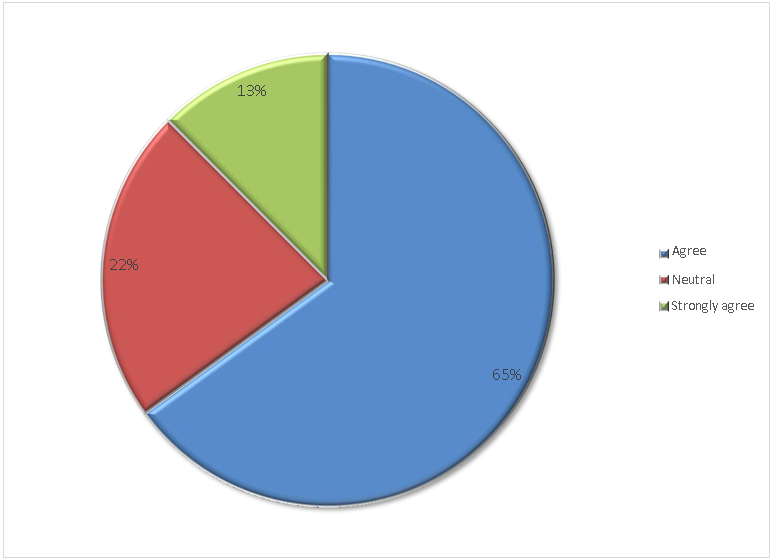
Chart7
2. Continuous Learning Opportunities
| Row Labels | Count of Gender |
|---|---|
| Agree | 22 |
| Disagree | 2 |
| Neutral | 8 |
| Strongly Agree | 7 |
| Strongly disagree | 1 |
| Grand Total | 40 |
Table8
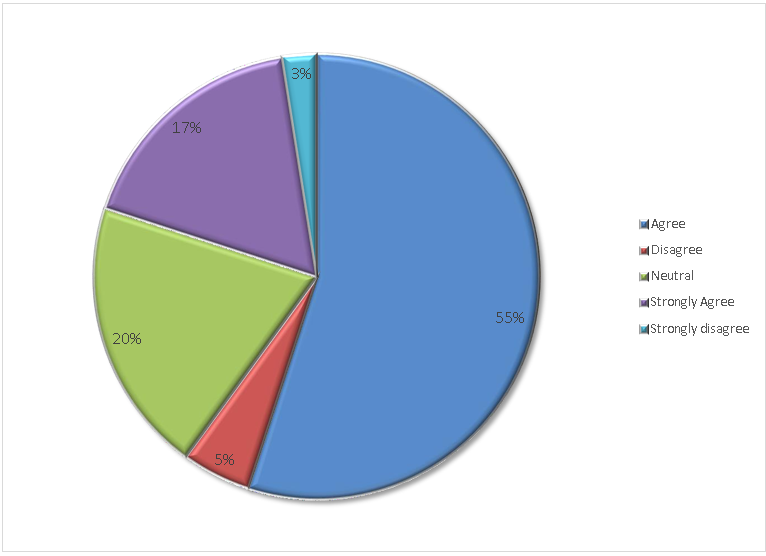
Chart8
3. Autonomy of job
| Row Labels | Count of Gender |
|---|---|
| Agree | 20 |
| Disagree | 1 |
| Neutral | 13 |
| Strongly Agree | 5 |
| Strongly disagree | 1 |
| Grand Total | 40 |
table9
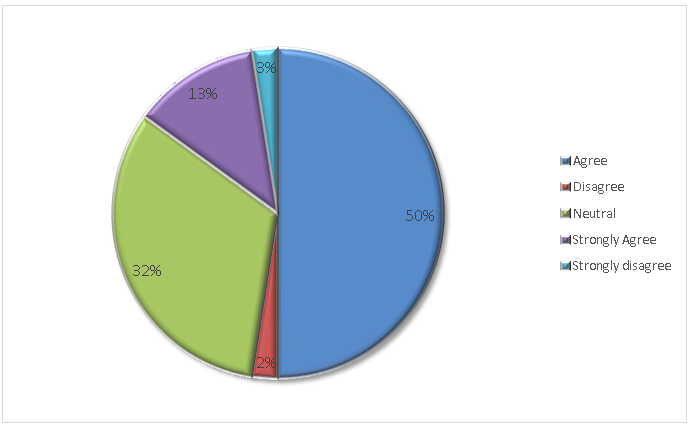
Chart9
4. Employee recognition and Appreciation
| Row Labels | Count of Gender |
|---|---|
| Agree | 26 |
| Disagree | 2 |
| Neutral | 6 |
| Strongly agree | 6 |
| Grand Total | 40 |
table10
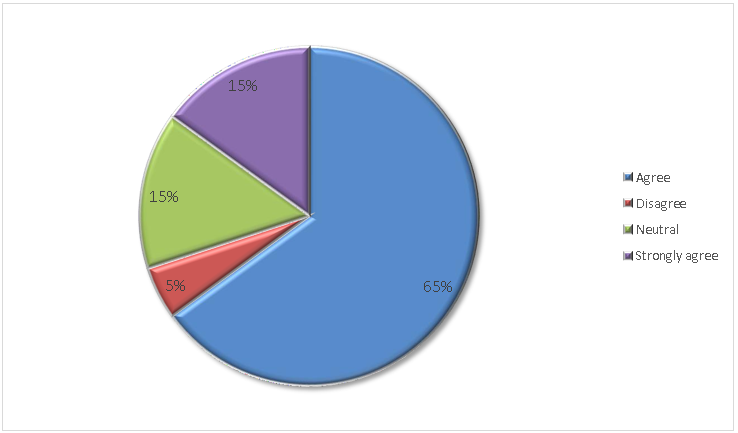
Chart10
5. Constructive Feedback Mechanisms
| Row Labels | Count of Gender |
|---|---|
| Agree | 18 |
| Disagree | 5 |
| Neutral | 10 |
| Strongly Agree | 64 |
| Strongly disagree | 3 |
| Grand Total | 40 |
table11
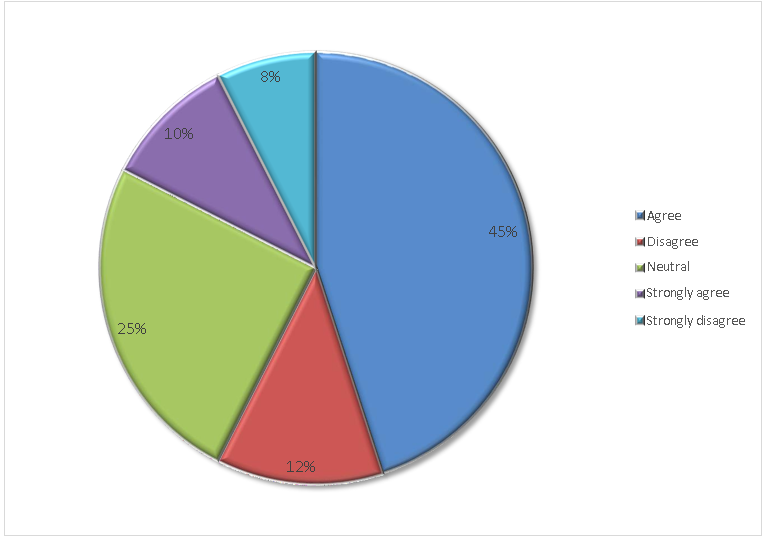
Chart11
6. Performance-Based Incentives
| Row Labels | Count of Gender |
|---|---|
| Agree | 19 |
| Disagree | 7 |
| Neutral | 11 |
| Strongly Agree | 3 |
| Grand Total | 40 |
table12
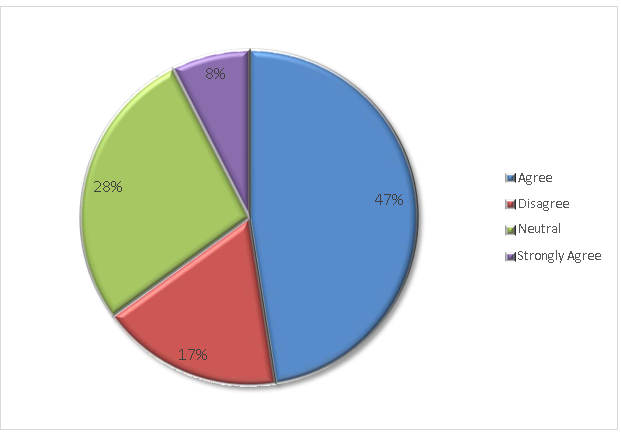
Chart12
7. Job Enrichment
| Row Labels | Count of Gender |
|---|---|
| Agree | 20 |
| Disagree | 6 |
| Neutral | 9 |
| Strongly Agree | 5 |
| Grand Total | 40 |
Table 13
table13
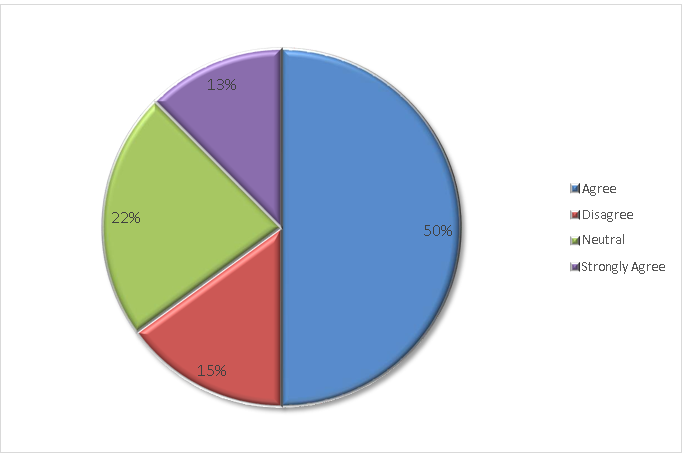
Chart13
8. Comprehensive Training Programs
Table: Gender Responses
| Row Labels | Count of Gender |
|---|---|
| Agree | 17 |
| Disagree | 2 |
| Neutral | 14 |
| Strongly Agree | 7 |
| Grand Total | 40 |
table14
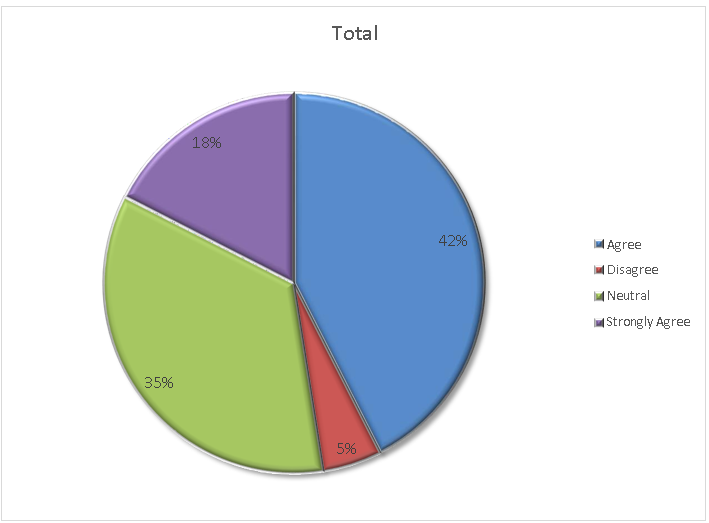
Chart14
9. Effective Grievance Resolution
| Row Labels | Count of Gender |
|---|---|
| Agree | 21 |
| Disagree | 1 |
| Neutral | 11 |
| Strongly agree | 7 |
| Grand Total | 40 |
table15
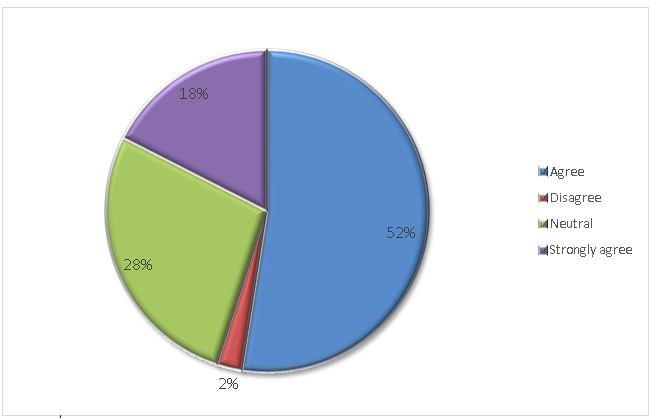
Chart15
10. Transparency in Organizational policies
| Row Labels | Count of Gender |
|---|---|
| Agree | 22 |
| Neutral | 8 |
| Strongly agree | 10 |
| Grand Total | 40 |
table16
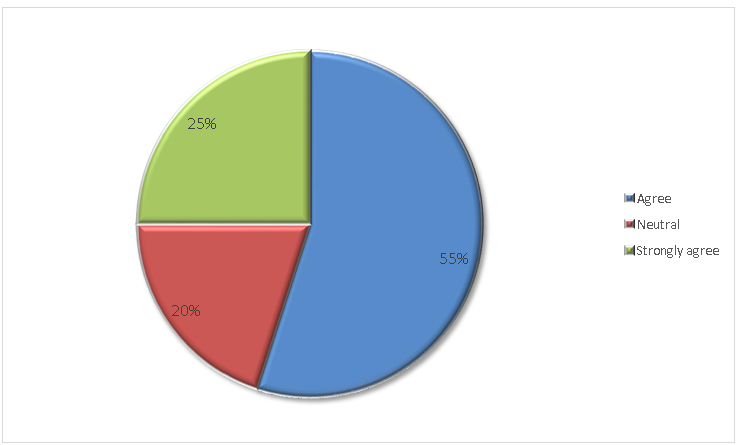
Chart16
11. Transparency in communication
Table
| Row Labels | Count of Gender |
|---|---|
| Agree | 25 |
| Disagree | 4 |
| Neutral | 8 |
| Strongly agree | 3 |
| Grand Total | 40 |
table17
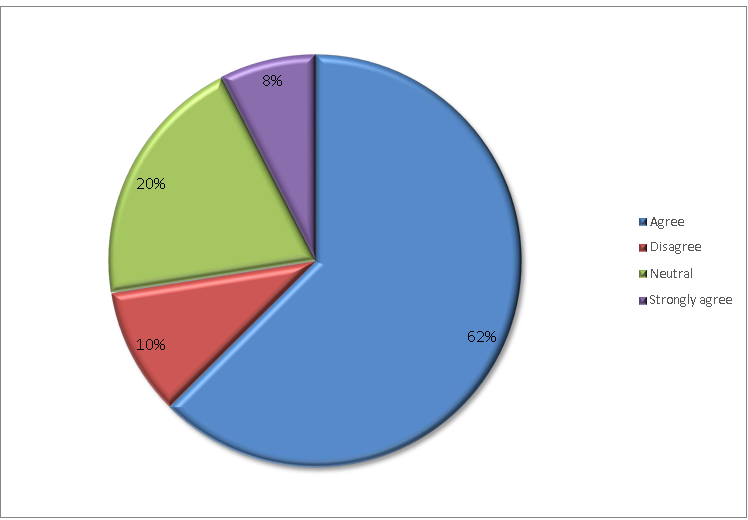
Chart17
12. Employee empowerment
| Row Labels | Count of Gender |
|---|---|
| Agree | 28 |
| Neutral | 7 |
| Strongly agree | 5 |
| Grand Total | 40 |
table18
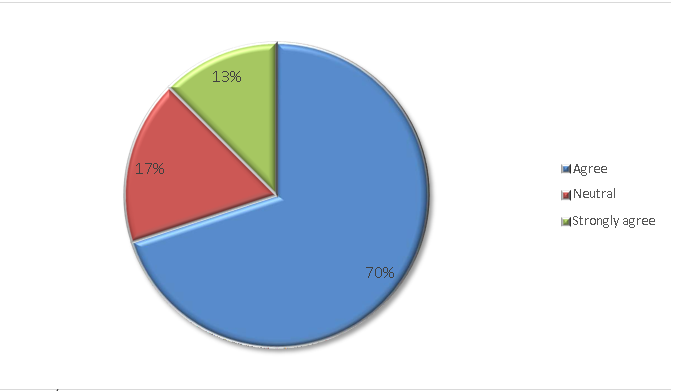
Chart18
13. Encouragement from superiors
| Row Labels | Count of Gender |
|---|---|
| Agree | 18 |
| Disagree | 4 |
| Neutral | 8 |
| Strongly Agree | 9 |
| Strongly disagree | 1 |
| Grand Total | 40 |
table19
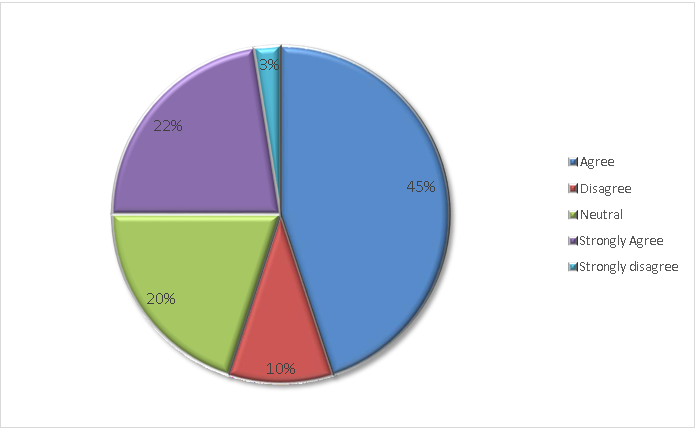
Chart19
➢ Number of participants responses towards ONGC is following Theory X and Theory Y:
| S. No | Score | No. of Employees | Theory | Percentage |
|---|---|---|---|---|
| 1 | 60–75 | 2 | Strong Y theory | 5% |
| 2 | 45–59 | 29 | General Y theory | 72.5% |
| 3 | 16–44 | 9 | General X theory | 22.5% |
| 4 | 0–15 | 0 | Strong X theory | 0% |
table20
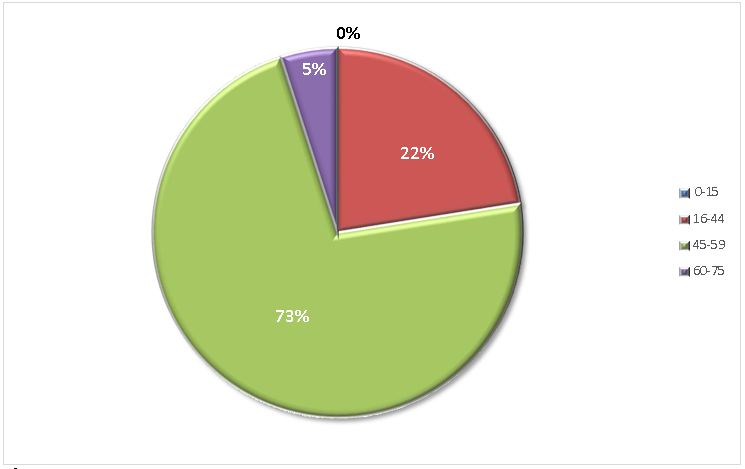
Chart20
- Total Employees Surveyed:40
- Theory Y: 77.5% (31 employees) lean towards Theory Y, with 5% strongly aligned.
- Theory X: 22.5% (9 employees) lean towards Theory X, with none strongly aligned.
ONGC's workforce predominantly aligns with Theory Y, as 77.5% of employees prefer a participative and self- motivating management style. Only 22.5% exhibit tendencies towards needing more supervision and control (Theory X), and none fall into the Strong X category. This suggests ONGC is better suited to a management style that empowers employees and encourages their involvement in decision-making.
Objective 3: To compare the employees’ responses towards Theory X and Theory Y with respect to Gender,Age, Designation, Annual Income and Experience.Analysis: Researcher has used Crosstabs to justify objective 3.
| Gender | Category | Theory | Total | ||
|---|---|---|---|---|---|
| Strong Y theory | General Y theory | General X theory | |||
| Gender | Male | 2 | 15 | 7 | 24 |
| Female | 0 | 14 | 2 | 16 | |
| Total | 2 | 29 | 9 | 40 | |
The table presents data on the relationship between gender and adherence to different management theories.
- The "General Y theory" is the most popular among both males and females, with very similar numbers (15 males and 14 females).
- The "Strong Y theory" has only male proponents.
- The "General X theory" is more favored by males than females.
- There are more males than females in the dataset, with males making up 60% and females 40% of the total participants.
| Theory | Total | ||||
|---|---|---|---|---|---|
| Strong Y theory | General Y theory | General X theory | |||
| Age | 20-30 years | 1 | 15 | 6 | 22 |
| 30-40 years | 0 | 10 | 1 | 11 | |
| 40-50 years | 1 | 3 | 2 | 6 | |
| 50 years and above | 0 | 1 | 0 | 1 | |
| Total | 2 | 29 | 9 | 40 | |
The table provides data on the relationship between age groups and adherence to different management theories.
- The "General Y theory" is the most popular across all age groups, with the highest support from the 20-30 years age group.
- The "Strong Y theory" has limited support, found only in the 20-30 year and 40-50 years age groups.
- The "General X theory" is more favored by the younger age groups, particularly those aged 20-30 years.
- The majority of the respondents are in the 20-30 years age group, making up 55% of the total sample. The support for different theories decreases with age.
| Theory | Total | ||||
|---|---|---|---|---|---|
| Strong Y theory | General Y theory | General X theory | |||
| Designation | Lower-Level management | 0 | 13 | 4 | 17 |
| Middle level management | 2 | 15 | 5 | 22 | |
| Top level management | 0 | 1 | 0 | 1 | |
| Total | 2 | 29 | 9 | 40 | |
The table provides data on the relationship between management level (designation) and adherence to different management theories.
- The "General Y theory" is the most popular theory across all levels of management, with strong support from both lower-level and middle-level management.
- The "Strong Y theory" has support exclusively from middle-level management.
- The "General X theory" is more favored by lower and middle-level management, with no proponents in top-level management.
- Middle-level management is the largest group in the dataset, making up 55% of the total sample, followed by lower-level management at 42.5%, and top-level management at 2.5%.
| Theory | Total | ||||
|---|---|---|---|---|---|
| Strong Y theory | General Y theory | General X theory | |||
| Annual Income | ≥ 2 Lakhs | 0 | 6 | 3 | 9 |
| ≥ 2 Lakhs and < 5 Lakhs | 0 | 1 | 1 | 2 | |
| ≥ 5 Lakhs and < 10 Lakhs | 0 | 6 | 1 | 7 | |
| ≥ 10 Lakhs and < 15 Lakhs | 1 | 3 | 1 | 5 | |
| ≥ 15 Lakhs | 1 | 13 | 3 | 17 | |
| Total | 2 | 29 | 9 | 40 | |
The table provides data on the relationship between annual income and adherence to different management theories.
- • The "General Y theory" is the most popular theory across all income groups, with strong support from the highest income group (≥ 15 Lakhs).
- The "Strong Y theory" is only supported by individuals with annual incomes of ≥ 10 Lakhs.
- The "General X theory" is more evenly distributed across different income groups, with a slight preference among the lowest and highest income groups.
- The highest income group (≥ 15 Lakhs) constitutes the largest portion of the dataset, making up 42.5% of the total sample.
| Theory | Total | ||||
|---|---|---|---|---|---|
| Strong Y theory | General Y theory | General X theory | |||
| Experience | 0 years and < 2 years | 0 | 8 | 5 | 13 |
| ≥ 2 years and < 5 years | 1 | 8 | 2 | 11 | |
| ≥ 5 years and < 10 years | 0 | 2 | 0 | 2 | |
| ≥ 10 years | 1 | 11 | 2 | 14 | |
| Total | 2 | 29 | 9 | 40 | |
The table provides data on the relationship between work experience and adherence to different management theories.
- The "General Y theory" is the most popular theory across all experience groups, with the highest support from those with 10 or more years of experience.
- The "Strong Y theory" has support exclusively from individuals with at least 2 years of experience, especially those with 2 to 5 years and those with 10 or more years of experience.
- The "General X theory" is more favored by individuals with less than 2 years of experience.
- Individuals with the least experience (0 to < 2 years) and those with the most experience (≥ 10 years) constitute the largest portions of the dataset, accounting for 32.5% and 35% of the total sample, respectively.
-
Characteristics of Theories X and Y:
- Theory X: Supervision, control, limited autonomy.
- Theory Y: Inclusive leadership, continuous learning, job autonomy, employee recognition, constructive feedback, performance-based incentives, job engagement, training programs, grievance resolution, open communication, supportive leadership, empowerment, and transparent policies.
-
Management Theory Alignment in ONGC:
- Theory Y: 77.5% (31 employees)
- Strong Y: 5% (2 employees)
- General Y: 72.5% (29 employees)
- Theory X: 22.5% (9 employees)
- Strong X: 0% (0 employees)
- Theory Y: 77.5% (31 employees)
-
Gender Analysis:
- General Y: Popular among both males (15) and females (14).
- Strong Y: Only male proponents (2).
- General X: Favored more by males (7) than females (2).
- Males: 60%, Females: 40%.
-
Age Analysis:
- General Y: Most popular, especially among 20–30 years (55%).
- Strong Y: Supported by 20–30 and 40–50 years.
- General X: Favored by 20–30 years.
-
Designation Analysis:
- General Y: Popular across all levels, especially lower and middle management.
- Strong Y: Supported by middle management.
- General X: Favored by lower and middle management.
- Middle management: 55%, Lower management: 42.5%, Top management: 2.5%.
-
Annual Income Analysis:
- General Y: Most popular, especially ≥ 15 Lakhs (42.5%).
- Strong Y: Supported by ≥ 10 Lakhs.
- General X: Evenly distributed, with a slight preference for the lowest and highest income groups.
-
Experience Analysis:
- General Y: Most popular, especially ≥ 10 years (35%).
- Strong Y: Supported by those with at least 2 years of experience.
- General X: Favored by < 2 years.
- Least experience (0 to < 2 years): 32.5%, Most experience (≥ 10 years): 35%.
- Reinforce Theory Y Practices:
-
Address Gender Disparities:
✔Encourage female employees towards Strong Y Theory by providing additional leadership training and development opportunities.
✔Monitor and address any potential biases or barriers that may prevent female employees from aligning with Strong Y Theory.
-
Support Younger Employees:
✔Given the high proportion of younger employees favoring General Y and General X Theories, ONGC should provide tailored development programs that enhance their engagement and autonomy.
-
Enhance Middle-Level Management Support:
✔Since middle-level management supports both General Y and Strong Y Theories,additional resources and leadership development programs should be provided to this group to sustain their engagement and productivity.
- Align Incentives with Income Levels:
✔ For higher income groups (≥ 15 Lakhs), continue to offer performance-based incentives and opportunities for job enrichment to maintain their strong alignment with General Y Theory.
✔For lower income groups, consider targeted interventions to increase their alignment with General Y Theory.
-
Experience-Based Training Programs:
✔Develop specialized training and mentoring programs for employees with < 2 years of experience to shift their preference from General X to General Y Theory.
✔Leverage the expertise of employees with ≥ 10 years of experience to mentor less experienced colleagues, fostering a culture of continuous learning and development.
-
Monitor and Improve Grievance Resolution:
✔Strengthen grievance resolution mechanisms to ensure they are effective and transparent, as this is a key characteristic of Theory Y that supports employee satisfaction and engagement.
-
Promote Transparency:
✔Maintain and enhance transparency in organizational policies and communication to align with Theory Y practices, ensuring employees feel valued and informed.
-
Regular Feedback and Recognition:
✔Implement regular feedback mechanisms and recognition programs to sustain high levels of employee motivation and alignment with Theory Y.
✔ONGC should continue to emphasize and strengthen practices aligned with Theory Y,such as inclusive leadership, continuous learning opportunities, and employee empowerment, given the high preference (77.5%) for Theory Y.
By reinforcing Theory Y practices and addressing the specific needs of different employee groups, ONGC can further enhance its management approach and employee satisfaction.
LIMITATIONS OF THE STUDYThe following are the limitations for the study on this research topic.
- Time Constraints: The study is limited by the amount of time available to complete the research. This may affect the depth and breadth of the investigation.
- Need for Primary Data: To substantiate the objectives of the research, primary data collection is essential. However, gathering this data may pose challenges in terms of access, cost, and time.
- Limited Access to Research Papers: There is restricted access to relevant research papers and academic resources, which may limit the scope of the literature review and the ability to build on existing knowledge.
- Availability of Data: The availability and reliability of data required for the study could be a constraint. The research is dependent on the quality and extent of the data that can be obtained.
- Inaccurate data: Secondary data can be subject to doubt because of the error that can occur in any of the step or due to personal bias. Errors of this sort can make the secondary data inaccurate and therefore unusable. 5. CONCLUSION
- C. Lizy RK. (2023). Understanding Douglas McGregor's Theory X and Theory Y in Human Resource Management. Global Research Journal of Social Sciences and Management, 1(2), pp. 50–59.
- Mohammad Saiful Islam & Sharmin Akter Eva. (2017). Application of McGregor’s Theory X and Theory Y: Perception of Management toward the Employees in the Banking Industry of Bangladesh. The International Journal of Business & Management, 5(1), pp. 136–145.
- Lawter, L., Kopelman, R. E., & Prottas, D. J. (2015). McGregor's Theory X/Y and Job Performance: A Multilevel, Multi-Source Analysis. Journal of Managerial Issues, 27(1–4), pp. 84–101.
- Lt. Dr. L. K. Singh. (2019). A Critical Analysis of Theory X & Theory Y in the 21st Century. EPRA International Journal of Economic and Business Review, 7(9), pp. 42–45.
- Wangdi, T. & Tobgay, S. (2022). The Impact of McGregor's Theory X/Y on the Level of Job Satisfaction of Teachers and Principals.
- Wambugu, L. (2014). Effects of Organizational Culture on Employee Performance (Case Study of Wartsila – Kipevu II Power Plant). European Journal of Business and Management, 6, pp. 80–92.
- Arslan Ahmed Amin, Nazia Rafiq & Shrafat Ali Sair. (2016). A Study on Motivation Level of Employees and Its Relationship with the Leadership Styles Prevailing in a Public Sector Oil and Gas Organization. Science International (Lahore), 28(4), pp. 729–733.
- Ekwoaba, J., Ufodiama, N., & Inya, E. (2019). Participative Decision Making and Organizational Performance: A Snapshot Survey of Nigerian Oil and Gas Sector. Ilorin Journal of Human Resource Management (IJHRM), 3(1), pp. 13–28.
- Modi, H. (n.d.). Employee's Work-Life Balance in ONGC. MBA Project submitted to Gujarat Technological University, Ahmedabad.
The findings reveal a strong inclination towards Theory Y among ONGC employees, indicating a work environment that values participation, empowerment, and self-motivation. This suggests that ONGC's management style is largely aligned with modern management practices that emphasize inclusive leadership and employee engagement.
Analysis of psychographic factors such as participation in decision-making, scope for learning, job autonomy, employee recognition, and others showed significant agreement among employees, reinforcing the preference for Theory Y. The majority of respondents agreed or strongly agreed with statements reflecting characteristics of Theory Y, indicating that ONGC supports a management approach that encourages involvement, continuous learning, and transparent communication.
The demographic analysis provided further insights, showing that General Y theory is the most popular across all age groups, genders, management levels, income brackets, and experience categories. Males and females both showed strong support for General Y theory, with males also showing a higher inclination towards General X theory. Younger employees (20-30 years) and those with more experience (≥10 years) showed the highest support for General Y theory, while middle-level management exhibited exclusive support for Strong Y theory.
The findings of the study indicate that ONGC is well-suited to a management style that empowers employees and encourages their involvement in decision-making. The organization’s alignment with Theory Y principles suggests a collaborative and supportive work culture, which is likely to foster employee satisfaction and productivity. This alignment supports the hypothesis that ONGC follows Theory Y to a greater extent, positioning it favorably for ongoing organizational success and employee engagement.
DECLARATIONS| Acknowledgments | : | Not applicable. |
| Conflict of Interest | : | The author declares that there is no actual or potential conflict of interest about this article. |
| Consent to Publish | : | The author agrees to publish the paper in the Global Research Journal of Social Sciences and Management. |
| Ethical Approval | : | Not applicable. |
| Funding | : | Author claims no funding was received. |
| Author Contribution | : | The author confirms his responsibility for the study, conception, design, data collection, and manuscript preparation. |
| Data Availability Statement | : | The data presented in this study are available upon request from the corresponding author. |
REFERENCES
Citation: C. Lizy RK. Mandira Dey 2024. A Study on the Impact of Douglas Mcgregor’s Theory X And Theory Y in Oil and Natural Gas Corporation (ONGC) Global Research Journal of Social Sciences and Management, 2(1), pp 19-38.
Copyright: ©2024 C. Lizy RK. Mandira Dey. This is an open-access article distributed under the terms of the Creative Commons Attribution License (https://creativecommons.org/licenses/by/4.0/), which permits unrestricted use, distribution, and reproduction in any medium, provided the original author and source are credited.