

A brief study on Challenges to the Indian Economy: The way forward
Mazy. R. K. C1
1Department of Electrical Engineering, Maulana Abul Kalam Azad university of Technology, Kolkata, West Bengal, India
1Email: mazyrajakumari.c@tcs.com
------------------------------
This research paper delves into the multifaceted challenges confronting the Indian economy, including slow economic growth, rising unemployment, inflationary pressures, fiscal deficits, and environmental sustainability issues. Employing a combination of quantitative analysis and qualitative assessments, the study identifies underlying causes and examines the impact of these challenges on India's development trajectory. The paper proposes a comprehensive set of policy recommendations aimed at addressing these obstacles, emphasizing the importance of structural reforms, technological innovation, and sustainable development practices. By exploring the interconnections between economic policies, social equity, and environmental stewardship, this study offers a roadmap for navigating India's economic challenges towards achieving inclusive and sustainable growth.
Keywords:Indian Economy, economic growth, unemployment, environmental sustainability, policy recommendations, inclusive sustainable growth.
Section-1: IntroductionEconomic growth (Acemoglu, 2012) of a country refers to the increase in the capacity of an economy (H. Clark Johnson, 2017) to produce goods and services (Hill, 1977), compared from one period to another. It is typically measured by the growth in real Gross Domestic Product (GDP) (Tripathi, 2015) or GDP adjusted for inflation. Economic growth can be driven by various factors such as increases in the workforce, technological innovations, improvements in physical and institutional infrastructure, greater investment in human capital, and enhanced productivity. Economic growth is considered a crucial indicator of the economic health of a country, as it directly impacts job creation, income levels, and the standard of living of the population. Higher economic growth enables a country to improve its infrastructure, education, health care, and to invest in new technologies, which further fuels long-term prosperity. It also provides the government with more resources for public spending without the need to increase taxes or borrowing (Dashkeev & Turnovsky, 2023) . In essence, economic growth represents the ability of an economy to produce more goods and services over time, leading to improved wellbeing and quality of life for its citizens.
Adam Smith, often referred to as the father of modern economics (Sandmo, 2014), laid the foundation for contemporary economic growth and performance theory in his seminal work, "The Wealth of Nations," first published in 1776 (Tsoulfidis, 2024). Smith identified the division of labour and capital accumulation as the primary drivers of economic growth. The division of labour increases productivity by allowing workers to specialize in specific tasks, thus improving efficiency and output. Capital accumulation refers to the growth of a country's stock of capital goods, such as machinery, buildings, and tools, which facilitates increased production capacity. However, Smith also emphasized that these factors are significantly influenced by "the extent of the market." This concept suggests that the size and scale of the market determine the degree to which the division of labour and capital accumulation can be effectively utilized. A larger market allows for more specialization and a greater division of labour, leading to higher productivity and economic growth. Conversely, in smaller markets, the opportunities for specialization and capital investment are limited, potentially restricting growth. Smith's insight into the relationship between market size, division of labour (Rosen, 1978), and capital accumulation (Swan, 1956) forms a crucial part of his economic theory (Becker et al., 2017), highlighting the interdependence of market forces and economic expansion. His work laid the groundwork for future economic analysis and remains influential in understanding the mechanisms of economic growth.
The purpose of this research paper is to meticulously explore and analyse the various challenges that are currently confronting the Indian economy (Masood, 2013). It aims to shed light on critical issues such as sluggish economic growth, escalating unemployment rates, persistent inflation, widening fiscal deficits, and the pressing need for environmental sustainability (Ekins & Zenghelis, 2021). Through a detailed examination of these challenges, the paper seeks to understand their origins, dynamics, and the ways in which they impact India's development and growth prospects. By leveraging both quantitative data and qualitative insights, this study endeavours to provide a holistic view of the obstacles facing the Indian economy, ultimately contributing to a more informed discourse on potential policy responses and strategic interventions needed to navigate these challenges effectively. The remainder of the paper is structured as follows: Section II delves into the Key challenges of the Indian, providing an in-depth analysis of each challenge. Section III outlines GDP growth of India. Section IV offers the way forward. Finally, Section V concludes the paper.
Section 2: Key Challenges to the Indian economyThe Indian economy is a mixed economy characterized by a combination of traditional village farming, modern agriculture, handicrafts, a wide range of industries, and numerous services. It is the world's fifth-largest economy by nominal GDP (Ministry of Finance Government of India, 2024) and the third largest by purchasing power parity (PPP). The economy operates under a democratic parliamentary system and has been making significant strides in economic growth, particularly since the economic liberalizations of the early 1990s, which included reducing government controls on foreign trade and investment. Agriculture, manufacturing, and services are the major sectors contributing to the country's GDP.
India's economy is notable for its large and diverse market, with a significant contribution from both the private and public sectors. The service sector is the fastest-growing sector in India, contributing a significant portion to the GDP, followed by the industrial sector and agriculture. Information technology and software services have been major drivers of growth and employment. The Indian economy also faces various challenges, including poverty, corruption, inflation, and an inadequate physical infrastructure. Despite these challenges, India remains a key player in the global economy, with its large and young population offering a dynamic workforce and a rapidly growing consumer market. The economy's prospects are often viewed optimistically due to its high growth rates, increasing integration into the global economy, and ongoing reforms aimed at enhancing economic freedom and investment.
Economic Growth and Structural IssuesOverview of India's GDP growth trends over the last decade: Over the last decade, India's GDP growth has exhibited a pattern of robust expansion, albeit with fluctuations reflecting various domestic and global economic challenges. The period saw India emerge as one of the world's fastest-growing major economies, with growth rates often surpassing 6-7% annually. The early part of the decade was marked by strong growth, driven by significant contributions from the services sector, industrial activity, and increasing consumer demand. However, the economy faced headwinds around the mid-2010s due to factors such as demonetization in 2016 and the implementation of the Goods and Services Tax (GST) in 2017 (M. V., 2020), which temporarily slowed growth. Despite these disruptions, the economy showed resilience and began to recover, only to be hit again by the global COVID-19 pandemic in 2020, which caused a significant contraction in GDP. Following the pandemic, India's economy has been on a recovery path, with growth bouncing back strongly, thanks to government stimulus measures, a gradual resumption of economic activities, and a focus on digitalization and infrastructure development. While challenges such as inflation and unemployment persist, the overall trend in the last decade highlights India's growing economic strength and its potential for sustained long-term growth.
Dependency on the Agricultural Sector: India's economy has a significant dependency on agriculture, which employs a large portion of the population but contributes a smaller fraction to GDP. This sector is vulnerable to climatic conditions, leading to income instability for farmers and affecting overall economic stability.
Need for Manufacturing Sector Growth: The manufacturing sector in India (Mehta & Rajan, 2017), despite its potential, remains underdeveloped and unable to absorb the vast labor force moving away from agriculture. Its growth is crucial for creating employment, enhancing exports, and achieving balanced economic development.Service Sector Volatility: While the service sector has been a major growth driver for the Indian economy (Mukherjee, 2015), it is marked by volatility, largely due to its dependence on global markets and susceptibility to external economic shocks. This volatility can impact employment and income levels, affecting economic growth.
Impact of the COVID-19 pandemic on economic activities:The COVID-19 pandemic had a profound impact on economic activities in India (Ramakumar & Kanitkar, 2020), leading to one of the most significant contractions in the country's history during the fiscal year 2020-2021. The nationwide lockdown and subsequent restrictions severely disrupted supply chains, halted manufacturing, and led to the closure of businesses, particularly affecting the informal sector and small businesses. The service sector, especially tourism, hospitality, and aviation, faced unprecedented losses due to travel bans and social distancing norms. Additionally, unemployment rates surged as many lost their jobs or faced reduced incomes. However, the pandemic also accelerated digital transformation and innovation across sectors, with increased adoption of digital payments, e-commerce, and remote working practices, setting a new trajectory for economic activities in the post-pandemic era.
Unemployment and Labor Market Challenges
In the Indian context, unemployment rates have presented a complex picture, marked by significant disparities across various demographics, notably among youth and between rural and urban areas. The current unemployment rate reflects these multifaceted challenges, with youth unemployment being particularly concerning (Schneider & Pilz, 2024). Young individuals, despite higher levels of education and skills compared to previous generations, face difficulties in securing employment that matches their qualifications, leading to a higher rate of unemployment among this demographic. Rural versus urban disparities further complicate the unemployment scenario in India. Rural areas, traditionally reliant on agriculture, have been affected by seasonal employment patterns and the lack of industrial or service sector jobs, leading to higher rates of underemployment and migration to urban areas. In contrast, urban areas, though offering more employment opportunities in the service and industrial sectors, also suffer from high competition and the informal nature of many jobs, which do not offer job security or social benefits. These disparities are exacerbated by structural issues in the economy, such as slow job creation, the mismatch between the skills of the workforce and job requirements, and the significant portion of the population engaged in informal employment. Addressing these challenges requires targeted policy interventions focusing on skill development, job creation in both rural and urban areas, and improving the quality of employment to reduce underemployment and informal work.
The informal sector plays a crucial role in the Indian economy, accounting for a significant portion of employment and contributing substantially to the Gross Domestic Product (GDP). This sector encompasses a wide range of activities, from street vending to small-scale manufacturing and services, often operating outside the formal regulatory framework. While it serves as a vital source of livelihood for millions, especially in urban areas, the informal sector presents challenges for labour rights and income security.
Need for skill development and vocational training programs: India's economic growth and competitiveness in the global market are significantly influenced by the skills of its workforce. The rapid advancements in technology and changing labour market demands highlight the urgent need for skill development and vocational training programs (McGrath & Yamada, 2023). These programs are crucial for equipping the large and growing young population with the necessary skills and knowledge to meet the evolving needs of various industries, including manufacturing, services, and emerging sectors like digital technology and green energy. Skill development and vocational training programs can bridge the gap between the education system and the labour market, reducing unemployment rates among the youth by enhancing their employability. Moreover, such initiatives can foster innovation, increase productivity, and support the transition of workers from the informal to the formal sector, thereby contributing to sustainable economic growth. Investing in skill development is essential for India to harness its demographic dividend, improve income levels, and move towards higher value-added activities in the global economy.
Impact of Inflation:
As of the last update, India has been experiencing fluctuating inflation trends, characterized by periods of both moderate and high inflation rates (Karthikeyan & Manikandan, 2019). These fluctuations are influenced by a variety of factors, including food and fuel prices, supply chain disruptions, and domestic demand pressures. Food inflation, in particular, has been a significant driver due to its substantial weight in the consumer price index, affecting the overall inflationary trend. Additionally, global economic conditions, such as changes in oil prices and international trade dynamics, have also impacted inflation rates in India. The Reserve Bank of India (RBI) actively monitors these trends to manage inflation through monetary policy tools, aiming to maintain price stability while supporting economic growth. The central bank targets keeping inflation within a specified range, adjusting interest rates and employing other measures to control money supply and manage inflation expectations. Despite these efforts, challenges such as unexpected supply shocks and external factors continue to pose risks to inflation stability.
Overview of current inflation trends in India- Discussion on the causes of inflation: supply chain disruptions, fuel prices, and food inflation.
- Impact of inflation on purchasing power and poverty levels.
- Analysis of India's fiscal deficit trends and comparison with global benchmarks.
- Discussion on the causes of fiscal deficit: subsidies, defense spending, and public sector inefficiencies.
- Long-term implications of high public debt on economic stability and growth.
- Overview of environmental challenges: pollution, climate change, and water scarcity.
- Impact of economic activities on environmental degradation.
- Discussion on the integration of sustainable development goals into economic planning.
- Examination of recent government policies aimed at addressing these challenges: economic reforms, monetary policy adjustments, and investment in infrastructure.
- Evaluation of the effectiveness of these policies.
- Recommendations for future policy directions to overcome the identified challenges.
- Summary of key findings from each section.
- Restatement of the thesis in light of the research findings.
- Reflection on the potential future of the Indian economy considering both the challenges and the policy responses
India's economic journey since 1961 has been marked by significant transformations, influenced by various political, social, and global factors. This analysis explores the trajectory of India's GDP growth from 1961 to 2023, examining key milestones, structural changes, and contemporary challenges.
Early Years and Economic Planning (1961-1980)In the early 1960s, India was primarily an agrarian economy, with agriculture accounting for a significant portion of GDP. The first few decades post-independence saw the implementation of planned economic policies under the Five-Year Plans.
Key Features:- 1960s: The GDP growth rate during this period was moderate, averaging around 4-5%. The Green Revolution in the late 1960s introduced high-yielding variety seeds and modern agricultural techniques, leading to increased agricultural output.
- 1970s: Political instability and the global oil crisis impacted economic stability. The growth rate fluctuated, reaching about 3.3% in the 1970s due to the oil shocks and droughts affecting agricultural productivity.
The 1980s saw a gradual shift towards a more market-oriented economy, culminating in significant reforms in the early 1990s.
Key Features:- 1980s:GDP growth averaged around 5.5%. The government began to recognize the limitations of state-led industrialization, and policies started encouraging private sector participation.
- 1991 Economic Reforms: A severe balance of payments crisis led to comprehensive reforms. The government liberalized trade, reduced import tariffs, and deregulated several sectors, boosting foreign investment and increasing GDP growth rates to around 6% in the 1990s.
The 2000s marked a period of robust economic growth, driven by IT and service sectors.
Key Features:- 2000-2008: India emerged as a global player in the IT and service industries, resulting in GDP growth rates averaging over 8%. The economy benefited from globalization and increased FDI.
- 2008 Global Financial Crisis: Although India was relatively insulated, the growth rate dipped to about 6.7% in 2008-2009 due to reduced global demand and investment.
Post-crisis, India experienced a strong recovery, bolstered by government initiatives and demographic dividends.
Key Features:- 2010-2014: The economy rebounded, with growth rates exceeding 7%. The implementation of policies like the National Manufacturing Policy aimed to enhance manufacturing's share in GDP.
- 2015-2019: India's GDP growth peaked at around 8.2% in 2016, propelled by a burgeoning middle class and increased consumer spending. However, structural challenges remained, including income inequality and job creation.
The COVID-19 pandemic in 2020 severely impacted India's economy, resulting in a contraction of 7.3%, the first decline in GDP in over four decades.
Key Features:- 2020: Lockdowns and health crises led to significant disruptions. The agricultural sector was resilient, but services, especially hospitality and retail, faced severe downturns.
- 2021-2023: The economy began to recover, with growth rates rebounding to around 8.7% in 2021, aided by government stimulus and vaccination drives. By 2023, growth stabilized around 6-7%, with emphasis on digital transformation and infrastructure development.
Key Features:
- Economic Diversification: India has seen a shift from agriculture to services and manufacturing. The "Make in India" initiative aims to boost manufacturing.
- Demographic Trends: A young population presents both opportunities and challenges in terms of job creation and skill development.
- Global Economic Context: Trade tensions, geopolitical factors, and climate change pose risks to sustained growth.
- Income Inequality: Despite overall growth, disparities remain significant, necessitating inclusive growth strategies.
- Sustainable Development: Balancing economic growth with environmental sustainability is critical for long-term prosperity.
Table 1: GDP growth of India from 1961 to 2023
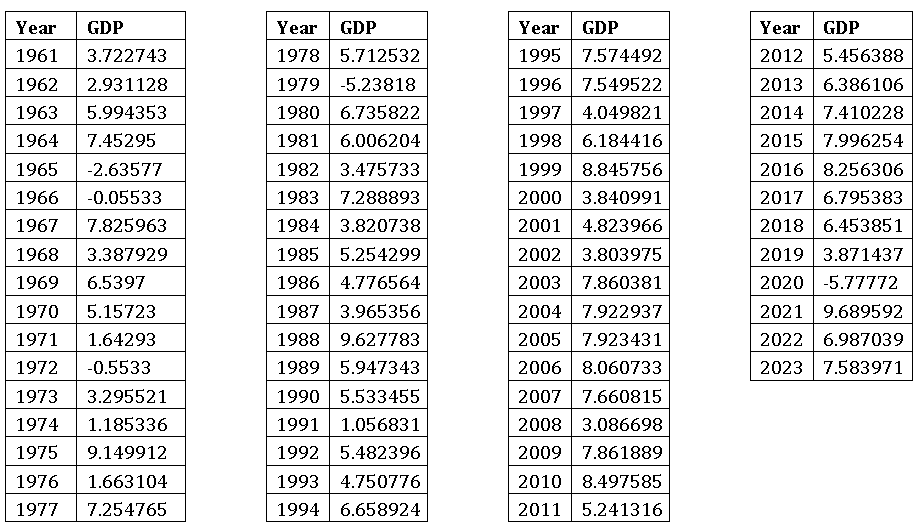
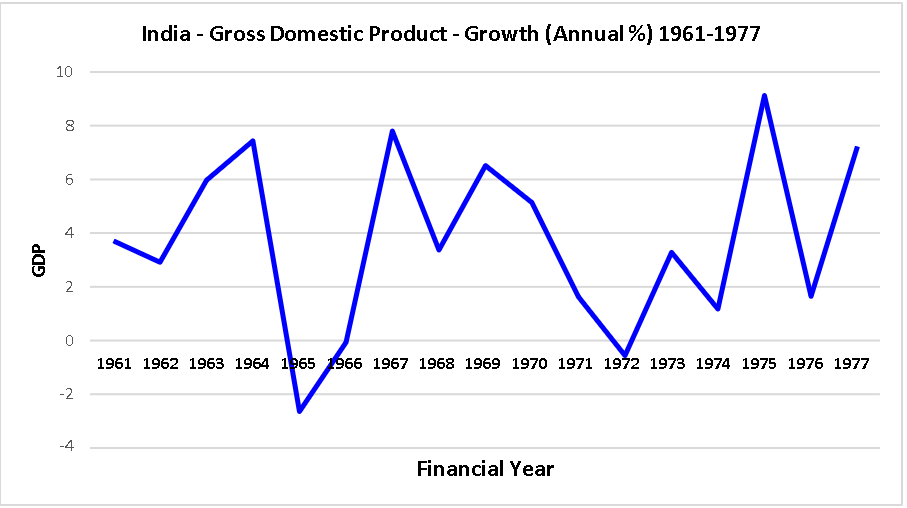
Figure 1: India – Gross Domestic Product – Growth (Annual %) 1961-1977
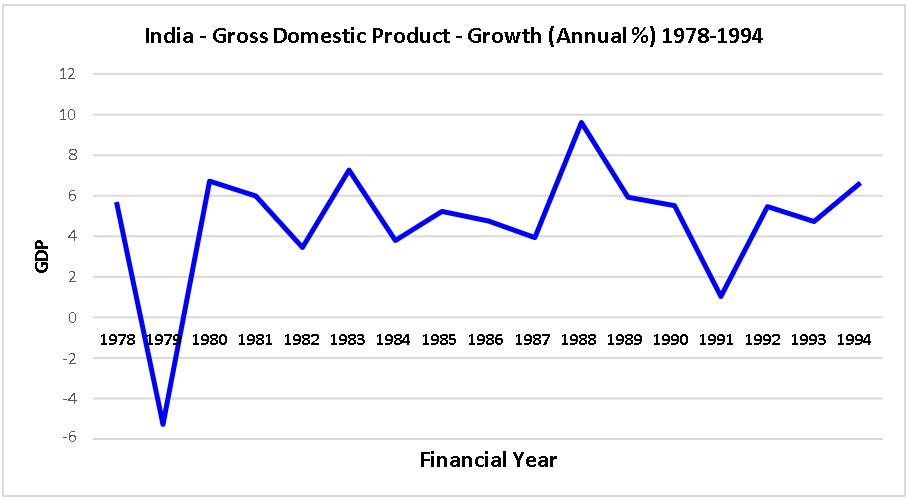
Figure 2: India – Gross Domestic Product – Growth (Annual %) 1978-1994
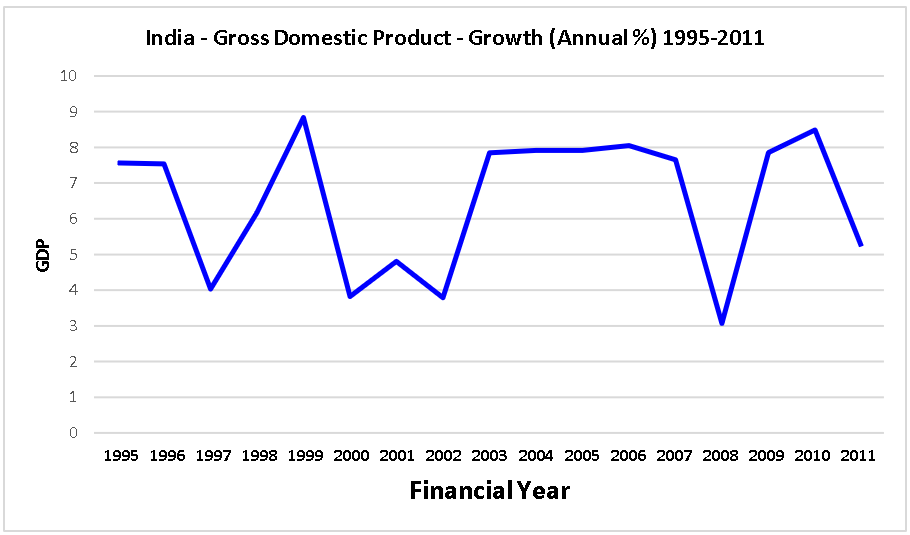
Figure 3: India – Gross Domestic Product – Growth (Annual %) 1995-2011
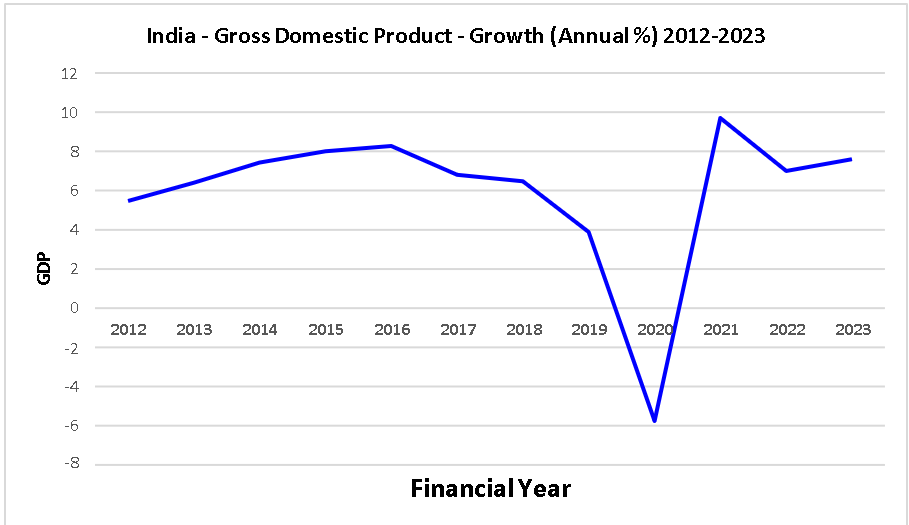
Figure 4: India – Gross Domestic Product – Growth (Annual %) 2012-2023
Addressing the challenges faced by the Indian economy requires a multifaceted approach that involves policy reforms, strategic investments, and societal changes. The way forward to overcome these challenges can be outlined through a series of recommendations and strategies across different sectors of the economy:
- Enhancing Economic Growth
- Diversify the Economy: Encourage diversification away from agriculture-dependent livelihoods into manufacturing and services, particularly in high-growth areas like technology and digital services.
- Promote Foreign Direct Investment (FDI): Simplify regulations and provide incentives for foreign companies to invest in key sectors, creating jobs and transferring technology.
- Addressing Unemployment
- Skill Development: Invest in large-scale skill development programs to make the workforce suitable for modern industries, particularly in areas like IT, healthcare, renewable energy, and manufacturing.
- Support for Small and Medium Enterprises (SMEs): Provide easier access to credit, tax benefits, and training programs to SMEs, which are a major source of employment.
- Tackling Inflation
- Monetary Policy: Use monetary policy tools judiciously to control inflation without stifling growth. This includes managing interest rates and controlling money supply in a balanced manner.
- Supply Chain Improvements: Invest in infrastructure to improve the supply chain, reducing costs and time in the transportation of goods to manage inflation better.
- Managing Fiscal Deficit and Public Debt
- Expenditure Rationalization: Prioritize government spending towards high-impact projects that stimulate economic growth and ensure social welfare, while cutting down on non-essential expenditure.
- Tax Reforms: Simplify the tax structure to improve compliance, widen the tax base, and introduce measures to combat tax evasion.
- Promoting Sustainable Development
- Renewable Energy: Accelerate investments in renewable energy sources to reduce dependence on imported fossil fuels and combat climate change.
- Sustainable Agriculture: Promote sustainable agricultural practices that increase productivity without degrading the environment.
- Strengthening Infrastructure
- Digital Infrastructure: Invest in digital infrastructure to support the growth of the digital economy, enhance e-governance, and improve public service delivery.
- Physical Infrastructure: Accelerate the development of roads, ports, railways, and urban infrastructure to improve connectivity and efficiency.
- Reforming Education and Healthcare/li>
- Education System Overhaul:Revamp the education system to focus more on critical thinking, creativity, and practical skills that are relevant to the evolving job market.
- Universal Healthcare: Expand access to affordable healthcare services to improve public health outcomes and reduce the economic burden of healthcare expenses on families.
- Enhancing Social Security
- Social Safety Nets: Expand and improve social safety nets including unemployment benefits, pension schemes, and health insurance to protect the vulnerable sections of society.
- Encouraging Innovation and Research
- R&D Investment: Encourage investment in research and development across sectors, particularly in technologies that can drive future economic growth.
- Governance and Institutional Reforms
- Reduce Corruption: Implement stricter measures to reduce corruption and improve the efficiency of public services.
- Judicial Reforms: Streamline judicial processes to ensure faster resolution of commercial disputes, thereby improving the business environment.
The way forward for the Indian economy involves not just policy and economic reforms but also a significant focus on social and environmental sustainability. By addressing these challenges holistically, India can ensure inclusive growth and development that benefits all sections of society.
Section 5: ConclusionThis brief study aims to give a comprehensive overview of the current challenges facing the Indian economy, grounded in data and analysis. From 1961 to 2023, India's GDP growth narrative reflects resilience and transformation amidst challenges. While the country has made significant strides towards becoming one of the largest economies globally, the focus must now shift towards sustainable and inclusive growth, ensuring that the benefits of economic progress reach all segments of society. As India navigates a complex global landscape, its ability to adapt and innovate will be pivotal for its economic future.
REFERENCES- Acemoglu, D. (2012). Introduction to economic growth. Journal of Economic Theory, 147(2), 545–550. https://doi.org/10.1016/j.jet.2012.01.023
- Becker, G. S., Michael, G., & Michael, R. T. (2017). Economic Theory. Routledge. https://doi.org/10.4324/9781351327688
- Dashkeev, V. V., & Turnovsky, S. J. (2023). Tax systems and public borrowing limits in a fiscal union. International Tax and Public Finance, 30(2), 351–395. https://doi.org/10.1007/s10797-021-09708-8
- Ekins, P., & Zenghelis, D. (2021). The costs and benefits of environmental sustainability. Sustainability Science, 16(3), 949–965. https://doi.org/10.1007/s11625-021-00910-5
- Clark Johnson, H. (2017). Chapter 1. The Industrial Economies in Perspective. In Dollars and Change (pp. 1–52). Yale University Press. https://doi.org/10.12987/9780300147902-003
- Hill, T. P. (1977). On goods and services. Review of Income and Wealth, 23(4), 315–338. https://doi.org/10.1111/j.1475-4991.1977.tb00021.x
- Ministry of Finance, Government of India. (2024). Economic Survey 2023–24.
Citation:Mazy. R. K. C. (2024). A brief study on Challenges to the Indian Economy: The way forward. Global Research Journal of Social Sciences and Management, 2(2), 79–88.
Copyright:©2024 Mazy. R. K. C. This is an open-access article distributed under the terms of the Creative Commons Attribution License ( https://creativecommons.org/licenses/by/4.0/ ), which permits unrestricted use, distribution, and reproduction in any medium, provided the original author and source are credited.