

Personality as a Predictor of Prosocial Behaviour in Male and Female Students
Afifa Rana1, S. Suneetha Kumari2
1Department of Psychology, Central University of Andhra Pradesh, Anantapuramu, India.
1Email: afifarana0987@gmail.com
------------------------------
This research work investigates the relationship between personality traits and pro-social behaviour among male and female students, with a particular focus on examining the potential correlation between personality traits and pro-social behaviour. A sample of 100 data was collected to explore the predictive power of various personality traits on pro-social behaviour. The study found no significant gender differences in pro-social behaviour, suggesting that both males and females exhibit similar levels of altruistic tendencies. Furthermore, the analysis revealed a positive correlation between neuroticism, extraversion, conscientiousness with pro- social behaviour. Specifically, individuals scoring higher in neuroticism and extraversion tended to demonstrate greater pro-social behaviour. However, no significant correlation was found between openness, agreeableness, and pro-social behaviour. Moreover, through regression analysis, it was identified that neuroticism and extraversion emerged as significant predictors of pro-social behaviour. These findings highlight the importance of certain personality traits in predicting altruistic tendencies among students, regardless of gender. Overall, this research work contributes to the existing literature by shedding light on the role of personality in shaping pro-social behaviour among male and female students. The implications of these findings are discussed about understanding and promoting altruistic behaviour in educational settings.
Keywords:Pro-social behaviour, Personality, Neuroticism, Extraversion, Openness to experience, Agreeableness, Conscientiousness.
1. INTRODUCTIONPsychology continues to focus on human behaviour in modern society, particularly when it originates to how it affects social interactions and the general well-being of the community. Prosocial behaviour, defined as an intentional activity done voluntarily to benefitothers, is one of the various facets of human behaviour that is crucial to creating harmonious communities and promoting beneficial social dynamics. Researchers have focused a great deal of work on understanding the elements that drive prosocial behaviour, and personality has emerged as a powerful predictor in this area, particularly in teenagers and young adults.
The role that gender plays in the research topic of “personality as a predictor of prosocial behaviour” is multifaceted and significant. Multiple studies have looked into the connection between personality traits and prosocial behaviour, The impact of gender adds another layer of complexity to this dynamic. Several suggest that research suggests that “gender norms” and “societal expectations” often shape how individuals express prosocial behaviours and manifest their personalities. Historically, gender stereotypes have depicted women as more nurturing and empathetic, traits that align closely with many aspects of prosocial behaviour. Consequently, It was shown that women typically occupy more overt forms of prosocial behaviour, such as helping or comforting others, than men.However, it's essential to identify that these dissimilarities may also reflect societal conditioning rather than inherent biological disparities.
Moreover, the exchange between gender and specific personality traits can further modulate prosocial behaviour. For instance, traits like agreeableness and empathy, typically linked with prosocial tendencies, might be expressed differently based on gender. While women often exhibit higher levels of these traits on average, societal pressures may constrain men from openly displaying such characteristics, leading to variations in how prosocial behaviours are demonstrated across genders. Also, studies have shown that particular character attributes could predict different forms of prosocial behaviour for men and women. For example, although agreeableness may predict altruistic acts in women, traits like extraversion or dominance might significantly drive prosocial behaviours among men.
Understanding the relationship between gender and personality in the framework of prosocial behaviour is crucial for developing more nuanced interventions and promoting social cohesion. By acknowledging how gender norms influence the expression of personality traits and subsequent behaviours, researchers can design interventions tailored to address specific societal expectations and encourage a more inclusive approach to prosociality. Moreover, recognizing the diversity within genders and the fluidity of personality expression can lead to a deeper comprehension of how individuals, regardless of gender expectations, contribute to the welfare of others. Ultimately, by unraveling the complexities of gender and personality in prosocial behaviour, researchers can pave the way for more equitable and effective strategies to foster kindness and compassion in society. This research work investigates the compound link between prosocial conduct and personality qualities in adolescents and young adults. By examining existing literature, empirical investigations, and utilizing theoretical frameworks, this study endeavors to clarify the intricate relationship between many components of personality and prosocial behaviour. It also aims to investigate the possible ramifications of these discoveries for improving social interventions and encouraging constructive youth development.
Examining personality as a predictor of prosocial conduct in teenagers and young adults is important because it can offer valuable perspectives on fundamental processes that motivate selfless deeds and cooperative endeavors. Understanding how personality factors influence an individual's tendency for prosocial conduct can help guide targeted treatments to encourage civic involvement, empathy, and compassion as people traverse the intricacies of moral decision-making and social interactions.
This research work's first part will offer a thorough summary of the theoretical underpinnings of the connection between prosocial conduct and personality. Using foundational ideas like trait-based models of personality, evolutionary psychology, and social learning theory, this section will clarify the theoretical framework that directs further empirical research.
After presenting the theory, the research work will conduct a thorough analysis of empirical studies investigating the connections among personality characteristics and different types of prosocial behaviour in teenagers and young adults. Through the integration of results from many research projects, this part seeks to uncover broad trends, pinpoint possible moderators or mediators, and highlight domains that require additional investigation.
The research work will next go over the methodology used to carry out a fresh empirical examination of how prosocial behaviour and personality relate to one another in a group of young adults and adolescents. The methods used in participant recruitment, data collecting, and statistical analysis will be described in this section, in addition to the application of strong study designs, extensive measurement tools, and rigorous analytical methodologies.
The research work will present the empirical study's findings after data collection and analysis, clarifying the interactions among specific personality characteristics (like empathy, agreeableness, and conscientiousness) and various prosocial behaviours (like sharing, helping, and volunteering) in young adults and adolescents. The significance of these findings for the development of theories, social policies, and intervention measures targeted at promoting prosocial development in juvenile populations will also be covered in this part.
Personality has been used as a predictor, throughout the world since time immemorial for its influence on other psychological traits. Several researchers proved how personality predicts human behaviour. Though human behaviour is dynamic and almost impossible to predict as it keeps on varying based on the circumstances, prior events, and many other environmental and situational factors, knowing one’s personality will help to predict the tendency of the behaviour in situations, which means it creates an elastic boundary and enable an individual to behave within that certain boundary which has certain limits of stretching even in exceptional situation. In research the Big-Five personality traits are used as predictors, where extraversion is found to be a talking, social status, and voluntarism; agreeableness is a predictor of less swearing, being less likely to divorce, volunteerism, less criminal behaviour; again the trait of conscientiousness predicts college GPA, success in an occupational field, less drug addiction, and also less likely to get divorced; neuroticism is linked with more prone to depression, less emotional stability, and fight in romantic relationships; the last trait openness to experience predicts more traveling/studying abroad and being more likely to choose an artistic or creative career and also vote for candidates with liberal thinking (Ozer & Benet-Martinez, 2006; Roberts et al., 2007; Mehl, Gosling, & Pennebaker, 2006).
Personality is defined by different scholars and researchers in many ways taking different perspectives. Initially, the term "personality" originates from the Latin word “persona”, a mask that is worn by performers or actors during the portrayal of a character on on the stage. Thus, personality can be defined as an arrangement or manner of characteristics that can be revealed by external appearances. Yet, this is a conservative way of defining personality, it isn’t just the mere outward characteristics that determine the character of a person but is a wholesome including all the characteristics that are possessed by an individual both external that are visualized and internal, the qualities that are “unique” to an individual, and vary from person to person, in other words, it could be argued that “personality” is an unique possession of characteristics of an individual. So, personality is not only what we see but also what is observed through behaviour.
The famous definition of personality was given by Allport (1961), who says that “Personality” refers to the ever-changing arrangement of psychological and physical systems within an individual, which influence how they adapt uniquely to their surroundings. Personality is a fluid arrangement, emphasizing its constantly evolving nature, and also signifies that the physical and mental systems are interconnected, resulting in unique arrangements that differ from individual to individual due to their interconnectedness. As an outcome of psychological and physical factors shaping people's behaviour, the definition illustrates how complex and individual people's interactions with their surroundings are.
Again, Eysenck (1952), defined Personality as the relatively consistent and lasting structure of an individual's character, temperament, intellect, and physical attributes, which shape their distinct adaptation to their surroundings. This illustrates the complexity of disposition as an amalgamation of factors that collectively shape an individual's identity and Engagement with the environment. First, it emphasizes that personality traits typically remain relatively stable and durable, suggesting that even as individuals can evolve over time, their core characteristics remain the same. The inclusion of character, temperament, intellect, and physique underpins this stability, representing a broad spectrum of characteristics that contribute to the person's identity. Temperament encompasses innate behavioural traits and emotional responses, whereas character embodies moral values and ethical principles. Physical attributes and psychological well-being are sometimes referred to as physique, whereas cognitive ability and problem-solving techniques are included in intellect. When merged, these dimensions form a unique configuration that shapes an individual's perception and responds to their surroundings. Secondly, the term "unique adjustment" emphasizes the bespoke nature of this exchange, acknowledging that every individual's personality shapes their reactions to outside stimuli in unique ways. In the conclusion, the statement emphasizes how environment and personality interact intricately, highlighting how important it is to comprehend these dynamics to understand how people behave and adapt.
Numerous theories have tried to explain personality, be it the type, trait, Freud’s psychoanalytic theories, Jung’s analytical psychology, or individual psychology, also Erickson’s psychosocial theories, Horney, Roger, and other theorists, even today research is focused on deciphering personality. It’s impossible to document all those theories altogether without any specific focus. This is why the main emphasis of this investigation is to give readers an overall idea about the trait theories encompassing the “Five Factor Model of Personality”, which will help to influence one's perspective about the research work.
One of the initial and most prominent psychologists who contributed to trait theories is Allport. Allport carried out studies emphasizing human characteristics and individual motives. Three tiers of characteristics comprised his theory.
- a)cardinal trait is an uncommon, distinctive quality that only a select few people possess and which profoundly affects and shapes their behaviour in a variety of contexts. Mother Teresa's altruism, which was fundamental to her life and deeds, is given as an example.
- b)Central trait: These are more widespread general traits that have a substantial impact on an individual's behaviour. They usually have a number between 5 and 10. Examples include dispositions that affect behaviour, such as shyness and cheerfulness.
- c)Secondary traits: These are characteristics that seem only in particular circumstances and might not be expressed consistently in various settings. One instance cited is experiencing discomfort when confined. Raymond B. Cattell introduced a distinctive approach to understanding personality, drawing from data sourced from individuals' life records, self-assessments, and standardized assessments. By analyzing this information, Cattell identified significant personality elements that exist in conjunction with n individuals and are also observed across different populations.
He characterised these factors into two main types: surface traits and source traits.
Surface traits refer to observable characteristics of an individual's behaviour that are easily noticed by others. These traits are essentially the outward actions and behaviours exhibited by an individual.
Alternatively, source traits are more fundamental and essential attributes that lead to surface traits. Cattell believed that these source traits were more crucial in shaping an individual's behaviour. Unlike surface traits,source traits are not readily apparent and can only be identified through comprehensive computer analysis of the collected data.
Cattell's distinction between surface and source traits is essential for understanding the complexity of personality. While surface traits provide observable patterns of behaviour, source traits delve deeper into the core aspects of an individual's personality, serving as the foundation for their overt actions. Through his approach, Cattell aimed to uncover the underlying structures of personality and how they manifest in behaviour.
Hans Eysenck proposed a comprehensive theory of personality that encompasses both trait and type aspects. He aimed to simplify the complexity of personality by reducing it to three major dimensions, which he believed were genetically influenced and present to varying degrees in everyone.
To achieve this simplification, Eysenck utilized factor analysis, a statistical technique that identifies common factors among groups of items. Through this method, he condensed a lengthy list of traits into three fundamental dimensions:
- a) Extroversion: This dimension measures an individual's sociability and their inclination to focus on the surroundings instead of their internal thoughts and experiences. Those high in extroversion tend to be outgoing, social, and seek stimulation from their surroundings.
- b) Neuroticism: Neuroticism reflects the level of emotional instability within an individual. It encompasses traits such as moodiness, anxiety, and unreliability. Individuals high in neuroticism are prone to experiencing negative emotions and may struggle with managing stress and maintaining emotional stability.
- c) Psychoticism: Psychoticism represents a person's level of tough-mindedness, including characteristics such as hostility, ruthlessness, and insensitivity. Those high in psychoticism may exhibit aggressive or antisocial tendencies and may have struggles in establishing intimate connections because to their lack of empathy and cooperation.
Eysenck's theory provides a structured framework for understanding personality variations and highlights the genetic underpinnings of these dimensions. By categorizing individuals according to their scores in these three areas, Eysenck sought to elucidate the core components of ‘personality traits’ and their impact on ‘behaviour’ and ‘interpersonal relationships’.
The “Big Five-Factor” modelThe most recent hyporesearch work in the area of personality was put forth by Paul Costa and Robert McCrae. They have created a five-factor personality model known as "The Big Five." The five criteria were seen in trait assessments throughout cultural research. It began with Campbell's significant studies in 1990, which established the framework for grouping personality traits into five overarching categories. The characteristics of conscientiousness, extraversion, agreeableness, openness, and neuroticism are all encompassed in the Big Five Theory. (Acronym OCEAN)
The Big Five's first dimension “Openness to Experience”, describes a person's openness to novel concepts, encounters, and unusual viewpoints. High degrees of openness are frequently linked to inventiveness, curiosity, and a readiness to experiment with other ways of thinking and expressing oneself. Alternatively, those individuals with low openness levels could favor routine, customs, and familiarity, exhibiting a more circumspect and conservative way of living (Campbell et al., 1993). Understanding individual variations in cognitive flexibility, adaptation, and invention depends heavily on this factor.
The second dimension, conscientiousness, concerns an individual's level of responsibility, organization, and self-discipline. Highly conscientious people have a profound feeling of responsibility and accountability and are typically methodical, goal-oriented, and diligent in their undertakings. Conversely, those people with low conscientiousness may experience difficulties with impulsivity, disorganization, and procrastination, which can make it difficult to finish tasks and achieve goals (Feist, 1998). Given that diligent people are more prone to succeed in jobs requiring dependability, attention to detail, and adherence to deadlines, this factor is crucial in predicting workplace performance.
The third component, extraversion, measures a person's assertiveness, friendliness, and preference for social interaction. Extraverted people are typically socially adept: Their source of energy comes from engaging with others and being gregarious, enthusiastic, and outgoing. According to Burke et al. (1993), they frequently take pleasure in attracting attention, engaging in group activities, and developing relationships with others. Conversely, introverted people are typically more quiet, introspective, and independent; they enjoy alone pursuits and need time to themselves to refuel.
The fourth dimension, agreeableness, includes qualities that are beneficial in interpersonal relationships, like cooperation, trust, and altruism. People with high agreeableness levels are understanding, caring, and respectful of the thoughts and feelings of others. In their interactions, they place a high value on harmony,cooperation, and understanding between people, which promotes healthy social dynamics and interpersonal ties (Barrick & Mount, 1991). Alternatively, individuals with low agreeableness levels may have inclinations toward scepticism, hostility, and self-interest, which can cause misunderstandings and conflicts in social situations.
The last and fifth component is neuroticism, which is related to the propensity to feel depressive, anxious, or easily stressed out. Elevated neuroticism is linked to mood swings, emotional instability, and increased susceptibility to perceived risks and difficulties. People with high levels of neuroticism may tend to worry, ruminate, and catastrophize, which can make it hard for them to deal with life's stresses (Bartram, 2005). People with low neuroticism, are more adaptive, emotionally resilient, and capable of handling stress and hardship.
It is critical to understand that each of these dimension’s functions as a continuum, with people differing in where they fall on each spectrum. Furthermore, the interaction of these factors can result in intricate behavioural patterns and distinctive personality features for every person. The “Big Five Factor Model” offers a thorough framework for comprehending the complex interplay of individual characteristics, behavioural tendencies, and interpersonal dynamics in a variety of contexts.
This personality model has its roots in groundbreaking studies carried out during the early 1900s that aimed to pinpoint the essential elements that underlie human personality. On the basis of lexical analysis and factor analysis of trait descriptors, early trait theorists like Gordon Allport and Raymond Cattell developed a variety of taxonomies of personality traits (Allport & Odbert, 1936; Cattell, 1943). These early studies served as a foundation for later investigations aimed to identify the key components of personality and create thorough models of trait organization.
Lewis Goldberg's work during the 1980s and 1990s was known to be among the most significant influences on the creation of the “Big Five Factor” Model. across order to regulate the fundamental aspects of personality across a variability of samples and cultural contexts, Goldberg completed a thorough factor analysis study employing self-report personality questionnaires, for example the Goldberg Personality Inventory (GPI) (Goldberg, 1981; Goldberg, 1990). After much investigation, he was able to identify five strong personality traits, which he named “Agreeableness, Extraversion, Conscientiousness, Openness to Experience, and Neuroticism”.
The “Big Five Factor” Model's broad acceptance can be ascribed to its cross-cultural validity, empirical robustness, and predictive power in numerous fields. The Big Five dimensions are universally and broadly applicable, as evidenced by the several investigations that have confirmed their stability and replicability over a variety of populations and measurement tools (McCrae & Costa, 1997; McCrae & Allik, 2002). Furthermore, Research has consistently demonstrated that the “Big Five” dimensions have predictive validity in predicting various results, including outcomes related to mental health, relationship satisfaction, career performance, and academic achievement (Ozer & Benet-Martinez, 2006; Roberts et al., 2007).
Numerous fields of study and practice, such as clinical psychology, personality psychology, organizational psychology and counseling, have embraced the ‘Big Five Factor’ Model. The ‘Big Five’ characteristics are a fundamental paradigm in personality psychology that allows researchers to examine individual differences in dispositional structure, development, and functioning. Researchers evaluate the ‘Big Five’ dimensions and look into their correlations, antecedents, and outcomes using self-report assessments like the NEO Personality Inventory (NEO-PI-R) and the ‘Big Five Inventory’ (BFI) (Costa & McCrae, 1992; John et al., 1991).
The ‘Big Five’ aspects are essential to understanding workplace behaviour, job performance, and organizational efficiency in organizational psychology. Numerous work-related outcomes, such as job satisfaction, job performance, leadership effectiveness, and career success, have been repeatedly demonstrated by research to be foreseen through the ‘Big Five’ traits (Barrick et al., 2001; Judge et al., 2002). Furthermore, the ‘Big Five’ dimensions have been related with different occupational roles and professional behaviours; that is, certain traits are more advantageous for performance in specific job contexts or professions (Salgado, 1997; Barrick et al., 2001).
The ‘Big Five’ dimensions are used in clinical psychology and counseling to diagnose mental diseases, organize treatment, and develop intervention methods along with analyzing personality pathology. Several research papers have indicated that specific personality characteristics, such as a high level of neuroticism and a low level of conscientiousness, are linked to a maximum risk of mental health issues, such as mood disorders, substance use disorders, and anxiety disorders (Lahey, 2009; Kotov et al., 2010). The “Big Five” characteristics are measured by clinicians to estimate the personality profiles of their clients, pinpoint their strengths and weaknesses, and customize interventions to meet their particular needs and difficulties.
The “Big Five Factor Model” is widely used and accepted, but it has not been without controversy and criticism.According to some academics, the Big Five dimensions may fall short of fully encapsulating the richness and depth of the human psyche, leaving out crucial elements like motivations, values, and self-concept (McAdams & Pals, 2006). Some have expressed doubts about the Big Five dimensions' cultural uniqueness and universality, arguing that its applicability may change depending on the cultural setting and population (Cheung et al., 2001; Church et al., 2014). Furthermore, several research investigations have questioned the incremental validity of the “Big Five” dimensions beyond conventional measures of accomplishment and intellect (Duckworth & Quinn, 2009).
Researchers have worked to improve and expand the “Big Five Factor Model” by adding other personality traits and facets in response to these critiques. For instance, the Honesty-Humility component of the HEXACO model, which was introduced by Lee and Ashton in 2004, accounts for individual variations in sincerity, fairness, and avoiding greed. A dimensional model of personality pathology that incorporates components of the Big Five dimensions with extra features pertinent to the diagnosis and categorization of personality disorders is also included in the DSM-5 different framework for understanding personality disorders (American Psychiatric Association, 2013).
This Model is a thorough and generally recognized framework for comprehending personality in people. Its five dimensions—conscientiousness, extraversion, agreeableness, neuroticism, and openness to experience— offer a methodical and empirically based taxonomy of personality traits that encompass the essential elements of individual variations in affect, behaviour, and cognition.
Pro-social behaviour
Psychology scholars People from diverse regions globally are currently focusing on positive psychology, which is a relatively new and emerging field of psychology Following the events of a well-known incident in the 1970s involving Kitty Genovese in the U.S, the concept of “pro-social behaviour” was first used (khon, 1990). Kitty Genovese fell victim to a brutal murder
in front of her house on March 13, 1964. Although many neighbors heard her calls for assistance, 38 of them did not act, which created a deep curiosity about what had caused their indifference and apathy (kohn,1990). The primary objective of social psychologists John Darley and Bibb Latane’s investigation was to determine why witnesses failed to react to the victim’s distress (khon, 1990). They found in their research that, the primary factors which influence helping behaviour is bystander apathy. In their research, they explained that the bystander effect is a phenomenon in which helping behaviour decreases with the rise in the number of individuals witnessing the distress of the victim (khon, 1990).
Participants in landmark research conducted by John Darley and Bibb Latane (1969) were put in various scenarios to assess their response in an emergency (khon, 1990). Contributors who were in the company of others were significantly less motivated to report the emergency During their time spent in a room filled with smoke. The bystander phenomenon can be elucidated by two major factors: the urge to behave in a socially acceptable manner, and the diffusion of responsibility, This shows that individuals are likely to feel less need to act since they believe that others in the situation share the blame (khon, 1990).
Furthermore, according to the study, observers are less likely to come forward in unclear situations, which increases the bystander effect (khon, 1990). In the case of Kitty Genovese, the inaction of the witnesses resulted as the incorrectly believing themselves to be witnessing a lover’s quarrel as opposed to being a serious life-threatening situation (khon, 1990). This tragic incident made the necessary to thoroughly understand the bystander effect and so to avoid getting into such a situation by introducing intervention and thus plays a vital role in enhancing social responsibilities.
Altruism vs pro-social behaviour
Pro-social actions, which include deeds like lending a hand, sharing, and consoling others, frequently yield social and psychological benefits for the individual performing it. These advantages can manifest in various forms, such as emotions of contentment, fulfillment, and social acceptance. Also, residing in a community that values pro-social behaviour might benefit people in the long run by encouraging a sense of belonging, cooperation, and support among those around them.
Even while pro-social activity has many benefits, researchers have encountered difficulty distinguishing wholly altruistic actions—that is, actions that benefit the recipient alone, with no expectation of return for the performance. According to the literature, altruism is any willing act done for the benefit of another person without thinking about oneself or getting recognition (Smith & Mackie, 2000; Batson et al., 2002; Aronson et al., 2004). However, because human conduct involves a complicated interaction of goals and rewards, it could be difficult to distinguish acts of pure altruism.
The idea of altruism has its origins in the concepts proposed by Auguste Comte, a French sociologist, who postulated believe people are naturally motivated to behave compassionately toward others (Lee, Lee, and Kang, 2003). Comte believed that the core human tendency to prioritize the well-being of others over one's interests is the source of altruism. This concept complies with the assumption that altruism entails selfless assistance motivated by a sincere wish to assist others (Aronson, Wilson, Akert, & Fehr, 2004).
Yet, it's essential to understand that pro-social action and altruism are distinctly separate ideas. Altruism emphasizes the lack of personal gain or expectation of reward for the practitioner, even while both entail deeds that benefit others. conver. Conversely, pro-social behaviour includes a wider variety of activities that could either be motivated by altruism or are intended to advance the welfare of others.
Scholars have investigated the fundamental mechanisms and reasons that constitute altruistic conduct. According to some, altruism is motivated solely by the desire to improve the welfare or lessen the suffering of others, with no hidden agendas (Hall, 1999). This viewpoint highlights the virtuousness of altruistic intentions and proposes that people can find fulfillment in helping others, independent of any material gains.
Conversely, some contend that societal and psychological elements including empathy, reciprocity, and social conventions might also possess an impact on altruism (Batson et al., 2002). For example, people might perform charitable deeds to fit in with society's norms, get over guilt feelings, or rise in the social hierarchy. Furthermore, empathy—a basic human quality entailing the capacity to comprehend and experience the feelings of others—can be a powerful force behind altruistic actions (Smith & Mackie, 2000).
Furthermore, processes of evolution may have created altruistic behaviour since cooperative and helpful people may benefit from advantages in reproduction or survival (Batson et al., 2002). According to this theory, altruism may have developed as a characteristic that helps groups survive and maintain social cohesiveness. Altruism and pro-social behaviour are significant elements of social dynamics and relationships. While pro- social activity often produces psychological and social benefits for the individual exhibiting it, altruism encompasses selfless deeds performed with no thought of gaining anything personally. Researchers keep looking into the underlying motives and mechanisms that underlie altruistic acts despite the difficulties in distinguishing only altruistic activities. This investigation sheds light on the complexity of human nature and social behaviour.
Pro-social behaviour has been explained by several theories, each of which provides a different perspective on the mechanics and reasons that underlie altruistic deeds.
Pro-social conduct is acquired by reinforcement and observation, argues Bandura (1977). Parents and other authority people serve as role models, exhibiting desired behaviours that are then reinforced by rewards or penalties (Bandura & McDonald, 1963; Batson, 1998). Pro-social behaviour is also reinforced by social acknowledgment in a group setting (Fisher & Ackerman, 1998).
Motivation Perspective:Based on the motivation of the helper, theorists differentiate between egoistic and altruistic pro-social conduct (Batson, 1991; Nelson, 1999; Piliavin & Charng, 1990). While egoistic activity is motivated by self-interest or group-related reasons, altruistic behaviour is driven only by the desire to enhance the well-being of another person (Batson, 1998; MacIntyre, 1967). While some researchers (Eisenberg & Mussen, 1989; Cialdini, Kenrick, & Bauman, 1976) believe that children's expectations and perceived consequences may have an impact on pro-social conduct, others (Jackson & Tisak, 2001; Tisak & Ford, 1986) stress the consequence of putting others' needs first.
Social identity theory:Giving to social identification theory, people identify with groups in command to boost their self-esteem, which causes them to favor the in-group and make selective social comparisons (Tajfel & Turner, 1986; Turner et al., 1987). According to Hogg and Abrams (1988), group identification encourages collaboration and conformity to standards, which in turn promotes pro-social conduct for the group's benefit (Ashforth & Mael, 1989; Kramer, 1993).
Biological perspective:From a biological perspective, pro-social conduct, empathy, and altruism are seen to be fundamental to society's ability to operate and may have hereditary roots (Plomin et al., 2001). As per twin studies, genetic factors constitute almost 50% of the variance in empathy and altruism (Rushton et al., 1986; Rushton, 2004).
Negative-State Relief Hyporesearch work:Matthews, & Allen, 1988), people are motivated to help others to relieve their feelings of despair. Pro-social activity can similarly be prompted by guilt or unfavorable feelings (Harris et al., 1975).
The Negative-State Relief Model is characterized by three main features: first, people feel empathic concern, which is an emotional response to another person's suffering; second, this concern is accompanied by feelings of sadness or distress in the helper; and third, helpers try to alleviate their negative feelings by assisting those in need.
The Negative-State Relief Hyporesearch work is supported by Cialdini's (1987) research, which shows that individuals having strong empathy were less expected to assist if they had received praise from researchers. Their spirits were affected by the compliments, which reduced their inclination to act in a way that would advance their mood. This research implies a close relationship between the incentive for pro-social conduct and emotional state control.
Furthermore, Harris et al.'s (1975) research demonstrates that guilt might enhance the chance of helpful activity, which lends more credence to the Negative-State Relief Hyporesearch work. For instance, after confessing their sins in church, people could be more likely to give money since helping others lessens their feelings of shame.
Batson proposed the Empathy-Altruism Hyporesearch work in 1987 and expanded on it in 1991. It states that when someone is in need, empathic feelings encourage altruistic behaviour. In keeping with this theory, people who own empathy towards others are more inclined to be driven to make an effort to lessen their suffering, even if it means incurring personal expenses (Batson et al., 2002). In this view, an individual's altruistic urge to help those in need is stronger the more empathic emotion they have experienced.
In support of the Empathy-Altruism Research studies like the one done in 1982 by Toi and Batson provide the basis for hypotheses. Within this study, participants listened to a recorded interview with a student who purportedly was in a major accident and was having trouble in class because of their injuries. The individuals' perceived costs of assisting were also adjusted by the researchers, as was their level of empathy. The findings validated the hyporesearch work by demonstrating that people with strong empathy were more willing to assist the injured student, regardless of the expenses involved, as opposed to people with low empathy, who only assisted when the costs of not assisting were very high.
This study explains in what way people can be inspired to act pro-socially, even if it means making compromises in their own lives, by empathy. The Empathy-Altruism Hyporesearch work sheds light on how empathy influences altruistic behaviour and offers important insights into the psychological processes that underlie helpful behaviour. Moreover, the hyporesearch work is validated by actual data from studies such as Toi and Batson, which shows how applicable it is in practical situations.
As per the Empathic-Joy Hyporesearch work, which was explained by Smith, Keating, and Stotland in 1989, pro-social behaviour is largely motivated by empathy, or the capacity to comprehend and experience another person's emotions. This theory states that, when someone who has empathy for someone in need can meet that person's needs, they are more likely to enjoy vicarious happiness and comfort. The helper receives this vicarious happiness as a reward, which increases their incentive to assist.
Three prominent characteristics are proposed by the hyporesearch work:
Empathic concern is felt by those who assist; it is the capacity to understand another person's emotional state and result in a sincere wish to ease their suffering.
Their consideration for the requirements of others results in this concern: The helper's sensitivity to the requirements of the person in distress determines the extent of their empathic concern. Persons with a superior ability to read the emotional clues of others are more expected to feel more sympathetic worry.
Relieving someone else's sorrow brings forth a feeling of delight and subsequently relieves the helper's empathic concern: Helpers feel relieved and satisfied when they successfully ease the recipient's anguish; this, in turn, lessens their distress and heightens their satisfaction.
This theory asserts that the sense of delight that follows an act of empathy are important factor in inspiring people to act in pro-social ways. Helping others brings a sense of fulfillment that strengthens altruistic tendencies and encourages people to continue doing pro-social things. Empathy and emotional construction are critical for promoting altruistic behaviour, according to studies that support the Empathic-Joy Hyporesearch work (Smith et al., 1989). Furthermore, social psychology research has produced empirical proof of the influence of vicarious emotions—like happiness and relief—on helpful behaviour (Stotland, 1969). All things considered, the empathic joy Hyporesearch work provides insightful information on the psychological processes that underlie pro-social behaviour and the elements that encourage acts of kindness.
As per the Self-Efficacy Hyporesearch work, people's willingness to assist others, particularly in instances where they are in need, might be influenced by their proficiency in a given skill. Higher degrees of expertise in a certain environment can evoke feelings of more capability and confidence about their capacity to help others, which increases the probability of them providing aid, according to Midlarsky (1968). A higher willingness to assist may result from this better clarity about what to do, as well as from a lessened stress level and fear of making mistakes (Withey, 1962; Janis, 1962; Staub, 1971).
The Self-Efficacy Hyporesearch work essentially contends that individuals who adhere to the belief they are competent and self-assured and are more prone to have faith that they can effectively help others in need. People who think they can make a positive change in the world might be more prone to participate in pro-social behaviours due to their view of self-efficacy. The hyporesearch work provides a thorough understanding of how self-efficacy shapes altruistic behaviours by integrating ideas from other studies on competence, confidence, and helping behaviour.
Numerous factors determine pro-social behaviour. Analyzing the influence of different factors will shed light on the present research and will help the readers to connect different factors and their impact on pro-social behaviour.
Various factors influencing how individuals engage engage with and assist others in their social surroundings are incorporated into the idea of pro-social behaviour. Physical attractiveness is one such aspect that has been demonstrated to possess a substantial impact on how people are viewed and handled by others (DeVito, 1976). DeVito (1976) defined attractiveness in several ways, including behaviour, psychological qualities, and physical appearance. According to research, those who are physically appealing tend to have a higher probability than those who do not get help from others (Harrell, 1978). This phenomenon can be explained by cultural norms and expectations, according to which handsome people are typically treated better because it is considered that they lead better lifestyles (Berscheid, Walster, & Bohrnstedt, 1973).<
Furthermore, it is remarkable how family and resemblance affect pro-social behaviour (Penner et al., 2005; Graziano et al., 2007). According to Grabiano et al. (2007), people tend to act pro-socially towards others who resemble them or whom they see favorably. This includes family members. This tendency could be a result of reciprocity, obligation, and emotional attachment in family interactions (Graziano et al., 2007). Moreover, attitude similarity acts as a kinship heuristic cue, promoting pro-social behaviour even towards strangers (Park & Schaller, 2005).
Another factor influencing pro-social behaviour is religion; Individuals who adhere strongly to their faith and have strong humanitarian beliefs tend to be generous and altruistic (Burnett, 1981; Pessemier et al., 1977). This suggests that moral and religious convictions have a big influence on how people behave in a pro-social way. Many scholars (Yodrabum, 2005; Hardy and Carlo, 2005; Batson et al., 1993) claim that moral reasoning, sharing, pro-social behaviour, religious experiences, and faith practices cover a wide range of activities that are meant to help people or communities (Batson, 1998). Conversely, there is a widespread belief that individuals tend to be generally kind, cooperative, considerate, and reliable and that those who identify as religious are expected to exhibit these traits.
Furthermore, it has been exposed that empathy and altruistic behaviour are predisposed by the victim's perspective (Batson et al., 1997, 2003). People who put themselves in the victim's shoes show more empathy and are more inclined to do good deeds for them (Batson et al., 1997, 2003). This emphasizes how empathy and considering other people's perspectives can inspire pro-social behaviour.
The recognizable victim effect offers a further understanding of how people counter certain situations of need (Kogut & Ritov, 2005a, b; Small et al., 2006). Identifiable victims have a higher probability of receiving aid from others than abstract or statistical victims (Kogut & Ritov, 2005a, b; Small et al., 2006). People are more inclined to aid others who they believe deserve it, and this effect is mediated by deservingness beliefs (Weiner, 1980). In addition, pro-social behaviour is also shaped by good peer and friend influences, especially for young people (Barry & Wentzel, 2006; McGuire & Weisz, 1982).
Variations in pro-social behaviour are also influenced by age and gender, with females typically displaying higher levels of pro-social behaviour than males (Fabes et al., 1999; Holmgren et al., 1998). Furthermore, pro- social behaviour varies according to age, with older adolescents placing less significance on pro-social principles than younger adolescents (Beutel & Johnson, 2004; Kavussanu et al., 2006). But some pro-social traits, like moral judgment and the capacity for perspective-taking, might get stronger with age (Eisenberg et al., 2005).
Bringing a clear light on the discoveries of the present research, personality is a substantial predictor of pro- social behaviour. Certain psychological qualities and environmental circumstances are linked to individual variations in prosocial behaviour. Evidence for the presence of an altruistic or prosocial personality, which is defined by qualities like agreeableness, extroversion, low shyness, and sociability, was discovered by Eisenberg et al. (1999). However, other characteristics, such as perceived self-efficacy in helping situations, may also influence how prosocial behaviour manifests itself (Penner et al., 2005).
In addition, prosocial behaviour is set by the interaction between contextual factors and personality features. Similar to agreeable people, those who don't assist members of the outgroup. However, according to Gaziano et al. (2007), these characteristics do not always indicate helpful behaviour towards members of the ingroup.
Although some personality features seem to make people more likely to act in a prosocial manner, there isn't always a clear-cut link between personality and helpful behaviour.
A slight association between the various kinds of helping behaviours that children exhibit was discovered by Hartshorne and May (1929), indicating that personality factors alone do not encompass all of the variances in helping behaviour.
In the same way, studies have explored that those with high altruism scores are not invariably more willing to assist others compared to those with low scores.
In general, prosocial behaviour is shaped by personality qualities, but environmental conditions also interact with personality features to control whether or not people engage in helping behaviour. This demonstrates the complexity of human behaviour and the significance of taking individual variances and environmental impacts into account while researching prosocial behaviour.
Numerous gaps are also found while conducting literature review, this research addresses those gaps. One of the valid research gaps that is found in previous studies is a generalization, the results of those studies cannot be applicable in every culture. This study centers on samples from the Indian subcontinent, tries to find the existing relationship between pro-social behaviour and personality, and also tries to address all the research gaps. Overall, this correlational study mainly focuses on finding the connection between the big five domains of personality (i.e. openness to experience, conscientiousness, extraversion, agreeableness and Neuroticism) and pro-social behaviour.
Healthy social functioning focuses on pro-social activity involving deeds meant to benefit others. Its importance is seen in several areas, such as societal cohesiveness, community involvement, and interpersonal connections. It is vital to comprehend those variables that affect pro-social conduct, especially in the formative years of adolescence and early adulthood when people are navigating social integration and identity development. Pro-social tendencies are mostly shaped by personality, a complex construct that reflects permanent patterns of ideas, feelings, and behaviours. The empirical data on the connection between pro- social conduct in young adults and adolescents and personality factors is critically inspected in this review of the literature also the research gaps were identified which gave more validity for conducting this research.
Aristotle's claim that people are social creatures at their core provides the framework for comprehending pro- social action, which is explained as doing good deeds for others. To promote harmonious cohabitation and strong interpersonal ties within society, this conduct is essential. It involves a variety of aspects, including moral concerns, situational factors, social rewards, socialization, inheritance, and most importantly personality features (Trishala, 2021).
In the works on pro-social conduct, the ‘Big Five personality traits’ conscientiousness, extraversion,agreeableness, and neuroticism got a lot of attention.
This literature review aims to reconnoiter the body of knowledge about the predictive power of personality traits in pro-social behaviour in young adults and adolescents. This review objectives to clarify the degree to which pro-social attitudes in this demographic group are influenced by personality by combining the results of multiple studies.
Marked by characteristics including anxiety, emotional instability, and susceptibility to stress, neuroticism, it can be speculated that neuroticism might be negatively associated with pro-social behaviour. The primary objective of Trisha M. Nash's (2013) research aims to ascertain how neuroticism which is characterized by emotional instability, self-focus, and low level of emotional regulation modifies the association between moral traits and prosocial activities. The study's findings showed that the association between prosocial actions and empathy or perspective-taking was not substantially mediated by neuroticism. However, when taking into account the connection between thankfulness and prosocial activities, it was discovered that a moderate level of neuroticism predicted engagement in prosocial behaviours (Nash, T. M. 2013). This research demonstrates that neuroticism has no direct effect on pro-social behaviour, by acting as a moderator between gratitude and pro-social behaviour. Despite the importance and great insights this study only shed light on the moderating part of neuroticism in the association between moral characters and pro-social behaviour, and does not explore any direct relation between neuroticism and pro-social behaviour.
In another literature it was found that prosocial conduct has a greater positive affective impact on those with high neuroticism, which suggests that prosocial action may be especially helpful for individuals who are more exposed to experiencing unpleasant feelings and distress (Snippe, et.al. 2018), this means that people with high neuroticism feel more positive emotion compared to people who have low neuroticism. This literature shows that there is some link between prosocial behaviour and neuroticism, but the direct link is not analyzed. Unlike the above studies, an additional investigation was carried out to examine the connection between neuroticism and prosocial behaviour. It was discovered that there is a bad correlation between neuroticism and prosocial activities (Tariq and Naqvi,2020). The prime findings of this study coincide with my hyporesearch work.
Outgoingness, assertiveness, friendliness, and an inclination to seek excitement and stimulation are traits that are normally associated with extraversion. Extraverts are frequently people-oriented, where they obtain their energy from social connections, and are generally found to be chatty and animated in social situations. They might also be inclined to try new things and take chances. It can be hypothesized that there exists a positive association between extraversion and pro-social behaviour.
Rendering to research that supports the present research hyporesearch work, it was seen that extraversion exhibits a positive association with pro-social behaviour (Tariq, & Naqvi, 2020).
Conversely, another research suggests that there is a positive relationship between anti-social behaviour and extraversion (Siegman, 1963), which supports the idea that of anti-social behaviour has a positive link with extraversion then necessarily pro-social behaviour will not get along with extraversion, thus contradicts my hyporesearch work. Curiosity, inventiveness, originality, and a readiness to investigate novel concepts, viewpoints, and experiences are traits of being open to new experiences. Individuals who tend to have high openness are open-minded, adventurous, interested in the mind, and accepting of many ways of thinking and being. They frequently take pleasure in novelty, variety, and outlandish concepts. To gratify their thirst for knowledge, they can partake in pursuits like travel, the arts, or philosophical debates.
From the above explanation it can be depicted that there shouldn't exist any potential link between openness to experience and pro-social behaviour as they both deal with completely different characteristics of an individual that didn't coincide, similar findings are seen in a study (Mackenzie,2018), that significant engagement in pro-social behaviour doesn't predict by openness to experience.
Conversely, there is a research study conducted by MLMA, found that along with agreeableness, openness to experience is significantly and positively correlated to pro-social behaviour (Kline, 2019). This contradicts my hyporesearch work that openness to experience doesn't significantly correlate with pro-social behaviour.
Characteristics like friendliness, empathy, cooperation, and compassion define the agreeableness attribute. Individuals with high agreeableness levels are frequently cooperative, helpful, and sensitive to the feelings of others. They prioritize peace and gaining harmony with people, then they do on standing up for themselves. They cherish social ties and relationships and are frequently perceived as being kind, amiable, and caring. The above description of the trait denotes that, people high in agreeableness will be highly active in volunteering pro-social behaviour. Many studies have been led, the findings of which supported this notion. Agreeableness is one among the big five factor, which can be predicted to show the strongest relationship with pro-social behaviour compare to other pro social behaviour.
This proposition is supported in a meta-analytical study in which 770 paper were reviewed, the findings highlight that out of personality variables, agreeableness is the key factor to determine pro-social behaviour (Thielmann, et.al, 2020).
Another theoretical framework, also support the idea that out of all the five personality traits in FFM only agreeableness is closely related to pro-social behaviour (Habashi et.a, 2016).
There exist a significant gap in the above studies as they are based on, theoretical framework and meta- analysis, so lack true sample data. This research paper focuses to introduce those gaps as data have been collected and interpreted.
The qualities of organization, accountability, dependability, diligence, and a strong work ethic are characteristics of conscientiousness. High conscientiousness individuals are typically meticulous, methodical, and goal-oriented. They frequently set priorities for their work, focus on the little things, and aim for success. Because they feel obligated and responsible to others, conscientious people who are self-disciplined, organized, and dependable, found to participate in pro-social activities.
Supporting this idea, the findings of one study denote that only conscientiousness out of the five factors with emotional intelligence (E.I) had a significant independent and joint contribution to PBS(Pro-social Behavioural Scale) (Afolabi, 2013).
Though not direct, It has been identified that conscientiousness is linked to an increased cortisol reaction to stress, which specifies that those with high conscientiousness levels may react more physiologically to stressful events (Garcia-Banda, 2011). This literature proposes that not only them but anyone interested in trouble, acts as a stressor, individuals having high conscientiousness might react promptly compared to those with low conscientiousness.
There have also been further investigations carried out., but in those studies no noteworthy relationship was found contradicting my hyporesearch work.
There are also studies of two contrasting findings, using HEXACO-60 model of personality, one says there's only agreeableness that predicts pro-social behaviour (Hilbig et.al, 2014), whereas the other contradicts by stating their findings that, there is no statistically noteworthy correlations between HEXACO-60 personality and pro-social behaviour (Mackenzie,2018).
Another study by Carlo et.al, (2005) “The interplay of traits and motives on volunteering: Agreeableness, extraversion and prosocial value motivation”, found that agreeableness and extraversion were both related to volunteering. Specifically, higher levels of agreeableness and extraversion were related with greater engagement in volunteering activities.
Prosocial Value Motivation as a Mediator: The results indicated that prosocial value motivation partially mediated the relationships between agreeableness, extraversion, and volunteering. This means that, people who scored higher in agreeableness and extraversion will be motivated by prosocial values, which in turn increased their likelihood of volunteering.
Interaction Between Agreeableness and Extraversion: Interestingly, the study found that as agreeableness decreased, the relation between extraversion and prosocial value motivation to volunteer became stronger, which advocates that individuals who are less agreeable may rely more on extraversion to drive their motivation to volunteer.
Not only the fact that only Agreeableness is define as a true predictor of personality and other variables are kept out of comparison, there are many other research gaps, that needed to be introduced.
The study “Searching for the prosocial personality: A Big Five approach to linking personality and prosocial behaviour”, Habashi, et.al (2016), based on meta-analysis and theoretical framework only focused on agreeableness, there is a necessity to further exploration of other variables and a lack of true data, though this study provide insight but the limitations should be considered and introduced.
Similarly, a study conducted on Indian origin “Big Five Personality traits as determinants of pro-social behaviour”, conducted by Trishala, (2021). The research paper explores the link between pro-social behaviour and the “Big Five personality traits”. By conducting a theoretical review, the paper aims to elucidate which personality traits are related with a propensity for engaging in pro-social behaviour.
Theoretical frameworks suggest that, specific personality traits may predispose individuals to exhibit pro- social tendencies. For instance, individuals high in agreeableness are expected to demonstrate empathy, altruism, and cooperation, making them more likely to involve in helpful behaviours towards others. Similarly, conscientious individuals, characterized by organization, reliability, and self-discipline, may be inclined to engage in pro-social acts due to their sense of duty and responsibility towards others.
However, despite the theoretical underpinnings, empirical evidence regarding the relation between the ‘Big Five personality’ traits and pro-social behaviour remains somewhat inconsistent. While in some literature it was seen that significant associations between specific personality domains and pro-social tendencies, others have reported mixed or negligible effects.
While Trishala's (2021) paper contributes valuable insights by synthesizing existing literature on the relation between the ‘Big Five personality’ traits and pro-social behaviour, it also highlights an important research gap. Despite the theoretical expectations, these empirical researches have yielded inconsistent findings, suggesting the need for further investigation. Additionally, there exist a lack of research focusing on diverse cultural contexts and age groups, which could provide a more inclusive understanding of how personality influences pro-social tendencies across different populations.
Another similar study by Kline, et.al (2019). “Personality and prosocial behaviour: A multilevel meta-analysis”, employ a Bayesian multilevel meta-analysis (MLMA) to investigate the connection between personality traits and prosocial behaviour across 15 interdisciplinary experimental studies. Their analysis of nearly 2500 individual observations reveals that openness and agreeableness, two dimensions of the ‘Big Five personality’ traits, are found to be significantly and positively associated with prosocial behaviour. Importantly, this discovery is consistent across various model specifications and apects of prosociality, addressing previous contradictory findings in the literature. Notably, the authors find no evidence that monetary incentivization influences prosocial tendencies, contrary to prior research suggesting a reduction in prosocial behaviour under incentivized conditions.
By utilizing MLMA, the authors effectively incorporate individual-level data from multiple published research works while accounting for the graded structure of the data. The Bayesian approach employed allows for unbiased estimation of study-level effects, even with a comparatively small number of studies.
Still, while this study delivers valued insights into the relation between personality and prosocial behaviour, there are limitations to consider. For instance, the generalizability of the outcomes may be constrained by the specific experimental contexts and participant samples included in the analysis. Additionally, while MLMA offers advantages in analyzing multilevel data, it may not be fully address all the sources of heterogeneity crossways studies.
The research gap that lies in the necessity for more vigorous observed studies that employ rigorous methodologies to examine the nuanced relationship between definite personality traits and pro-social behaviour.
Therefore, future research should focus to address these gaps by employing longitudinal designs, incorporating cross-cultural perspectives, and utilizing more comprehensive measures of both personality and pro-social behaviour.
Another study by Tariq, F. T., & Naqvi, I. (2020), revealed several key insights into the relation between personality traits and prosocial behaviour among adolescents. Specifically, personality traits such as Conscientiousness, Openness, Extraversion, and Agreeableness, demonstrated a positive association with prosocial behaviour. Conversely, Neuroticism exhibited a negative relationship with prosocial behaviour.
Further analysis through regression models identified Extraversion, Openness, Agreeableness, and Conscientiousness as significant positive predictors of prosocial behaviour among adolescents. Among these traits, Agreeableness emerged as the sturdiest predictor of prosocial behaviour
. Conversely, Neuroticism was identified as a negative predictor of prosocial behaviour, indicating that adolescents with significant higher levels of Neuroticism may engage in fewer prosocial acts.
While Tariq and Naqvi's (2020) research study offer insightful information about the link between personality traits and prosocial behaviour among adolescents, several research gaps warrant consideration. Firstly, the study's focus on a specific cultural context (twin cities of Rawalpindi and Islamabad, Pakistan) may also limit the generalizability of findings to broader populations. Future research could explore cross-cultural variations in the association between personality and prosocial behaviour to better understand how the cultural factors influence these associations.
Additionally, the study primarily employs self-report measures to assess personality traits and prosocial behaviour, which may be subject to biases and inaccuracies, though in my research I have used self-report inventories but the authentication of data can be guaranteed as they were guided by me while filling up the form, so there shouldn't exist much discrepancies.
Personality traits are important indicators of pro-social conduct in teenagers and young adults, providing important context for understanding the intricacies of social interaction and human generosity. The literature review emphasizes how crucial it is to take into account the individual personality variations while examining the variables influencing the performance of altruistic deeds.
A strong predictor of pro-social conduct is agreeableness; those who score well on this attribute exhibit elevated levels of empathy, compassion, and collaboration. Their propensity to lend a hand, share, and volunteer greatly strengthens the relation that hold people together in their communities. In a similar vein, conscientiousness is essential for driving pro-social behaviour since people who are organized, accountable, and goal-oriented are more likely to follow social standards and take part in charitable activities. Pro-social behaviour is influenced by extraversion as well, especially in group-oriented activities and community assignation projects where gregarious, outgoing people flourish.
conversely, a high level in neuroticism might impede pro-social conduct since they can lead to emotional instability and bad affect, which makes it hard for them to sympathize with others and make a good contribution to social welfare. Openness to new experiences, however, has no effect on pro-social behaviour because these people are naturally inquisitive, liberated, and imaginative.
The complex interplay between pro-social conduct and personality highlights the need for specialized therapies and programs catered to the distinct characteristics and developmental phases of young people and adolescents. Through an awareness of the conduct in which particular personality traits impact altruistic inclinations, professionals can create interventions targeted at fostering compassion, empathy, and collaboration in young people.
The developmental trajectories of pro-social conduct and personality are best understood through longitudinal research, which provides important insights, into how these dimensions transform over time.Through monitoring people's personality traits and pro-social activities from youth to maturity, researchers can pinpoint crucial times for intervention and ascertain the best approaches for fostering constructive social behaviours.
Interventions that focus on personality qualities linked to pro-social conduct also have the potential to help future generations develop an empathy- and altruism-filled culture. Programs for socio-emotional learning that focus on prosocial behaviour, conflict resolution, and empathy development can give teenagers and young adults the skills they need to handle challenging social situations and make valuable contributions to their communities.
There exists a complex relationship between pro-social conduct and personality, with some features being important indicators of altruistic inclinations. Through the identification and comprehension of these correlations, scholars and professionals can create focused treatments that cultivate empathy, collaboration, and kindness in teenagers and young adults, ultimately promoting a more sympathetic and interconnected community.
This chapter outlines the methodology employed to explore the correlation between personality traits and prosocial behaviour in adolescents and young adults. The research design, hyporesearch work, research questions, participants, measures, procedures, and methodologies for data analysis are delineated in detail.
AimThis research aims to examine the role of ‘Big Five personality’ traits as predictors of pro-social behaviour in male and female college student.
Objective- Investigate the connection between personality attributes, such as agreeableness, empathy, altruism, and pro-social behaviour in adolescents and young adults.
- Examine how different dimensions of personality, such as extraversion, conscientiousness, and openness, influence various forms of pro-social behaviour, including volunteering, helping others, and charitable donations.
- Explore the role of gender in depicting prosocial behaviour.
A correlational research design was employed to examine the association between personality traits and prosocial behaviour. This design allowed for the exploration of the degree to which individual personality differences predict variations in prosocial behaviour among male and female students, later multiple regresiion analysis was conducted to find the potential predictor of prosocial behaviour, and an independent t-test was conducted to see the gender different in prosocial behaviour.
Research questionsHow do personality traits influence prosocial behaviour?
Is there any significant gender difference in determining prosocial behaviour?
Hyporesearch work- Neuroticism:
Null Hyporesearch work (H0): There is no significant relationship between Neuroticism and prosocial behaviour.
Alternative Hyporesearch work (H1): There is a significant negative relationship between Neuroticism and prosocial behaviour
- Extraversion:
Null Hyporesearch work (H0): There is no significant relationship between Extraversion and prosocial behaviour.
Alternative Hyporesearch work (H2): There is a significant positive relationship between Extraversion and prosocial behaviour.
Null Hyporesearch work (H0): There is no significant relationship between Openness to Experience and prosocial behaviour.
Alternative Hyporesearch work (H3): There is a significant positive relationship between Openness to Experience and prosocial behaviour.
Agreeableness:Null Hyporesearch work (H0): There is no significant relationship between Agreeableness and prosocial behaviour.
Alternative Hyporesearch work (H4): There is a significant positive relationship between Agreeableness and prosocial behaviour.
Conscientiousness:Null Hyporesearch work (H0): There is no significant relationship between Conscientiousness and prosocial behaviour.
Alternative Hyporesearch work (H5): There is a significant positive relationship between Conscientiousness and prosocial behaviour.
GenderNull Hyporesearch work (H0): There is no significant gender difference in the mean of prosocial behaviour.
Alternative Hyporesearch work (H6): There is a significant gender difference in the mean of prosocial behaviour.
Operational definition of variable- Pro-social behaviour: Observable actions intended to benefit others or society, including but not restricted to helping, sharing, volunteering, cooperating, and showing empathy towards others.
- Extraversion: A personality trait, characterized by sociability, assertiveness, enthusiasm, and a propensity to seek out social interactions and stimulation.
- Agreeableness: A personality trait, characterized by compassion, trust, cooperativeness, and a general inclination towards empathy and worry for the well-being of others.
- Conscientiousness: A personality trait, characterized by organization, responsibility, self-discipline, goal-directed behaviour, and a tendency to plan and adhere to rules and norms.
- Neuroticism: A personality trait, characterized by emotional instability, negative affectivity, anxiety, moodiness, and a tendency to experience distress and react strongly to stressors.
- Openness to experience: A personality trait, characterized by creativity, curiosity, intellectual engagement, openness to noble ideas and experiences, and a willingness to explore unconventional beliefs and values.
100
Age Range:16 years to 30 years
Sampling techniques:snowball
Research type:Correlational and regression analysis
Variables:Dependent Variable- 1. Pro-socialness
Confounding Variable: Gender
Predictor variable: Personality traits
- Neuroticism
- Extraversion
- Openness to experience
- Agreeableness
- Conscientiousness
The scales employed in this study are as follows:
Personality traits: NEO-FFI
Pro-social behaviour: Pro sociality scale
The Prosociality Scale, developed by Caprara and Pastorelli in 1993, typically comprises around 16 items intended to assess different aspects of pro-social behaviour, including helping, sharing, cooperation, and empathy (Caprara & Pastorelli, 1993). Participants rate the frequency of engaging in each behaviour on a Likert-type scale, spanning from "never" to "always."
Reliability, the consistency and stability of measurement over time, is often evaluated using internal consistency reliability, measured by Cronbach's alpha coefficient. Studies assessing the reliability, of the Prosociality Scale have consistently reported robust internal consistency, with the alpha coefficient typically ranging from, 0.70 to 0.90 or higher (Caprara et al., 2005a).
Validity, the accuracy with which a scale measures the intended construct, can be evaluated through various methods. Construct validity, which assesses whether the scale measures the intended psychological construct, has been supported by positive correlations between Prosociality Scale scores and other measures of empathy, cooperation, and altruism (Caprara et al., 2005a). For instance, prominent relations have been found between Prosociality Scale scores and measures such as the Interpersonal Reactivity Index (IRI) and the Volunteer Functions Inventory (VFI), indicating that people with elevated scores on the Prosociality Scale also tend to score higher on measures of empathy and volunteerism.
Criterion-related validity, the degree to which scale scores correlate with external criteria or measures, has been demonstrated by studies showing that Prosociality Scale scores predict outcomes such as volunteerism,charitable giving, and positive social relationships (Caprara et al., 2005a). People with higher scores on the Prosociality Scale are prone to participate in volunteer activities, donate to charity, and report higher levels of satisfaction in their interpersonal relationships.
The Prosociality Scale is a reliable and valid instrument for assessing pro-social behaviour, with strong internal consistency and evidence supporting its construct and criterion-related validity. By capturing various dimensions of pro-social behaviour, the scale provides researchers with a useful tool for understanding and measuring individuals' altruistic tendencies and their impact on social relationships and community well- being.
The NEO ‘Five-Factor Inventory’ (NEO-FFI) is a comprehensive personality assessment tool rooted in the ‘Five Factor Model (FFM) of personality, which posits five fundamental dimensions of personality: Neuroticism, Extraversion, Openness to Experience, Agreeableness, and Conscientiousness. Developed by Costa and McCrae, the NEO-FFI measures these traits through a series of Likert-scale items, providing insights into individuals' behavioural tendencies, emotional patterns, and cognitive styles. This questionnaire has been extensively studied, with research consistently affirming its reliability, validity, and cross-cultural applicability.
Reliability is a crucial aspect of any psychometric instrument, indicating the consistency and stability of measurement over time. In the instance of the NEO-FFI, internal consistency reliability is typically assessed using Cronbach's alpha coefficient, which reflects the degree of interrelatedness among items within each personality domain. Studies have dependably testified high levels of internal consistency for the NEO-FFI, with the alpha coefficient ranging from .70 to .90 across the five scales (Costa & McCrae, 1992).
Moreover, the NEO-FFI demonstrates good test-retest reliability, indicating that scores remain relatively stable over time. Test-retest reliability coefficients for the NEO-FFI scales are, in the range of .70 to .80 over intervals ranging from more than a few weeks to several months (Costa & McCrae, 1992). These findings suggest that the NEO-FFI yields consistent results upon repeated administrations, enhancing its utility in both research and clinical settings.
Validity denotes the degree to which a measurement instrument accurately assesses the construct and its significance to measure. The construct validity, of the NEO-FFI has been rigorously investigated through factor analysis, criterion-related validity studies, and convergent and discriminant validity analyses. Factor analytic studies consistently support the five-factor structure proposed by the FFM, with distinct clusters of items corresponding to each personality domain (McCrae & Costa, 1989).
Criterion-related validity studies have demonstrated the predictive validity, of the NEO-FFI in different domains of functioning, including academic performance, job satisfaction, marital stability, and mental health outcomes. For example, individuals whose scores are high on Conscientiousness tend to achieve higher academic grades and experience greater success in the workplace, Meanwhile, individuals with high scores on Neuroticism are more prone to anxiety, depression, and interpersonal conflict (McCrae & Costa, 2003).
Furthermore, convergent and discriminant validity analyses have supplied evidence for the distinctiveness of the NEO-FFI personality dimensions from other related constructs. For instance, while Neuroticism shares some overlap with measures of anxiety and depression, it remains conceptually distinct, capturing broader tendencies towards emotional instability and vulnerability to stress (Costa & McCrae, 1992).
Moreover, its reliability and validity, the NEO-FFI has set standards for different populations, allowing for meaningful comparisons of individual scores. Normative data provide context for interpreting an individual's standing on each personality dimension relative to others within the same population group. These standards are resulting from large-scale normative samples representative of the general population, ensuring the precision and dependability of comparative interpretations (Costa & McCrae, 1992).
Cross-cultural validation research has shown the robustness of the NEO-FFI across different cultural contexts, highlighting its applicability in diverse populations worldwide. Translated versions of the NEO-FFI have been validated in numerous languages and cultural settings, with findings consistently supporting the universality of the five-factor structure of personality (McCrae & Costa, 2003).
The ‘NEO Five-Factor Inventory’ (NEO-FFI) is a reliable and valid tool for assessing the ‘Five Factor Model’ (FFM) personality traits of Neuroticism, Extraversion, Openness to Experience, Agreeableness, and Conscientiousness. Through its rigorous psychometric properties, such as reliability, validity, normative data, and cross-cultural applicability, the NEO-FFI offers a thorough framework for comprehending individual personality differences. This instrument has been extensively utilized in research, clinical practice, and organizational settings, enhancing our comprehension of human behaviour and informing interventions aimed at enhancing psychological well-being and interpersonal functioning.
This study aims to examine the complex interplay among personality characteristics and pro-social behaviour among adolescents and young adults. Pro-social behaviour encompasses a range of voluntary actions intended to benefit others or society as a whole, such as helping, sharing, cooperating, and empathizing. Understanding this relationship is crucial for elucidating the elements that contribute to positive social interactions and community engagement during the formative stages of development.
By examining how individual differences in personality traits influence pro-social behaviour, this study aims to illuminate the underlying mechanisms that shape individuals' capacity for empathy, altruism, and cooperation. Gender is pivotal as it is characterized by significant psychological and social differences, making it imperative to explore how personality attributes contribute to the expression of pro-social tendencies.
The discoveries of this study carry many implications for both theoretical understanding and practical applications. From a theoretical perspective, elucidating the interplay between personality attributes and pro- social behaviour contributes to our knowledge of human social behaviour and the processes underlying interpersonal interactions. By identifying which personality traits, are most strongly associated with, pro- social behaviour, researchers can refine existing theories and models of personality within the realm of social psychology.
Practically speaking, the outcomes of this research can guide the creation of interventions aimed at promoting positive social interactions and fostering inclusive communities among adolescents and young adults. By tailoring interventions to individuals' personality profiles, practitioners can develop different approaches that are more well-organized strategies for cultivating pro-social behaviours and enhancing social cohesion within communities. Furthermore, comprehending how ‘personality traits’ interact with situational factors to influence pro-social behaviour can guide the implementation of targeted interventions in specific contexts, such as schools, workplaces, and community organizations.
This study aims to further our comprehension of the intricate dynamics among personality traits and pro- social behaviour among adolescents and young adults. By adopting a comprehensive methodology that integrates quantitative analysis with ethical considerations, the study aims to generate insights that have both theoretical relevance and practical applications for fostering positive social interactions and community engagement among young people.
Ethical Considerations: Ethical approval is obtained from the ‘Institutional Review Board (IRB) before data collection. Informed consent is obtained from all participants, emphasizing their voluntary participation and the confidentiality of their responses. Measures are implemented to protect participants' anonymity and reduce any probable risks related to their participation in the research study.
Data Collection:
Participants complete self-administered questionnaires assessing ‘personality traits’ and ‘pro-social behaviour’ in a controlled setting. Clear instructions are provided, and participants are assured of the confidentiality and anonymity of their responses.
Data Analysis: Statistical analysis is conducted using appropriate techniques, such as correlation analysis and multiple regression, to explore the predictive connection between personality traits and pro-social behaviour. A comparative analysis was also conducted, independent t-test, to find the potential variations between genders in prosocial behaviour. Potential demographic factors are reported for the analysis to isolate the unique contribution of ‘personality traits.Limitations
Sampling Bias: Convenience sampling may limit the applicability of the findings to broader populations.
Self-Report Measures: The reliance on self-report measures may introduce response prejudices and the tendency to present oneself favorably effects.
Cross-Sectional Design: The study's reliance on correlations precludes establishing causality between personality traits and pro-social behaviour.
This chapter outlined the methodology employed to explore the function of personality as a predictor of pro- social behaviour in adolescents and young adults. By employing a rigorous research design and adhering to ethical guidelines, the study aims to enhance our comprehension of the factors that influence positive social interactions and community engagement among young people.
Result and DiscussionThis chapter investigates the practical investigation into the connection between personality traits and prosocial behaviour. The research work topic, "Personality as a Predictor of Prosocial Behaviour," seeks to unravel how individual differences in personality dimensions influence one's tendency to engage in altruistic actions for the benefit of others. By presenting and analyzing the obtained results, this chapter aims to look at the predictive power of various personality traits in fostering prosocial tendencies. Through a thorough exploration of the collected data, this chapter contributes to understanding the underlying mechanisms driving prosocial behaviour, offering insights that could inform interventions and future research efforts in the field.
Table: Pearson correlation between neuroticism and prosocial behaviour

In the above table (Table:1), The Pearson’s correlation coefficient, for 0.292 indicates a moderately positive correlation in between pro-social behaviour and neuroticism. This indicates that those with greater levels of neuroticism tends to exhibit slightly greater levels of pro-social behaviour, meanwhile, individuals with lower levels of neuroticism tend to display slightly lower levels of pro-social behaviour.
The significance level (p-value) of 0.003 indicates that this correlation is statistically significant. This means there is only a 0.3% probability of observing a correlation coefficient of 0.292 or higher by random chance alone if there is no true association between pro-social behaviour and neuroticism in the population. Therefore, we reject the ‘null hyporesearch work’ (H0) that there is no discernible relationship between pro- social behaviour and neuroticism in favor of the alternative hyporesearch work (H1) that there is a, statistically noteworthy connection between the two variables.
This statistical significance provides confidence that the observed correlation, is not merely due to random variation or sampling error but rather reflects a genuine association between pro-social behaviour and neuroticism. Nonetheless, it's crucial to recognise that correlation does not imply causation, and there may be other factors at play that influence both variables or act as mediators in their relationship.
In the Indian subcontinent, the observed correlation between pro-social behaviour and neuroticism could be attributed to various cultural, social, and psychological factors. One possible explanation is the influence of cultural values emphasizing collectivism and social harmony. In this framework, individuals might feel a heightened sense of responsibility towards others and a desire to maintain social cohesion, leading them to participate in pro-social behaviours as a method of fostering community well-being.
Furthermore, societal expectations in the Indian subcontinent may place a strong emphasis on altruism and compassion, particularly towards family members, neighbors, and broader social networks. Individuals scoring higher on neuroticism, which is characterized by emotional instability and anxiety, may be particularly attuned to these social standards and strive to meet them to alleviate their distress or seek social validation. Moreover, the quality of interpersonal relationships, influenced by both personality traits and cultural dynamics, could shape individuals' pro-social tendencies. Neuroticism may manifest in heightened sensitivity to social cues and a desire for positive social interactions. As a consequence, individuals high in neuroticism may engage in pro-social behaviours as a method of establishing and maintaining supportive relationships, thereby mitigating their emotional distress.
Lastly, pro-social behaviour could act as a coping strategy for individuals facing socio-economic challenges and stressors prevalent in the Indian subcontinent. Engaging in acts of kindness and altruism may provide a sense of purpose and fulfillment, buffering against the negative effects of neuroticism and promoting psychological well-being in the face of adversity.
By examining specific items from personality assessment tools like the NEO-FFI questionnaire and the Prosociality scale, researchers can further explore the mechanisms underlying the relation between neuroticism and pro-social behaviour within the cultural context of the ‘Indian subcontinent’. Items related to neuroticism, such as feelings of inferiority or anxiety, may interact with culturally specific norms and expectations to influence individuals' pro-social tendencies, highlighting the complex interplay between the personality domains and culture in shaping social behaviour.
Table: 2 Pearson correlation between extraversion and prosocial behaviour

From the above table (Table:2), it can be depicted that, the Pearson’s correlation coefficient of 0.279 between pro-social behaviour (PSB) and extraversion gives the impression of a moderate positive correlation between these two variables. This designates that individuals who score higher on extraversion tend to display slightly ‘higher’ levels of pro-social behaviour, while those with ‘lower’ extraversion scores exhibit slightly ‘lower’ levels of pro-social behaviour.
The statistical significance of this correlation is noteworthy, with a p-value of 0.005, indicating that there is less than a 0.5% probability of observing such a correlation by random chance alone. This suggests that the observed relationship between PSB and extraversion is unlikely to be due to sampling error and is instead indicative of a genuine association between the two variables.
The correlation between pro-social behaviour (PSB) and extraversion can be illuminated by examining several psychological and contextual factors. Firstly, extraversion encompasses traits such as sociability, assertiveness, and enthusiasm, which predispose individuals to look out for social interactions and engage actively in social contexts. This inclination towards social engagement may naturally lead extraverted individuals to participate more frequently in pro-social behaviours, such as helping others, volunteering, or cooperating within groups.
Moreover, extraversion is often associated with positive emotionality, including feelings of joy, optimism, and empathy. Such emotional traits can foster a genuine concern for others' well-being and a desire to contribute positively to their lives. Extraverted individuals may find fulfillment and satisfaction in expressing empathy and kindness towards others, thus motivating them to be involved in pro-social actions.
Furthermore, social influence plays an crucial role, in shaping behaviour, and extroverted those tend to be well-connected within their social networks. They may be exposed to social customs and expectations that promote altruism and cooperation, thereby influencing their own behaviour towards pro-social ends. Additionally, extroverted individuals may actively promote and model pro-social behaviours within their social circles, encouraging others to follow suit.
The correlation between extraversion and PSB may also be predisposed by reward sensitivity. Extraverted individuals often exhibit a heightened sensitivity to rewards and positive reinforcement. Engaging in pro- social behaviours can lead to social approval, gratitude, and a sense of fulfillment, all of which serve as powerful motivators for extroverted individuals to continue engaging in altruistic actions.
Finally, there may be a selection bias at play, as certain social contexts or situations may selectively attract extroverted individuals who thrive in environments that facilitate social interaction and cooperation. For example, extroverted people are more likely to participate in social gatherings, community events, or volunteer activities, which inherently promote pro-social behaviour.
Table: 3 Pearson correlation between openness to experience and prosocial behaviour

The Pearson’s correlation coefficient, an amount of 0.081 between pro-social behaviour and openness to experience, with a significance level of, 0.423, suggests a frail positive correlation that is not significant statistically. This denotes that there is a little to no linear relationship between pro-social behaviour (PSB) and openness to experience in the dataset analyzed, as shown in “Table:3”.
The weak correlation coefficient, of 0.081 indicates that there is a minimal association between PSB and extraversion. Simply put, individuals' scores on openness do not predict their levels of pro-social behaviour to a significant degree. This the absence of a robust correlation implies that factors beyond extraversion have a greater influence on determining individuals' pro-social tendencies.
The non-significant p-value of 0.423 further supports the notion that the observed correlation between PSB and openness to experience is likely due to random chance or sampling variability. With a significance level higher than, the conventional threshold of 0.05, we fail to disprove the ‘null hyporesearch work’(H0) that there is no significant association between PSB and openness in the sample.
The outcomes observed, particularly the weak correlation and lack of statistical significance between pro- social behaviour and openness, could be ascribed to various factors. Firstly, the sample size might not be large enough to detect subtle yet significant connections between the variables. With a larger sample size, the analysis could yield more reliable results. Secondly, the measurement error associated with assessing pro-social behaviour and openness could have attenuated the observed relationship. If the measurement tools used are imprecise or biased, it can diminish the strength of the correlation, as assessed by the items in the Prosociality Scale, revealing intriguing insights into the potential influence of personality traits on altruistic tendencies. Openness, characterized by traits such as imagination, curiosity, and a love of learning, is often associated with a broad-minded and exploratory approach to life. Individuals high in openness tend to have a rich inner world, a keen interest in novel experiences, and a flexible and adaptable mindset. These traits may shape their perceptions, attitudes, and behaviours in ways that foster pro-social tendencies.
Within the items of the FFI, statements such as "I am open to new experiences" and "I have a vivid imagination and am creative" reflect aspects of openness related to cognitive flexibility and imagination. Those who exhibit, high scores on these items may possess a greater capacity to empathize with others' perspectives and envision creative ways to address societal needs. Similarly, the inclination to learn new things and explore diverse ideas, as indicated by items like "I am curious about many different things" and "I love to learn new things and explore new ideas," may lead open individuals to pursue chances for personal growth and understanding, including opportunities to absorb in pro-social behaviours.
Conversely, the Prosociality Scale items, which assess behaviours like helping others and making positive contributions to society, reflect concrete manifestations of pro-social behaviour. Individuals who approve with statements such as "I enjoy helping others, even if there's nothing in it for me" and "I often go out of my way to assist others" demonstrate a willingness to prioritize others' well-being and contribute to the welfare of their communities.
Table : 4 Pearson correlation between agreeableness and prosocial behaviour
The Pearson correlation coefficient of 0.196 between pro-socialness and agreeableness, with a significance level of 0.051, at a significance level of 0.051, the correlation between pro-socialness and agreeableness would not be considered statistically significant according to the conventional threshold of 0.05.
Given that the correlation is not up to the level of statistical significance, it suggests that there is insufficient evidence to justify that there is a true relationship between pro-socialness and agreeableness in the population from which the sample was drawn. Therefore, the interpretation of the correlation should be cautious, and alternative explanations should be considered.
In light of this, the weak positive correlation observed between pro-socialness and agreeableness may be because of chance variation or other factors are not accounted for in the analysis. Additional research with larger sample sizes or different methodologies may be needed to further explore the relationship between these constructs and determine if there is indeed a meaningful association between them.
The weak and non-significant correlation between pro-socialness and agreeableness, despite their conceptual alignment in capturing aspects of interpersonal behaviour and concern for others' well-being, can be credited to several factors. Firstly, while agreeableness encompasses traits related to empathy, trust, and cooperativeness, pro-socialness specifically measures observable behaviours of helping, sharing, and cooperation. Individuals may exhibit elevated levels of agreeableness but engage in pro-social behaviours to varying degrees based on situational demands, personal values, or other factors not captured by agreeableness alone.
Furthermore, situational specificity plays a role in shaping individuals' pro-social behaviours and agreeable tendencies. In certain contexts, individuals may demonstrate agreeable traits such as kindness and cooperation but may not always engage in observable pro-social behaviours if the situational demands do not necessitate it. As a result, the weak correlation between pro-socialness and agreeableness may reflect the influence of situational factors on behaviour, highlighting the dynamic nature of interpersonal interactions. Additionally, the temporal stability of personality traits and behaviours may contribute to the weak correlation observed. While personality traits like agreeableness are comparatively stable over time, pro- social behaviours may vary depending on changing circumstances, life events, or social roles. Individuals may demonstrate consistency in their agreeable disposition but may exhibit variability in their engagement in pro- social behaviours, leading to a weak association between the two constructs.
Mediating factors, such as empathy, moral values, or social identity, may also intervene in the relationship between pro-socialness and agreeableness. These variables could influence individuals' motivations, attitudes, or perceptions toward helping others, thereby moderating the association between agreeableness and pro-social behaviours. Failure to account for these mediating factors in the analysis may obscure the true nature of the relationship between pro-socialness and agreeableness.
Finally, cultural variation in the interpretation and manifestation of pro-socialness and agreeableness may contribute to the weak correlation observed across different cultural contexts. Cultural norms and values regarding interpersonal behaviour and social obligations may shape individuals' pro-social behaviours and agreeable tendencies differently, leading to variations in the strength and direction, of the correlation between the two constructs.
Table: 5 Pearson correlation between conscientiousness and prosocial behaviour

The correlation coefficient in “Table : 5” reported (0.198) with a significance level of 0.048, it means that there is a 4.8% chance (or less) of observing a correlation coefficient as extreme as 0.198, assuming that there is truly no correlation between pro-social behaviour and conscientiousness in the population from which the sample was drawn. Since 0.048 is less than 0.05, the result can be considered statistically significant at the 0.05 level.
Although weak, a positive correlation between pro-social behaviour and conscientiousness exists. In other words, people who score higher on conscientiousness tend to exhibit slightly higher levels of pro-social behaviour, and this relationship is unlikely to have occurred by random chance alone. However, it's important to note that, statistical significance does not suggest practical significance, and the strength of the correlation (0.198) suggests only a modest association among the two variables.
The observed statistical significance of the correlation (0.198) between pro-social behaviour and conscientiousness at a significance level of 0.048 suggests several possible reasons for this result.
Firstly, conscientiousness is characterized by traits such as organization, reliability, and self-discipline, which are conducive to engaging in pro-social behaviours. Individuals high in conscientiousness are often diligent in fulfilling their obligations and responsibilities, including those related to interpersonal relationships and community involvement. Their sense of duty and adherence to social norms may encourage them to actively seek out opportunities to help others and contribute to the welfare of their communities.
Furthermore, the relationship between conscientiousness and pro-social behaviour may be mediated by personal values and moral standards. Conscientious individuals often possess strong ethical principles and a commitment to social responsibility, which guide their behaviour towards altruistic actions. Their intrinsic motivation to uphold moral values and fulfill their social obligations may drive them to engage in pro-social behaviours as a means of making a positive impact on others' lives and contributing to the greater good.
Additionally, conscientious individuals are typically goal-oriented and focused on achieving long-term objectives. Pro-social behaviours, such as volunteering or assisting others, may align with their personal goals and values, leading them to prioritize activities that encourage social welfare and community development. Their strategic approach to goal pursuit may involve actively looking at opportunities for prosocial engagement and investing time and effort in activities that benefit others.
Moreover, the statistical significance, of the correlation may also reflect the precision of the measurement instruments used to assess pro-social behaviour and conscientiousness. While both constructs are reliably measured, the observed correlation provides evidence of a meaningful association between conscientiousness and pro-social behaviour within the sample population. However, it's important to acknowledge that other factors, such as situational influences, individual differences, and contextual factors, may also contribute to the observed correlation and warrant further exploration in future research.
Table :6 Model Summary of regression analysis

In the above Table, 6, Result the Pearson correlation coefficient provides several metrics such as R, R-squared, adjusted R-squared, and the standard error of the estimate. This system of measurement help assesses how well a regression model fits the data. The R value represents the multiple correlation coefficient, indicating the quality of prediction of the dependent variable. For instance, a value of 0.449 suggests a moderate level of prediction. R-squared (or coefficient of determination) signifies the quantity of variance in the dependent variable elucidated by the independent variables, with a value of 0.201 indicating that, 20.1% of the variability in the dependent variable (PBS) is explained by the independent variables. Adjusted R-squared accounts for the number of predictors in the model, with a rate of 0.176 accurately reflecting the data.
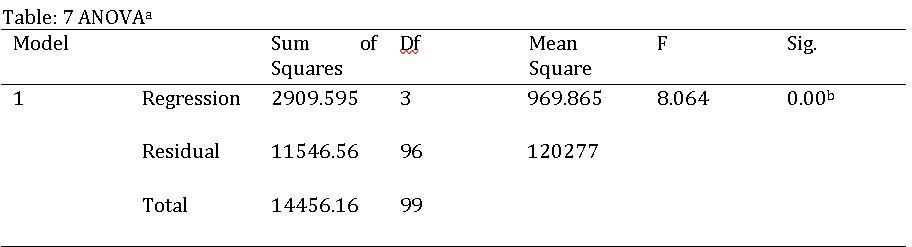
- Predictots: Neuroticism, Extraversion, and Conscientiousness
- Dependent Variable: PBS
Table: 8 Coefficientsa
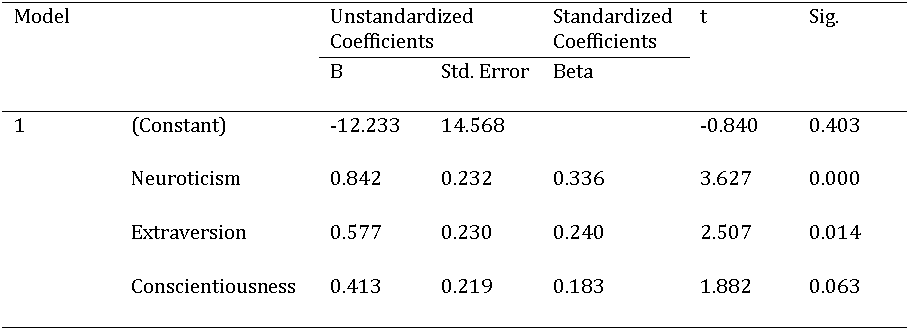
- Dependent Variable: PBS
The table (Table 8) determines the coefficients of the dependent variable. It reveals that neuroticism and extraversion significantly predict PBS (p < 0.05). Unstandardized coefficients demonstrate the variation in the dependent variable for one-unit increase in the independent variable while holding other variables constant. For instance, considering neuroticism, the unstandardized coefficient (B) is 0.842 (refer to the Coefficients table). Which shows that for each one-point rise in neuroticism, there is a 0.842 increase in PBS.
Similarly, the unstandardized coefficient, B, for extraversion is equal to 0.577 (see Coefficients table). which means that for each one-point increase in extraversion, there is an increase of PSB by 0.577.
Conversely, it was also found that conscientiousness is a statistically significant predictor.
Table: 9 Summary of t-test showing the effect of gender on PSB

The t-test conducted to compare the mean scores of pro-social behaviour (PSB) between males and females yielded interesting results. With a sample size of 50 males and 50 females, the mean PSB score for males was 37.32, slightly lower than the mean score of 37.88 for females. This suggests a potential trend of higher pro- social behaviour among females compared to males, although the difference in means is minimal.
The t-value of -0.280 indicates the magnitude of the difference between the means, with the negative sign indicating that, on average, males scored slightly lower on pro-social behaviour compared to females. However, the small magnitude of the t-value suggests that this difference is not substantial.
Moreover, the p-value associated with the t-test stands at 0.865, considerably surpassing the conventional significance threshold of 0.05. This elevated p-value suggests that there exists no statistically significant distinction in pro-social behaviour scores between the males and the females in the population. Put differently, any disparities observed between the two groups are likely to be stemmed from chance variation rather than a genuine divergence in pro-social behaviour tendencies.
Overall, grounded on the outcomes of the t-test, there exists no compelling evidence to indicate that gender exerts a noteworthy impact on pro-social behaviour scores. Although a minor trend of heightened pro-social behaviour among females is evident in this sample, this discrepancy fails to attain statistical significance. Further investigation with a larger sample sizes and additional variables may be necessary to delve into the intricate interaction between gender and pro-social behaviour more comprehensively.
The non-significant difference in pro-social behaviour (PSB) scores between the males and the females, as indicated by the t-test results, can be credited to several potential factors.
Firstly, societal norms and gender roles may influence individuals' expression of pro-social behaviour. While stereotypes often portray females as more nurturing and empathetic, and thus more likely to involve in pro- social acts, the actual manifestation of these behaviours can differ widely based on cultural, social, and individual factors. In some contexts, males may express pro-social behaviour differently or may be less inclined to report such behaviours due to societal expectations or perceived gender norms.
Additionally, individual differences within genders can contribute to the variability in pro-social behaviour scores. Personality traits, upbringing, socialization experiences, and personal values all play roles in shaping individuals' propensity to engage in pro-social acts. Therefore, while there may be general trends in pro-social behaviour between genders, there is considerable overlap and variability within each group.
Furthermore, the specific measurement instruments used to measure pro-social behaviour may effect the results. Different scales or questionnaires may captu
e different aspects of pro-social behaviour or may be subject to response biases. Therefore, variations in measurement methods can affect the observed differences between males and females.
It's also essential to consider contextual features that may moderate the relationship between gender and pro- social behaviour. For example, cultural standards, social support networks, and situational demands can all influence individuals' opportunities and motivations to engage in pro-social acts. Differences in these contextual factors between males and females may be the reason behind the observed variability in pro-social behaviour scores.
The non-significant difference in pro-social behaviour scores between males and females likely arises from a complex interplay of societal expectations, individual differences, measurement considerations, and contextual factors. While gender may play an important role in shaping pro-social behaviour tendencies, it is just one of many influences that contribute to the rich tapestry of human social behaviour. Further research exploring these factors in greater depth is necessary to gain a more complete understanding of the nuances of gender differences in pro-social behaviour.
Overall, from the result, it is concluded that H1, H2, and H5 are accepted, whereas H3, H4 and H6 are rejected.
Pro-social behaviour, defined as voluntary actions intended to benefit others, is a fundamental aspect of human interaction and societal well-being. Understanding the factors that influence pro-social behaviour, particularly among students, is of significant interest in both psychological research and educational practice. This summary provides an impression of a research study analyzing the correlation in between personality traits and pro-social behaviour among male and female students, with a focus on identifying potential gender differences and the predictive power of particular personality attributes.
The study involved a sample of 100 students, comprising both males and females 50 for each sample, who completed measures assessing their personality attributes and pro-social behaviour. The main goal was to investigate whether personality characteristics such as neuroticism, extraversion, conscientiousness,openness, and agreeableness, were associated with pro-social behaviour and whether all the associations varied by gender.
An initial analysis of the data exposed that there were no significant gender differences in pro-social behaviour among the participants. This finding denotes that both male and female students exhibited similar levels of altruistic tendencies, debunking the common assumption that gender plays an important role in determining pro-social behaviour.
Subsequent analyses focused on exploring the connections among particular personality characteristics and pro-social behaviour. The findings showed a positive association in between neuroticism, extraversion, and conscientiousness with pro-social behaviour. Individuals those who scored higher in neuroticism and extraversion tended to demonstrate greater pro-social behaviour, while conscientiousness also showed a positive association with altruistic tendencies.
In contrast, there was no notable correlation observed between openness, agreeableness, and pro-social behaviour. This suggests that even though certain personality traits might incline individuals to engage in pro- social acts, others may not have any direct impact on altruistic behaviour.
Further exploration via regression analysis exposed that, neuroticism and extraversion came out as significant predictors of pro-social behaviour among the students. This finding underscores the significance of certain character attributes in shaping altruistic tendencies, regardless of gender. Specifically, individuals higher in neuroticism and extraversion were inclined to participate in pro-social behaviour, highlighting the nuanced interplay in between personality and altruism.
The ramifications of these findings are noteworthy, for both psychological research and educational practice. By identifying neuroticism and extraversion as significant predictors of pro-social behaviour, this study offers valued insights into the underlying mechanisms driving altruistic tendencies among students. Understanding these mechanisms, can inform the development of interventions aimed at promoting pro-social behaviour in educational settings.
Moreover, the finding that there are no gender differences in pro-social behaviour challenges conventional notions about the impact of gender on altruism. Instead, it suggests that variations in personality among individuals may play a more substantial role in shaping pro-social behaviour than gender.
Thus, this research contributes to our comprehension of the intricate relationship between ‘personality traits’ and ‘pro-social behaviour’ among male and female students. By elucidating the predictive power of specific characteristics and debunking myths about gender differences in altruism, this study enrich our understanding of the factors influencing pro-social behaviour and lays the groundwork for future research in this area.
The major findings of the research examining the connection between personality traits and pro-social behaviour among ‘male’ and ‘female’ students can be summarised as follows:
- No Gender Differences in Pro-social Behaviour: Contrary to common assumptions, the study found no statistically significant gender differences in pro-social behaviour among the participants. This implies that both the male and the female students exhibit alike levels of altruistic tendencies, challenging traditional beliefs about gender disparities in altruism.
- ‘Positive’ Correlation with Neuroticism and Extraversion: The analysis showed a positive correlation between neuroticism and extraversion with pro-social behaviour. Individuals scoring higher in neuroticism and extraversion were prone to participate in pro-social behaviour, suggesting that these personality traits may incline individuals to altruistic acts.
- Conscientiousness Associated with Pro-social Behaviour: Conscientiousness also showed a positive association with pro-social behaviour. Students who demonstrated elevated levels of conscientiousness were more inclined to engage in altruistic actions, highlighting the role of this personality trait in fostering altruism.
- No Correlation with Openness and Agreeableness: In contrast, there was no notable correlation observed between openness, agreeableness, and pro-social behaviour. This specifies that, while certain personality traits may influence altruistic tendencies, others may not directly influence pro-social behaviour among students.
- Neuroticism and Extraversion as Predictors: Regression analysis identified neuroticism and extraversion as significant predictors of pro-social behaviour. Individuals higher in neuroticism and extraversion were more inclined to participate in altruistic acts, indicating the predictive power of these ‘personality traits’ in shaping altruistic tendencies among students.
These findings highlight the intricate relationship among personality traits and pro-social behaviour, emphasizing the significance of comprehending variances in fostering altruism among male and female students.
ImplicationThe implications of the study findings regarding the connection between personality traits and pro-social behaviour among male and female students are multifaceted and carry implications for both psychological research and educational practice:
- Promotion of Altruistic Behaviour in Educational Settings: Understanding the influence of personality characteristics, like neuroticism and extraversion, in predicting pro-social behaviour can guide the creation of interventions aimed at promoting altruistic behaviour among students. Educational institutions can design programs and initiatives tailored to individuals' personality profiles to foster a culture of empathy, kindness, and social responsibility.
- Challenging Gender Stereotypes: The finding that there are no statistically significant gender differences in pro-social behaviour challenges traditional gender stereotypes about altruism. By debunking myths about gender disparities in altruistic tendencies, educators and policymakers can promote gender equality and inclusivity in educational environments.
- Individualized Approaches to Character Development: Recognizing the influence of specific personality traits on pro-social behaviour underscores the importance of adopting individualized approaches to character development and moral education. Educators can tailor interventions to target students' unique personality profiles, leveraging their strengths and addressing potential areas for growth in fostering altruistic behaviour.
- Supporting Students' Social and Emotional Well-being: By acknowledging the positive association among specific personality traits (e.g., neuroticism, extraversion) and pro-social behaviour, educational institutions can prioritize initiatives aimed at supporting students' social and emotional well-being. Offering students chances for self-reflection, emotional regulation, and interpersonal skills development can boost their ability to empathic compassion, and altruism.
- Informing Future Research Directions: The research findings contribute to advancing our understanding of the intricate interaction among personality traits and pro-social behaviour. They provide a foundation for future research investigating further factors that might impact altruistic tendencies, such as cultural factors, situational variables, and developmental processes. By Expanding on these findings, researchers can further refine theoretical models and develop evidence-based interventions to promote pro-social behaviour in diverse populations.
The implications of this research extend beyond the academic realm to encompass practical implications for fostering a more compassionate, empathetic, and socially responsible society. By harnessing the data acquired from this study, educators, policymakers, and researchers can work collaboratively to cultivate a culture of altruism and collective well-being within educational communities and beyond.
LimitationsDespite the valuable insights provided by the research findings, several limitations should be acknowledged:
- Sample Characteristics: The study's findings are limited by the features of the sample population, which may not be representative of the broader student population. The sample size, demographic composition, and recruitment methods may have influenced the applicability of the results to other contexts or populations.
- Measurement Tools: The study relied on self-report measures to assess personality traits and pro-social behaviour, which are subject to potential biases such as social desirability bias and response bias. Additionally, the use of standardized scales may not capture the full complexity of personality constructs or pro-social behaviour, leading to limitations in measurement validity and reliability.
- Cross-Sectional Design: The research utilized a cross-sectional design, this limitation restricts the capacity to make causal inferences regarding the observed relationships between ‘personality traits’ and ‘pro-social behaviour’. Longitudinal or experimental designs would offer a more robust indication for causal relationships and temporal dynamics.
- Potential Confounding Variables: The study might not have measured all pertinent confounding variables that could affect the associations in between personality traits and pro-social behaviour. Factors like socio- economic status, cultural background, and life experiences could have impacted participants' behaviours and responses, introducing potential confounds into the analysis.
- Limited Scope of Personality Traits: The study focused on a specific set of personality traits (e.g., neuroticism, extraversion) and their associations with pro-social behaviour, neglecting other potentially relevant personality factors. Future research could discover additional personality dimensions and their contributions to altruistic tendencies.
- Generalizability: The findings of the study might have restricted generalizability beyond the particular context in which the research was carried out. Cultural, institutional, and contextual factors could influence the relationships between, personality traits and pro-social behaviour in diverse settings. Warranting caution in extrapolating the findings to diverse populations or cultural contexts.
- Directionality of Relationships: While the study identified relations between personality traits and pro- social behaviour, the directionality of these relationships remains unclear. Future research could explore the reciprocal effects between personality traits and altruistic tendencies over time.
Acknowledging these limitations is essential for interpreting the research findings accurately and for guiding future research endeavors aimed at addressing gaps in knowledge and understanding within the field of personality variables and pro-social behaviour.
Recommendation for future researchOn the basis of identified limitations and areas for further exploration, a number of suggestions for future research include the following:
- Longitudinal Studies: Conduct longitudinal studies investigating the temporal dynamics and causal connections among personality traits and pro-social behaviour over time. Longitudinal designs would enable researchers to track changes in personality and altruistic tendencies across different developmental stages and life transitions.
- Diverse Populations: Expand the scope of research to include diverse populations, involving individuals from various cultural upbringings, socioeconomic statuses, and age groups. Comparative studies across cultures and contexts would elucidate the cultural universality or specificity of the relation between personality traits and pro-social behaviour.
- Comprehensive Personality Assessment: Utilize comprehensive measures of personality that encompass a broader variety of traits and dimensions beyond the ‘Big Five’ (e.g., dark personality traits, moral character virtues). This would provide a deeper comprehension of how various personality factors influence altruistic tendencies.
- Experimental Designs: Implement experimental designs to investigate the causal mechanisms underlying the relation between personality traits and pro-social behaviour. Experimental manipulations could be employed to examine how changes in personality (e.g., through interventions or situational priming) affect altruistic decision-making and behaviour.
- Mediating and Controlling Variables: Explore potential mediating and moderating variables that may explicate or qualify the relation between personality traits and pro-social behaviour. Factors such as empathy, moral identity, social norms, and situational context could serve as important mediators or moderators in these relationships.
- Intervention Studies: Develop and evaluate interventions aimed at promoting pro-social behaviour by targeting specific personality traits. Intervention studies could test the effectiveness of personality-focused interventions (e.g., personality coaching, character education programs) in fostering altruistic tendencies and positive social outcomes.
- Multi-method Approaches: Employ multi-method approaches that combine self-report measures with behavioural observations, informant reports, and physiological assessments to provide a comprehensive understanding of personality and pro-social behaviour. Integrating multiple sources of data would enhance the validity and reliability of research findings.
- Contextual Factors: Investigate the part of contextual factors, such as social norms, group dynamics, and situational cues, in shaping the connection between personality traits and pro-social behaviour. Contextualized approaches would illuminate the situational variability and ecological validity of personality- altruism associations.
By taking in to consideration of these recommendations, future research endeavors can advance in the understanding of the intricate relationship between ‘personality’ traits and ‘pro-social behaviour’, leading to more nuanced theoretical models and evidence-based interventions for promoting altruism and social well- being.
CONCLUSIONIn conclusion, the research results offer valuable understandings into the correlation between personality traits and pro-social behaviour among male and female students. Despite certain limitations, the study contributes to our knowledge of the factors influencing altruistic tendencies and embraces significant implications for both psychological research and educational practice.
The study's discovery of no significant gender differences in pro-social behaviour challenges traditional stereotypes and underscores the importance of considering individual differences in personality when examining altruistic tendencies. By identifying neuroticism and extraversion as significant predictors of pro- social behaviour, the research highlights the importance of certain personality traits in shaping altruistic tendencies among students.
While the study sheds light on the associations between personality traits and pro-social behaviour, further research is warranted to look for the underlying mechanisms and to address the limitations recognised in this study. Longitudinal studies, experimental designs, and interventions targeting specific ‘personality traits’ are recommended to offer a more thorough comprehension of the complex interplay between personality and altruism.
Ultimately, by advancing our knowledge of the factors influencing pro-social behaviour, this research adds to the promotion of empathy, kindness, and social responsibility in educational settings and beyond. By recognizing the role of personality in shaping altruistic tendencies, educators, policymakers, and researchers can work collaboratively to foster a culture of compassion and collective well-being in society.
- Aronson, R.B., Macintyre, I.G., Precht, W.F., Wapnick, C.M., Murdoch, T.J.T., 2002. The expanding scale of species turnover events on coral reefs in Belize. Ecol. Monogr. 72, 233–249.
- Adams, G. R., & Cohen, A. S. (1976). An examination of cumulative folder information used by teachers in making differential judgements of children’s abilities. The Alberta Journal of Educational Research, 22, 216-224.
- Afolabi, O. A. (2013). Roles of personality types, emotional intelligence and gender differences on prosocial behaviour. Psychological Thought, 6(1).
- Ashforth, B.E. and Mael, F. (1989). Social identity theory and the organization. Academy of Management Review, 14(1), 20–39.
- Bandura, A. and McDonald, F.J. (1963). Influence of social-reinforcement and behaviour of models in shaping children’s moral judgments. Journal of Abnormal and Social Psychology, 67(3), 274–81.
- Barnett, M. A., P. A. Tetreault, J. A. Esper, and A. R. Bristow (1986). “Similarity and Empathy - the Experience of Rape,” Journal of Social Psychology, 126(1), 47-49.
- Barry, C. M., & Wentzel, K. R. (2006). Friend influence on prosocial behaviour: The role of motivational factors and friendship characteristics. Developmental Psychology, 42, 153-163.
- Baston, C.D. (1987). Prosocial motivation: Is it ever truly altruistic? In L. Berkowitz (Ed.), Advances in Experimental Social Psychology, 20, 65-122. New York: Academic Press.
- Baston, C.D., Bolen, M.H., Cross, J.A., and Neuringer-Benefiel, H.E. (1986). Where is the altruism in the altruistic personality? Journal of Personality and Social Psychology, 50(1), 212-220.
- Batson, C. D., Early, S. and Salvarani, G. (1997). “Perspective taking: Imagining how another feels versus imagining how you would feel,” Personality and Social Psychology Bulletin, 23(7), 751-758.
- Batson, C. D., Lishner, L., Dulin, S., Harjusola-Webb, E.L., Stocks, S., Gale, O., Hassan, O., and Samput, B. (2003). “…As you would have them do unto you”: Does imagining yourself in the other’s place stimulate moral action? Personality and Social Psychology Bulletin, 29(4), 1190-1201.
- Batson, C. D., Sympson, S. C., Hindman, J. L., Decruz, P., Todd, R. M., Weeks, J. L., Jennings, G., and Burris, C. T. (1996). “I’ve been there, too”: Effect on empathy of prior experience with a need. Personality and Social Psychology Bulletin, 22(5), 474-482.
- Batson, C.D. (1991). The Altruism Question: Toward a Social Psychological Answer. Hillsdale, NJ: Erlbaum. Batson, C. D. (1998). Altruism and prosocial behaviour. In D.T. Gilbert, S.T. Fiske, and G. Lindzey (Eds.), Handbook of Social Psychology (4th ed., Vol. II, pp. 282–316). New York: McGraw-Hill.
- Batson, C.D., Chang, J., Orr, R., Rowland, J. (2002). Empathy, attitudes, and action: Can feeling for a member of a stigmatised group motivate one to help the group? Personality and Social Psychology Bulletin, 28(12), 1656-1666.
- Berscheid, E., Walster, E., & Bohrnstedt, G. (1973). The happy American body: A survey report. Psychology Today, 7, 119-131. Bierhoff, H.W. (2002). Prosocial behaviour. Hove, UK: Psychology Press.
- Bohnet, I., & Frey, B. S. (1999). “Social Distance and other-regarding Behaviour in Dictator Games: Comment,” The American Economic Review, 89(1), 335-339.
- Burford, H. C., Foley, L. A., Rollins, P. G., & Rosario, K. S. (1996). Gender differences in preschoolers’ sharing behaviour. Journal of Social Behaviour and Personality, 11, 17-25.
- Burnett, J. J. (1981). “Psychographic and demographic characteristics of blood donors,” Journal of Consumer Research, 8(1), 62-66. Beutel, A. M., & Johnson, M. K. (2004).
- Carlo, G., Okun, M. A., Knight, G. P., & de Guzman, M. R. T. (2005). The interplay of traits and motives on volunteering: Agreeableness, extraversion and prosocial value motivation. Personality and Individual Differences, 38(6), 1293-1305.
- Christy, C. A. and Voigt, H. (1994). “Bystander responses to public episodes of child abuse,” Journal of Applied Social Psychology, 24(9), 824-847.
- Cialdini, R. B., Schaller, M., Houlihan, D., Arps, K., Fultz, J., & Beaman, A. L. (1987). Empathy-based helping: Is it selflessly or selfishly motivated? Journal of Personality and Social Psychology, 52, 749-758.
- Cialdini, R., Kenrick, D., & Bauman, D. (1976). Effects of mood on prosocial behaviour in children and adults. In N. Eisenberg (Ed.), The Development of Prosocial Behaviour (pp. 339-356). New York: Academic Press.
- Compeau, D. R. and Higgins, C. A. (1995). Application of social cognitive theory to training for computer skills. Information Systems Research, 6(2), 118-143.
- Darley, J. M. & Latané, B. (1969). Bystander “apathy.” American Scientist, 57, 244-268. DeVito, J. A. (1976). The Interpersonal Communication Book. New York: Harper and Row. Dovidio, J. F., et al.
- Darley, J. M. & Batson, C. D. (1973). From Jerusalem to Jericho: A study of situational and dispositional variables in helping behaviour. Journal of Personality and Social Psychology, 27, 100-108.
- Eagly, A. H., & Crowley, M. (1986). Gender and helping behaviour: A metaanalytic view of the social psychological literature. Psychological Bulletin, 100, 283-308.
- Eisenberg, N., & Fabes, R. A. (1998). The relations of children’s situational empathy-related emotions to dispositional prosocial behaviour. International Journal of Behavioural Development, 22, 169-193.
- Eisenberg, N., & Fabes, R. A. (1998). Prosocial development. In W. Damon (Ed.), Handbook of Child Psychology: Social, Emotional, and Personality Development (Vol. 3, pp. 701–778). New York: Wiley.
- Eisenberg, N., & Mussen, P. (1989). The Roots of Prosocial Behaviour in Children. New York: Cambridge University Press.
- Eisenberg, N., Cumberland, A., Guthrie, I. K., Murphy, B. C., & Shepard, S. A. (2005). Age changes in prosocial responding and moral reasoning in adolescence and early adulthood. Journal of Research on Adolescence, 15, 235-260.
- Eisenberg, N., Fabes, R. A., & Spinrad, T. L. (2006). Prosocial development. In N. Eisenberg (Vol. Ed.), W. Damon & R. M. Lerner (Series Eds.), Handbook of Child Psychology: Social, Emotional, and Personality Development (Vol. 3, pp. 646–718). New York: Wiley.
- Eisenberg, N., Fabes, R. A., & Spinrad, T. L. (2006). Prosocial development. In N. Eisenberg (Vol. Ed.), W. Damon & R. M. Lerner (Series Eds.), Handbook of Child Psychology: Social, Emotional, and Personality Development (Vol. 3, pp. 646–718). New York: Wiley.
- Fabes, R. A., Carlo, G., Kupanoff, K., & Laible, D. (1999). Early adolescence and prosocial/moral behaviour I: The role of individual processes. Journal of Early Adolescence, 19, 5-16.
- Field, D. and Johnson, I. (1993). Satisfaction and change: A survey of volunteers in a hospice organisation. Social Science & Medicine, 36(12), 1625-1633.
- Fisher, R. J. and Ackerman, D. (1998). The effects of recognition and group need on volunteerism: A social norm perspective. Journal of Consumer Research, 25(3), 262-275.
- Flippen, A. R., Hornstein, H. A., Siegal, W. E., & Weitman, E. A. (1996). A comparison of similarity and interdependence as triggers for ingroup formation. Personality and Social Psychology Bulletin, 76, 338-402.
- Freeman, R. & Rushton, J. P. (2004). Genetic and environmental contributions to prosocial attitudes: A twin study of social responsibility. Proceedings of the Royal Society B, 271, 2583–2585.
- Gaertner, A., Validzic, K., Matoka, B., Johnson, B., & Frazier, S. (1997). Extending the benefits of recategorization: Evaluations, self-disclosure, and helping. Journal of Experimental Social Psychology, 33(4), 401-420.
- Garcia-Banda, G., Servera, M., Chellew, K., Meisel, V., Fornes, J., Cardo, E., & Doctor, R. M. (2011). Prosocial personality traits and adaptation to stress. Social Behaviour and Personality: An International Journal, 39(10), 1337-1348.
- Gender and prosocial values during adolescence: A research note. Sociological Quarterly, 45, 379-393.
- Graziano, W. G., Habashi, M. M., Sheese, B. E., & Tobin, R. M. (2007). Agreeableness, empathy, and helping: A person × situation perspective. Journal of Personality and Social Psychology, 93(4), 583-599.
- Habashi, M. M., Graziano, W. G., & Hoover, A. E. (2016). Searching for the prosocial personality: A Big Five approach to linking personality and prosocial behaviour. Personality and Social Psychology Bulletin, 42(9), 1177-1192.
- Hall, L. (1999). A comprehensive survey of social behaviours in O.J. Simpson case, from A to Z. Wales, United Kingdom: The Edwin Meller Press. Harrell, W. A. (1978). Physical attractiveness, self-disclosure, and helping behaviour. The Journal of Social Psychology, 104(1), 15-17.
- Hartshorne, H., & May, M. A. (1929). Studies in the nature of character: Studies in service and self-control (Vol. 2). New York: Macmillan.
- Hilbig, B. E., Glöckner, A., & Zettler, I. (2014). Personality and prosocial behaviour: Linking basic traits and social value orientations. Journal of Personality and Social Psychology, 107(3), 529.
- Hogg, M. A., & Terry, D. J. (2000). Social identity and self-categorization processes in organizational contexts. Academy of Management Review, 25(1), 121-140.
- Turner, J. C., Hogg, M. A., Oakes, P. J., Reicher, S. D., & Wetherell, M. S. (1987). Rediscovering the social group: A self-categorization theory. Oxford, UK: Basil Blackwell.
- Isen, A. M., & Levin, P. F. (1972). Effect of feeling good on helping: Cookies and kindness. Journal of Personality and Social Psychology, 21, 384-388.
- Jackson, M., & Tisak, M. S. (2001). Is prosocial behaviour a good thing? Developmental changes in children’s evaluations of helping, sharing, cooperating, and comforting. British Journal of Developmental Psychology, 19, 349-367.
- Kavussanu, M., Seal, A. R., & Phillips, D. R. (2006). Observed prosocial and antisocial behaviours in male soccer teams: Age differences across adolescence and the role of motivational variables. Journal of Applied Sport Psychology, 18, 326-344.
- Kline, R., Bankert, A., Levitan, L., & Kraft, P. (2019). Personality and prosocial behaviour: A multilevel meta-analysis. Political Science Research and Methods, 7(1), 125-142.
- Knafo, A., & Plomin, R. (2006). Parental discipline and affection and children’s prosocial behaviour: Genetic and environmental links. Journal of Personality and Social Psychology, 90, 147–164.
- Kogut, T., & Ritov, I. (2005a). The identified victim effect: An identified group, or just a single individual? Journal of Behavioural Decision Making, 18(3), 157-167.
- Kogut, T., & Ritov, I. (2005b). The singularity effect of identified victims in separate and joint evaluations. Organizational Behaviour and Human Decision Processes, 97(2), 106-116.
- Kohn, A. (1990). The Brighter Side of Human Nature: Altruism and Empathy in Everyday Life. New York: Basic Books. Kramer, R. M. (1993). Cooperation and organizational identification. In J. K. Murnighan (Ed.), Social Psychology in Organizations: Advances in Theory and Research (pp. 244–268). Englewood Cliffs, NJ: Prentice-Hall.
- Latané, B., & Darley, J. (1970). The unresponsive bystander: Why doesn’t he help? New York: Appleton-Century-Crofts. Leider, S., Mobius, M., Rosenblat, T., & Do, Q.-A. (2009). Directed altruism and enforced reciprocity in social networks. Quarterly Journal of Economics.
- Levine, M., Cassidy, C., Brazier, G., & Reicher, S. (2002). Self-categorization and bystander non-intervention: Two experimental studies. Journal of Applied Social Psychology, 32(7), 1452-1463.
- Levine, R. V., Norenzayan, A., & Philbrick, K. (2001). Cross-cultural differences in helping strangers. Journal of Cross-Cultural Psychology, 32, 543–560.
- Lim, K. H., Ward, L. M., & Benbasat, I. (1997). An empirical study of computer system learning: Comparison of co-discovery and self-discovery methods. Information Systems Research, 8(3), 254–272.
- MacIntyre, A. (1967). Egoism and altruism. In P. Edwards (Ed.), The Encyclopedia of Philosophy (Vol. 2, pp. 462–466). New York: Macmillan.
- Mackenzie, H. (2018). A quantitative analysis of the relationship between empathy and prosocial behaviour to determine the altruistic personality.
- Mael, F. A., & Ashforth, B. E. (1995). Loyal from day one: Biodata, organizational identification, and turnover among newcomers. Personnel Psychology, 48(2), 309–333.
- Manheimer, D. I., Mellinger, G. D., & Crossley, H. M. (1966). A follow-up study of seat belt usage. Traffic Safety Research Review, 10, 2-13.
- Markey, P. M. (2000). Bystander intervention in computer-mediated communication. Computers in Human Behaviour, 16, 183-188.
- Meier, S. (2004). An economic analysis of pro-social behaviour. McGuire, K. D., & Weisz, J. R. (1982). Social cognition and behaviour correlates of preadolescent chumship. Child Development, 53, 1478-1484.
- Midlarsky, E. (1968). Aiding responses: An analysis and review. Merrill-Palmer Quarterly, 14, 229-269.
- Nash, T. M. (2013). The moderating impact of neuroticism on the relationship between moral personality characteristics and prosocial behaviours. The University of Memphis.
- Nelson, T. D. (1999). Motivational bases of prosocial and altruistic behaviour: A critical reappraisal. Journal of Research, 4(1), 23–31.
- North, A. C., Tarrant, M., & Hargreaves, D. J. (2004). The effects of music on helping behaviour: A field study. Environment and Behaviour, 36(2), 266-275.
- Omoto, A. M., & Snyder, M. (1995). Sustained helping without obligation: Motivation, longevity of service, and perceived attitude change among AIDS volunteers. Journal of Personality and Social Psychology, 68(4), 671–686.
- outcomes. Annual Review of Psychology, 57, 401–421.
- Ozer, D. J., & Benet-Martinez, V. (2006). Personality and the prediction of consequential outcomes. Annual Review of Psychology, 57, 401–421.
- Park, J. H., & Schaller, M. (2005). Does attitude similarity serve as a heuristic cue for kinship? Evidence of an implicit cognitive association. Evolution and Human Behaviour, 26(2), 158-170.
- Penner, L. A., Dovidio, J. F., Piliavin, J. A., & Schroeder, D. A. (2005). Prosocial behaviour: Multilevel perspectives. Annual Review of Psychology, 56, 365–392.
- Pessemier, E. A., Bemmaor, A. C., & Hanssens, D. M. (1977). Willingness to supply human body parts: Some empirical results. Journal of Consumer Research, 4(3), 131-140.
- Piliavin, I. M., Rodin, J. A., & Piliavin, J. (1969). Good Samaritanism: An underground phenomenon? Journal of Personality and Social Psychology, 13, 289-299.
- Piliavin, J. A., & Charng, H.-W. (1990). Altruism: A review of recent theory and research. Annual Review of Sociology, 16, 27–65.
- Plomin, R., DeFries, J. C., McClearn, G. E., & McGuffin, P. (2001). Behavioural genetics (4th ed.). New York: W. H. Freeman.
- Ravi, R., & Singh, V. (2019). ‘Sukarma’: An investigation into the internal and external influences of prosocial behaviour. IAHRW International Journal of Social Sciences Review, 7(5), 898-904.
- Ewen, R. B. (1998). An Introduction to Theories of Personality (5th ed.). New Jersey: Lawrence Erlbaum Associates.
- Rushton, J. P., Fulker, D. W., Neale, M. C., Nias, D. K. B., & Eysenck, H. J. (1986). Altruism and aggression: The heritability of individual differences. Journal of Personality and Social Psychology, 50, 1192–1198.
- Toi, M., & Batson, C. D. (1982). More evidence that empathy is a source of altruistic motivation. Journal of Personality and Social Psychology, 43, 281-292.
- Schiff, M. (1977). Hazard adjustment, locus of control, and sensation seeking: Some null findings. Environment and Behaviour, 9(2), 233-254.
- Schmidt, G., & Weiner, B. (1988). An attribution-affect-action theory of behaviour: Replications of judgments of help-giving. Personality and Social Psychology Bulletin, 14(3), 610-621.
- Schroeder, D. A., Dovidio, J. F., Sibicky, M. E., Matthews, L. L., & Allen, J. L. (1988). Empathic concern and helping behaviour: Egoism or altruism? Journal of Experimental Social Psychology, 24, 333-353.
- Siegman, A. W. (1963). A cross-cultural investigation of the relationship between introversion-extraversion, social attitudes and anti-social behaviour. British Journal of Social and Clinical Psychology, 2(3), 196-208.
- Small, D. A., & Loewenstein, G. (2003). Helping a victim or helping the victim: Altruism and identifiability. Journal of Risk and Uncertainty, 26(1), 5-16.
- Smith, K. D., Keating, J. P., & Stotland, E. (1989). Altruism reconsidered: The effect of denying feedback on a victim’s status to empathic witnesses. Journal of Personality and Social Psychology, 57(4), 641-650.
- Snippe, E., Jeronimus, B. F., aan het Rot, M., Bos, E. H., de Jonge, P., & Wichers, M. (2018). The reciprocity of prosocial behaviour and positive affect in daily life. Journal of Personality, 86(2), 139-146.
- Solomon, L. Z., Solomon, H., & Stone, R. (1978). Helping as a function of number of bystanders and ambiguity of emergency. Personality and Social Psychology Bulletin, 4, 318-321.
- Staub, E. (1971). The use of role playing and induction in children’s learning of helping and sharing behaviour. Child Development, 42, 805-816.
- Staub, E. (1979). Positive social behaviour and morality: Vol. 2. Socialization and development. New York: Academic Press.
- Tajfel, H., & Turner, J. C. (1986). The social identity theory of intergroup behaviour.
- Tariq, F. T., & Naqvi, I. (2020). Relationship between personality traits and prosocial behaviour among adolescents. Foundation University Journal of Psychology, 4, 54-63.
- Thielmann, I., Spadaro, G., & Balliet, D. (2020). Personality and prosocial behaviour: A theoretical framework and meta-analysis. Psychological Bulletin, 146(1), 30.
- Trishala, M. (2021). Big Five personality traits as determinants of pro-social behaviour. Indian Journal of Positive Psychology, 12(2), 200-203.
- Tyler, T. R. (1999). Why people cooperate with organizations: An identity-based perspective. Research in Organizational Behaviour, 21, 201–246.
- Weiner, B. (1980). A cognitive (attribution) - emotion - action model of motivated behaviour: An analysis of judgments of help-giving. Journal of Personality and Social Psychology, 39(2), 186-200.
Citation: Afifa Rana et.al. 2024. Personality as a Predictor of Prosocial Behaviour in Male and Female Students. Global Research Journal of Social Sciences and Management, 2(2): 97-127.
Copyright: ©2024 Afifa Rana et.al. This is an open-access article distributed under the terms of the Creative Commons Attribution License (https://creativecommons.org/licenses/by/4.0/), which permits unrestricted use, distribution, and reproduction in any medium, provided the original author and source are credited.