Design a Model to Analyze the Technology Transfer Role Related to Employees Professional Ethics
Ahmadreza Shoa Hasani
PhD in Technology Management, Tehran Branch, Islamic Azad University, Tehran, Iran
email: arshsrb@gmail.com,
----------------------------------------------------------------------------------------------------------------------------------
ABSTRACT
Technology transfer involves the exchange of equipment, machinery, tools, human skills, experience, data, knowledge, techniques, and management practices. This study investigates the role of technology transfer in influencing employees' work ethics. Designed as applied and descriptive research, the study adopts a correlational approach and employs a survey method. The research focuses on employees of Abadan Oil Refinery, with a sample of 45 participants selected through available sampling. Data were collected using two questionnaires: a 50-question professional ethics questionnaire and a technology transfer questionnaire. Analytical methods included Pearson’s correlation coefficient, univariate regression, and structural equation modelling using Amos software. The findings revealed that the four main dimensions of technology transfer collectively account for up to 13.7% of the variance in employees' professional ethics. This underscores the significant impact of technology transfer on enhancing work ethics, commitment, and organizational conscience. By prioritizing the adoption and transfer of technology, organizations can create a more ethical and professional work environment. These results align with the findings of Rajabdorri et al. (2020), who emphasized the importance of integrating technology transfer into organizational strategies to improve employee professionalism and ethical standards. Ultimately, this study highlights the need for organizations to focus on technology transfer as a key driver of ethical behaviour and workplace integrity, contributing to both individual and organizational growth.
Keywords:
Professional Ethics, Technology Transfer, Intellectual Property (IP).
1. INTRODUCTION
In modern-day organizations, moral controversy — complex emergent situations and conditions that require redefining right and wrong actions (the moral compass) is increasingly being faced (Hurd, 2018); the line between right and wrong has never been blurrier. According to theology, a human being isn't just a physiological entity — they represent various fundamental moral characteristics that derive directly from God and are represented in the inner and personality spheres of the human being, and that manifest themselves in the human being's thoughts, speech, and actions. Yet, in the context of an organization, people might do things differently from what is congruent with their sense of right and wrong. These dissonances will have a great effect on the organization effectiveness and efficiency, since in terms of the organizational level the conduct and performance can result negative and positive impacts depending on the ethicality that the conduct and performance demonstrated (Marmat et al., 2016).
Ethics is still one of the most important topics for societies around the world. The world needs these professional ethics; work dedication, teamwork, trust, mutual interaction, etc. It is necessary that these values are defined and integrated into the organizational culture for their effective manifestation. One of the reasons to comply with professional ethics in organizations beside the necessity of non-conflicting with society is that it can prevent the waste of organization resources through rational and wise decision making (Rachels, 1986). Ethics scholars overall believe that all ethical behaviors depend on a complex social space in which the perceptual, conceptual and situational variables of each individual are of great importance (Slotfeldt, 2023); Therefore, many factors can affect the ethical or unethical behavior of managers in dealing with organizational issues (Giancaspro, 2022). Let it be said, especially in the industrial society of Iran, where the business environment is an inhibiting environment. Due to the importance of professional ethics in the development of the organization, it is necessary to consider the factors affecting professional ethics in organizations, because professional ethics affects the attitude of individuals towards work Rejection (Cardy, 2006).
Studies have shown that technology has an effect on professional ethics. The results of Mâţă Liliana's research (2022) showed that there is a relationship between the use of information technology and the ethical behavior of employees as human capital in higher education. There is a direct and meaningful relation, as well as between individual characteristics, use from the procedures, the use of data, the use of soft tools and the use of hard tools, there is a direct and meaningful relationship with the ethical behavior of employees, and the most important thing is prevention technology can be defined as all knowledge, processes, tools, methods which the author has defined the systems used in the production of products and the provision of services. Technology includes three parts that can be distinguished from each other and have the same importance. These components include: hardware, software, and memory. The fourth component that should be considered independently is technical knowledge. Technology has always played a fundamental role in creating wealth for countries and has greatly affected the standard and quality of life. The impact of technology has been such that the progress of civilization is often identified with regard to the superior technology of each era. (Heeks, 2000). Technological transfer can be an effective factor in the growth and development of professional ethics be based on the mentioned points, the main research question is to examine the status of technology transfer and professional ethics among the human capital or employees of Abadan Oil Refinery as an strategic industry and whether all four aforementioned components are present. Do the employees have Technology (Hardware, Software, Human Resources (Humanoid), and Organizational Resources) predictive power of professional Ethics?
In this regard, the World Intellectual Property Organization (WIPO) emphasizes the importance of intellectual property (IP) in the transfer of technology. In the R&D stage, IP is an important tool to help secure ownership of intellectual innovation, helping institutions to control how IP is used in accordance with their mission and values. And on top of that IP is a tool for business, enabling companies to secure market position and exclusivity around new products or processes. This places IP as a critical tool for attracting collaborative partners, as well as for monetizing investments in research via development partnerships or licensing agreements. Therefore, understanding the relationship between IP and technology transfer is critical for effective managing of this process, and, at the same time, optimizing it. (Research Handbook on Intellectual Property and Technology Transfer, 2020).
2. METHODOLOGY
This research is a type of applied research and it is a descriptive research (in terms of purpose), survey (in terms of time) and based on correlation. The statistical population of the research is 45 employees of Abadan Oil Refinery. These employees were selected as the sample of the research using the convenience sampling method Standard and verified letters in professional ethics and technology transfer in the framework of oil industries It will be used. In order to measure and measure the professional ethics, a questionnaire designed by the author which named "Analysis of My Narrative" from insights of Brett Smith and Javier Monforte (2020), was used, in which the employees consider their professional commitment in the form of measuring behaviors, decisions, and situations certain feelings and emotions with three sub-components (state) uniformity or conformity, distance or gap and conflict or disorganization by means of 25 questions and based on a five-point Likert scale, with a total base coefficient (Cronbach's alpha coefficient) of 0.750 a stabbing has been arranged. To measure the dimensions of technology transfer in the organization, this tool was measured with a 25-question questionnaire based on a five-point Likert scale (from very little = 1 to very much = 5) and the reliability coefficient It has Cronbach's alpha = 0.68 The hypothesis was tested according to the level of data (distance) and the type of hypothesis (relationship and effect) and the coefficient of single variable was used to measure the simultaneous effect independent variables on the research dependent variable and of course the fit of the model, from Structural equation modeling was done using Amos software
3. FINDINGS
According to the table 1, the first hypothesis of the research was based on the fact that there is a significant relationship between the transfer of technology and the professional ethics of employees. The coefficient of the path of the effect of the softening on the professional ethics of the employees was 0.38, which is positive and significant at the 0.01 level; Therefore, this hypothesis is confirmed. That is, the transfer of technology in software development has a direct, positive and meaningful relationship with the professional ethics of employees.
The second hypothesis of this research was based on the fact that technology transfer in the human dimension (Humanoid) has a direct relationship with the professional ethics of employees. The coefficient of the path of the effect of human dimension on professional ethics was 0.33, which is significant, so this hypothesis is confirmed. That is, the humanoid has a direct meaningful relationship with professional ethics.
The third hypothesis of this research was based on the fact that the transfer of technology in organization ware has a significant relationship with the professional ethics of the employees. The coefficient of the direct effect of technology transfer on the professional ethics of the employees after the organization ware was 0.25, which is positive and significant at the 0.01 level; Therefore, this hypothesis is confirmed.
The fourth hypothesis of this research is based on the fact that there is a significant relationship between the technology transfer in the field of hardware and the professional ethics of the employees. And the coefficient of the direct effect of technology transfer after tightening on the professional ethics of employees was 0.142, which is negative and significant at the 0.05 level; Therefore, this hypothesis is confirmed.
Table 1: The results of research hypotheses
Research Hypotheses Table
| Path coefficient |
Standard error |
t statistic |
Meaningful level |
Hypotheses |
|
Technological transfer in software development has a significant relationship with the professional ethics of employees.
|
0/000 |
5/168 |
2/443 |
0/382 |
|
Technological transfer in humanoid has a significant relationship with the professional ethics of employees.
|
0/000 |
4/223 |
2/566 |
0/332 |
|
Technological transfer in organization ware dimension has a significant relationship with the professional ethics of employees.
|
0/000 |
62/902 |
3/785 |
0/276 |
|
Technological transfer in the field of hardware has a significant relationship with the professional ethics of employees.
|
0/042 |
-2/029 |
2/208 |
-0/142 |
4. DISCUSSION:
In the presented model in figure 1 taken from table above, the relationship between the research variables was investigated using SEM according to Handbook of Structural Equation Modeling. (2023). Findings show that there is a significant relationship between the technology transfer in the software dimension and the professional ethics of the employees. The coefficient of the path of the effect of the softening on the professional ethics of the employees was 0.38, which is positive and significant at the 0.01 level; therefore, this hypothesis is confirmed. That is, the transfer of technology in the software dimension has a direct, positive and meaningful relationship with the professional ethics of the employees. In explaining this hypothesis, it can be stated that whenever employees those organizations should be familiar with the types of system and application software and be able to implement the application software. It is considered that the use of software, due to the emphasis on the use of system and application software in the organization, has led to an increase in ethical behavior among employees (Samir, 2009 and Sorokina, 2021). Also, whenever organizations are equipped with information equipment and tools, there is less possibility of error and as a result, moral behavior among employees increases (Mir Azimi, 2021). We believe that because the IT department is increasing the use of software everywhere in the organization, that information systems are being distributed throughout the organization, therefore by having access to information systems (IT), it will improve ethical behavior of all employees with IT. Sarah Banks, however, argues that this trend masks two separate and possibly conflicting agendas. On the one hand, it resonates with a progressive transformation that challenges NPM or managerialist approaches by emphasizing the status of social workers as moral agents engaging in advocacy for social justice (Svensson, 2004). The increased attention to ethics, however, can be interpreted as a continuation of NPM where ethics codes are used as a mechanism for regulating professionals and controlling service users. In a later publication, Banks emphasizes the need for a re-assertion of professionalism in social work, and outlines an initial framework for a situated ethics of social justice (Banks, 2014).
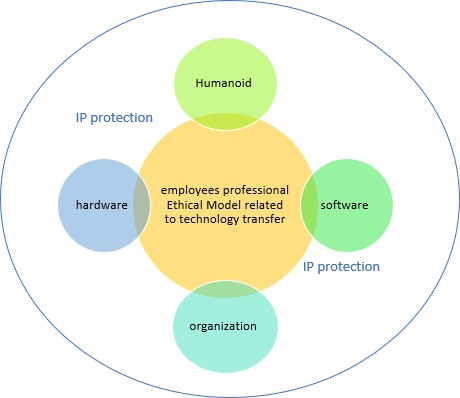
Figure 1. Proposed employees professional Ethical Model related to technology transfer protected by IP
The second hypothesis of this research was based on the fact that the transfer of technology in the humanoid dimension has a direct relationship with the professional ethics of the employees. The coefficient of the effect of humanoid on professional ethics was 0.33, which is significant; Therefore, this hypothesis is confirmed. That is, the humanoid has a direct meaningful relationship with professional ethics (Cardy, 2006). From the capabilities of the technological process, you can applicability and integration between new knowledge and existing knowledge. Basic knowledge related to technology (including technological knowledge, experience, technical and organizational skills). Knowledge base (including staff skill level, education level, education level) (Teo, 2011). Technology transfer with the organization's equipment to the last information on similar companies and organizations, and the setting of the goal points and the effort to achieve that goal according to the pattern of the transfer from the industry to the recipient, the time to become more legal provided the order and the attitude and behavior of the employees for the end. Organizational cooperation and commitment helps The category of technology, growth and reliability resulting from that is a framework for guidance, understanding, becoming more purposeful of employees and commitment and moral conscience of 14 employees (Khayat, 2015) and (Waroonkun, 2007).
5. CONCLUSION
The most important innovation of this research is familiarity with the concept of technology absorption and transfer in the oil industry, which leads to the creation of the model in order to create organizational value protected by intellectual property. Another important issue of this research is the applicability of this attitude, which leads to positive effects on the behavior and moral values in the organization and the reason for the increase of technology transfer. The mission and vision of the organization will be achieved.
Ethical considerations
In order to create trust in the participants and preserve the principle of trust and confidentiality of the participants' information, the questionnaires were designed anonymously. In addition, the participants were assured that their information will only be used in this research and that their information will remain confidential.
DECLARATIONS:
Acknowledgments
:
I would like to sincerely thank my family members Maryam,
Artemis and Aram for their support and love given to fulfil my PhD thesis which could be seen its outcome as the present article.
Conflict of Interest
:
The author declares that there is no actual or potential conflict of
interest about this article.
Consent to Publish
:
The author agrees to publish the paper in the Global Research
Journal of Social Sciences and Management.
Ethical Approval
:
Not applicable.
Funding
:
Author claims no funding was received.
Author Contribution
:
Both the authors confirm their responsibility for the study, conception, design, data collection, and manuscript preparation.
Data Availability Statement
:
The data presented in this study are available upon request from the corresponding author.
REFERENCES
- Banks, S. (2014). Ethics. United Kingdom: Policy Press.
- Cardy R, Selvarajan T. (2006). Assessing ethical behavior: the impact of outcomes on judgment bias. Journal of Managerial Psychology; 21 (1): 52- 72.
- Geeta, Marmat & Page, & Jain, Pooja & Pn, Mishra. (2016). Ethical Behaviour in Organizations: A Literature Review.
- Giancaspro, Maria & de simone, Silvia & Amelia, Manuti. (2022). Employees’ Perception of HRM Practices and Organizational Citizenship Behaviour: The Mediating Role of the Work– Family Interface. Behavioral Sciences. 12. 301. 10.3390/bs12090301.
- Handbook of Structural Equation Modeling. (2023). United Kingdom: Guilford Publications.
- Heeks R. (2000). Reinventing government in the information age. London: Rouledge. P. 113.
- Hurd, H. M. (Ed.). (2018). Moral Puzzles and Legal Perplexities: Essays on the Influence of Larry Alexander. Cambridge: Cambridge University Press.
- Khayat S M. (2015). Factors affecting technology transfer in the Philippines food processing industry. J Food Process Technol; 6: 441-463.
- Mâţă, Liliana. (2022). Ethical Use of Information Technology in Higher Education. 10.1007/978-981-16-1951-9.
- Mir Azimi S H R, Jamei M, Mohammadi F. (2021). Strategic principles of professional ethics of management in the Alawite government by analyzing the content of Imam Ali (PBU) letters to Mu'awiyah.28-7: (51) 14 ;
- Rachels, J. (1986). The elements of moral philosophy. Philadelphia: Temple University Press.
- Rajabdorri, Hossein; Vakiliifard, Hamidreza; Salari, Hojjatollah & Amiri, Ali (2020). The Relationship between Technology Use Factors based on the Developed Unified Theory of Acceptance and Use of Technology with Auditors' Ethical Behavior. Iranian Journal of Finance, 4(3), 80-102
- Research Handbook on Intellectual Property and Technology Transfer. (2020). United Kingdom: Edward Elgar Publishing.
- Samir AA. (2009). Business ethics in Islam the glaring gap in practice. International Journal of Islamic and Middle Eastern Finance and Management ; 2(4):278-288.
- Slotfeldt-Ellingsen, D. (2023). Professional Ethics for Research and Development Activities. Germany: Springer International Publishing.
- Smith, B., & Monforte, J. (2020). Stories, New Materialism and Pluralism: Understanding, Practising and Pushing the Boundaries of Narrative Analysis. Methods in Psychology, 2, Article 100016. https://doi.org/10.1016/j.metip.2020.100016
- Sorokina, N. (2021). THE ETHICAL INFRASTRUCTURE AND ITS ROLE IN THE PROCESS OF FORMING THE MORAL AND ETHICAL BACKGROUND OF PUBLIC SERVICE. Pressing Problems of Public Administration, 2(58). https://doi.org/10.34213/ap.20.02.18
- Svensson G, Wood G. (2004). Codes of ethics bestpractice in the Swedish public sector: a PUBSEC-Scal. The International Journal of Public SectorManagement; 17(2): 178- 195.
- Teo T, Noyes J. (2011). An assessment of the influence of perceived enjoyment and attitude on the intention to use technology among pre-service teachers: A structural equation modeling approach. Computers & Education; 57:1645-1653
- Waroonkun T. (2007). Modelling internationaltechnology transfer in Thai construction projects. [PhD thesis]. Australia: Griffith University.
Author Profile

The author, a graduate in Technology Management, is recognized as a specialist in the field of intellectual property. Throughout his professional career, he has focused on the development and protection of intellectual property rights across various projects. He has collaborated with both large companies and startups to create effective strategies for managing intellectual assets. Additionally, the author has numerous publications in this field, contributing to the promotion of knowledge and awareness about the importance of intellectual property. His goal is to enhance awareness regarding intellectual property and assist businesses in optimizing the use of their intellectual assets.