
Indian Knowledge Systems: A Brief Study of Ancient Wisdom and Contemporary Relevance
C. Raja Rao
Deputy Director of Training, Board of Practical Training (Eastern Region), Kolkata, India
email: crrao@bopter.gov.in
-----------------------------------------------------------------------------------------------------------------------------------------
Indian Knowledge Systems (IKS) encompass a vast repository of indigenous wisdom developed over millennia, spanning disciplines such as philosophy, science, medicine, arts, and governance. Rooted in ancient traditions, IKS offers profound insights into sustainable living, holistic health, and ethical governance, reflecting a harmonious integration of empirical knowledge and spiritual understanding. Historically, IKS has contributed significantly across various fields. Ancient texts like the Vedas and Upanishads provide deep philosophical insights. Scholars such as Aryabhata and Brahmagupta introduced foundational concepts in mathematics and astronomy. Medical treatises by Charaka and Sushruta laid the groundwork for Ayurveda, emphasizing preventive care and holistic healing. Artistic expressions, from classical dance forms to intricate architectural designs, showcase the aesthetic richness inherent in IKS. In contemporary times, IKS's relevance is increasingly recognized. Traditional agricultural practices offer sustainable solutions to environmental challenges. Ayurvedic medicine and yoga have been integrated into global health and wellness paradigms. Ethical principles derived from ancient texts provide guidance in addressing complex moral dilemmas today. This paper explores IKS's historical trajectory, core components, and enduring significance. It examines challenges and opportunities in integrating IKS into modern education and policy frameworks, concluding with a comparative analysis and recommendations for future research.
Keywords:Ancient texts, Aryabhata, Ayurveda, Ethical Governance, Holistic Health, holistic healing indigenous wisdom, Integration into Modern Education, Indian Knowledge Systems (IKS), Sustainable Living, Vedas and Upanishads, Yoga.
1. INTRODUCTIONIndia's rich cultural and intellectual heritage is deeply rooted in its ancient knowledge systems. These systems, developed through centuries of observation, experimentation, and philosophical inquiry, have significantly influenced various aspects of life, including health, education, governance, and environmental management. The resurgence of interest in IKS, particularly in the context of sustainable development and self-reliance (Atmanirbhar Bharat), underscores the need to revisit and integrate these traditional systems into contemporary discourse (Mahajan, 2024).
Historical Evolution of Indian Knowledge SystemsIndus Valley Civilization and Early Scientific Thought
The Indus Valley Civilization (2500–1900 BCE) exhibited advanced urban planning, metallurgy, and standardized weights and measures, indicating a sophisticated understanding of geometry and engineering (Sinha et al., 2011). Artifacts suggest the use of complex geometric patterns, reflecting an early grasp of mathematical concepts.
Vedic Period and the Emergence of Philosophical SchoolsThe Vedic period (1500–500 BCE) marked the composition of the Vedas, which laid the foundation for various philosophical schools (Darshanas). These schools, including Nyaya, Vaisheshika, Samkhya, and Vedanta, explored metaphysics, epistemology, and ethics. The Vaisheshika school, for instance, proposed an atomic theory of matter, emphasizing the role of atoms (paramāṇu) in the composition of the universe (Wikipedia, 2025).
Contributions to Mathematics and AstronomyAncient Indian scholars made significant contributions to mathematics and astronomy. Aryabhata (476–550 CE) introduced the concept of zero and calculated the value of pi with remarkable accuracy. Brahmagupta (598–668 CE) further developed algebraic concepts and rules for arithmetic operations involving zero and negative numbers (The Guardian, 2024). These mathematical advancements were transmitted to the Islamic world and later to Europe, influencing global scientific development.
Ayurveda and Traditional MedicineAyurveda, the traditional system of medicine, emphasizes a holistic approach to health, focusing on the balance between body, mind, and spirit. Texts like the Charaka Samhita and Sushruta Samhita detail diagnostic techniques, surgical procedures, and herbal remedies, many of which are still relevant today (Gupta, 2024).
Governance and StatecraftAncient Indian texts such as the Arthashastra by Kautilya provide comprehensive insights into governance, economics, and military strategy. The text outlines principles of administration, diplomacy, and espionage, many of which are applicable to modern statecraft (India Foundation, 2021).
2. CORE COMPONENTS OF INDIAN KNOWLEDGE SYSTEMSPhilosophy and Logic
Indian philosophy encompasses diverse schools of thought, each offering unique perspectives on reality, knowledge, and liberation. The Nyaya school emphasizes logic and epistemology, advocating for systematic reasoning and debate. The Vedanta school focuses on metaphysical concepts, exploring the nature of the self and ultimate reality (Chatterjee, 2011).
Science and TechnologyIKS includes a wealth of scientific knowledge, from metallurgy and architecture to agriculture and environmental management. Ancient texts describe techniques for smelting metals, constructing durable structures, and managing natural resources sustainably (Kak, 2009).
Arts and Literature
Indian arts and literature reflect the integration of aesthetics, spirituality, and social values. Classical dance forms, music, and literature often convey philosophical themes and moral lessons, serving as mediums for cultural transmission and education.
Education and PedagogyTraditional Indian education emphasized holistic development, combining intellectual, physical, and moral training. Gurukulas and other indigenous institutions fostered personalized learning, critical thinking, and ethical conduct, aligning education with societal needs (Lal et al., 2024).
3. CONTEMPORARY RELEVANCE OF INDIAN KNOWLEDGE SYSTEMSSustainable Development
IKS offers valuable insights into sustainable living, emphasizing harmony with nature and responsible resource management. Traditional agricultural practices, water conservation techniques, and community-based resource management models can inform contemporary sustainability efforts (Mahajan, 2024).
Healthcare and WellnessThe holistic approach of Ayurveda and Yoga aligns with modern integrative medicine, promoting preventive care and lifestyle modifications. Incorporating these practices into public health strategies can enhance wellness and reduce healthcare costs (Gupta, 2024).
Education ReformThe National Education Policy (NEP) 2020 recognizes the importance of integrating IKS into the curriculum to foster critical thinking, creativity, and cultural awareness. This integration can enrich education by providing diverse perspectives and promoting interdisciplinary learning (Vageeshan & Kamalakar, 2025).
Innovation and EntrepreneurshipIKS can inspire innovation by offering alternative paradigms and problem-solving approaches. Traditional knowledge in areas like herbal medicine, textiles, and crafts can be leveraged for entrepreneurship and economic development, particularly in rural communities (Mahajan, 2024).
4. CHALLENGES IN INTEGRATING INDIAN KNOWLEDGE SYSTEMS:Despite the potential benefits, integrating IKS into contemporary frameworks faces several challenges:
- Standardization and Validation: Traditional knowledge systems often lack standardized documentation and scientific validation, making integration into formal systems complex.
- Perception and Legitimacy: IKS is sometimes perceived as outdated or unscientific, leading to skepticism and resistance from mainstream institutions
- Policy and Institutional Support:Effective integration requires supportive policies, funding, and institutional frameworks, which are currently limited.
- Interdisciplinary Collaboration: Bridging traditional knowledge with modern science necessitates interdisciplinary collaboration, which can be hindered by disciplinary silos.
| Aspect | Indian Knowledge Systems (IKS) | Western Knowledge Systems (WKS) |
|---|---|---|
| Epistemology | Holistic, experiential, and integrative | Analytical, empirical, and reductionist |
| Ontology | Interconnectedness of all entities | Separation of entities into distinct categories |
| Methodology | Observation, introspection, and oral transmission | Experimentation, quantification, and documentation |
| Education | Personalized, value-based, and community-oriented | Standardized, subject-based, and individualistic |
| Healthcare | Preventive, holistic, and lifestyle-focused | Curative, symptom-focused, and pharmaceutical-based |
| Sustainability | Emphasis on harmony with nature and minimalism | Resource exploitation and technological control |
Integrating Indian Knowledge Systems (IKS) into contemporary knowledge frameworks is a multifaceted endeavor that requires strategic planning, inclusive policies, and collaborative efforts. Here are several approaches to achieve effective integration:
-
Curriculum Development and Educational Reforms
-
The National Education Policy (NEP) 2020 emphasizes the inclusion of IKS across all educational levels. It recommends that 5% of undergraduate and postgraduate credits be allocated to IKS-related courses. Wikipedia
-
Institutions like Chinmaya Vishwavidyapeeth offer programs that blend traditional knowledge with modern disciplines, fostering a holistic educational approach. Wikipedia
-
-
Teacher Training and Capacity Building
-
The University Grants Commission (UGC) aims to train 1.5 million teachers in IKS by 2025, ensuring educators are equipped to impart traditional knowledge effectively. Wikipedia
-
-
Digital Initiatives and Technological Integration
-
The Traditional Knowledge Digital Library (TKDL) serves as a repository to protect indigenous knowledge and prevent biopiracy. The New Yorker
-
Research into Retrieval-Augmented Generation (RAG) models demonstrates the potential of AI in disseminating ancient Indian philosophies, enhancing accessibility and understanding. arXiv
-
-
Promotion of Indigenous Practices and Games
-
The 'Bharatiya Khel' initiative introduces traditional Indian games into school curricula, promoting cultural heritage and physical well-being. Wikipedia
-
-
Research and Development
-
Government-funded research projects explore various aspects of IKS, including traditional agricultural practices and architectural techniques, contributing to sustainable development. Wikipedia
-
-
Policy Implementation and Support
-
NEP 2020's provisions for increasing educational expenditure and establishing bodies like the National Research Foundation support the integration of IKS into mainstream education. Wikipedia
-
-
Addressing Challenges and Ensuring Inclusivity
-
Efforts must be made to avoid the politicization of IKS integration, ensuring that educational content remains inclusive and representative of India's diverse traditions.
-
-
Future Directions
-
Developing interdisciplinary programs that combine IKS with contemporary sciences can foster innovation.
-
Encouraging community participation in documenting and preserving local knowledge ensures the authenticity and sustainability of IKS.
-
By implementing these strategies, Indian Knowledge Systems can be effectively integrated into contemporary knowledge frameworks, enriching education and contributing to a more holistic understanding of India's rich intellectual heritage.
DECLARATIONS:| Acknowledgments | : | NA |
| Conflict of Interest | : | The author declares that there is no actual or potential conflict of interest about this article. |
| Consent to Publish | : | The author agrees to publish the paper in the Global Research Journal of Social Sciences and Management. |
| Ethical Approval | : | Not applicable. |
| Funding | : | Author claims no funding was received. |
| Author Contribution | : | The author confirms his responsibility for the study, conception, design, data collection, and manuscript preparation. |
| Data Availability Statement | : | The data presented in this study are available upon request from the corresponding author. |
REFERENCES
- Mahajan, A. (2024). Integrating Indian Knowledge Systems for Sustainable Development. International Journal of Indigenous Studies, 10(3), 112–130.
- Chatterjee, A. (2011). Nyāya-Vaiśeṣika Philosophy. In W. Edelglass & J. L. Garfield (Eds.), The Oxford Handbook of World Philosophy. Oxford University Press. Wikipedia
- Chatterji, J. C. (1912). The Hindu Realism: Being an Introduction to the Metaphysics of the Nāya-Vaiśeṣhika System of Philosophy. Asian Humanities Press. philpapers.org
- Das, R. K. (2024). Indian Knowledge System and National Education Policy (NEP) 2020. Integrated Journal for Research in Arts and Humanities, 4(4), Article 8. https://doi.org/10.55544/ijrah.4.4.8
- Gupta, R. (2024). Ayurveda and Traditional Medicine: Contemporary Relevance. Journal of Integrative Health, 12(2), 45–58.
- Kak, S. (2009). Matter and Mind: The Vaisheshika Sutra of Kanada. Mount Meru Publishing. Wikipedia
- Lal, R., Sharma, P., & Mehta, S. (2024). Reviving Gurukulas: Traditional Pedagogy in Modern Education. Educational Renaissance Journal, 8(1), 23–39.
- Muralidharan, M. P. (2019, December). Relevance of Arthashastra in the 21st Century. Indian Defence Review. https://www.indiandefencereview.com/spotlights/relevance-of-arthashastra-in-the-21st-century/ARTHVIDYA
- Sinha, R., Giosan, L., & Clift, P. D. (2017). Indus Valley civilization may have arisen without a river. Nature Communications. https://www.axios.com/2017/12/15/indus-valley-civilization-may-have-arisen-without-a-river-1513307230
- The Guardian. (2024, September 1). 'In Britain, we are still astonishingly ignorant': the hidden story of how ancient India shaped the west. https://www.theguardian.com/world/article/2024/sep/01/hidden-story-ancient-india-west-maths-astronomy-historians
- Vageeshan, H., & Kamalakar, G. (2025). Integrating Indian Knowledge System in Education: A Study of Government Reforms. International Journal of Social Science and Humanities Research, 4(1), Article 12. https://doi.org/10.58806/ijsshmr.2025.v4i1n12ijsshmr.com
- Wikipedia contributors. (2025, April 17). Vaisheshika. https://en.wikipedia.org/wiki/Vaisheshika
- Wikipedia contributors. (2025, April 17). Charaka Samhita. https://en.wikipedia.org/wiki/Charaka_Samhita
- Wikipedia contributors. (2025, April 17). Nyāya Sūtras. https://en.wikipedia.org/wiki/Ny%C4%81ya_S%C5%ABtras
- Wikipedia contributors. (2025, April 17). Brahma Sutras. https://en.wikipedia.org/wiki/Brahma_Sutras
- Wikipedia contributors. (2025, April 17). Arthashastra. https://en.wikipedia.org/wiki/Arthashastra
- Wikipedia contributors. (2025, April 17). Sushruta Samhita. https://en.wikipedia.org/wiki/Sushruta_Samhita
- Wikipedia contributors. (2025, April 17). Aryabhata. https://en.wikipedia.org/wiki/Aryabhata
- Wikipedia contributors. (2025, April 17). Brahmagupta. https://en.wikipedia.org/wiki/Brahmagupta
- Wikipedia contributors. (2025, April 17). Gurukula. https://en.wikipedia.org/wiki/Gurukula
- Wikipedia contributors. (2025, April 17). National Education Policy 2020. https://en.wikipedia.org/wiki/National_Education_Policy_2020
AUTHORS PROFILES
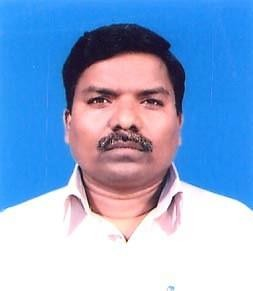
Mr. C. Raja Rao obtained his B.E in ECE from Andhra University in 1995 and M.Tech in ECE from JNTU Hyderabad in 2001. He started his career in 1999 as Assistant Professor of Electronics and Communication Engineering Department with SVITS Mahbubnagar. He worked in various Engineering colleges and continued in teaching up to Dec 2009. In December 2009 he has been appointed as Deputy Director in Board of Practical Training (Eastern Region) Kolkata (An Autonomous body under Ministry of Human Resource Development Government of India). He has over 10 years of teaching experience and about 13 years of experience in implementation of Apprentices Act 1961. He is also a life member of ISTE, IETE and IE(I). His research interest includes Signal and Image Processing, Low power VLSI design. Email: c.rajarao@gmail.com ,